Cracked paths. Crumbling driveways. House slabs that look older than the Opera House. Sound familiar? Let’s fix that.
If you’ve ever stood in your front yard squinting at a broken footpath or a patchy driveway and thought, “someone really should do something about this” — mate, that someone is you. And the good news? Getting quality concrete work done in Sydney doesn’t have to be a drama.
Whether you’re breaking ground on a new build, replacing council footpaths, or finally giving that tired driveway the retirement it deserves, concrete is the backbone of virtually every functional residential property in New South Wales. Done right, it lasts decades. Done badly? You’ll be calling someone back in two years — and nobody wants that awkward conversation.
This guide covers everything: why concrete is still king in Sydney, how the process actually works, what to look for in a concreting contractor, and why cutting corners on your slab is a financial decision you’ll live to regret.
Why Concrete Still Dominates Sydney’s Residential Scene
Sydney is a tough city on surfaces. Between the summer heat, coastal humidity, clay-heavy soils in the west, and the sheer weight of daily life — driveways, pathways, and house slabs take a beating year-round. That’s exactly why concrete remains the go-to material for residential construction across every suburb from Parramatta to Penrith, Sutherland to the Northern Beaches.
Here’s what makes it the undisputed heavyweight champion of outdoor surfaces:
Durability that outlives trends. Concrete doesn’t warp, rot, or fade. A properly installed concrete slab can handle everything Sydney throws at it — UV exposure, heavy foot traffic, vehicle loads, and the occasional kid on a skateboard.
Low maintenance (seriously low). Unlike timber decking or pavers that shift and splinter, a solid concrete surface needs minimal upkeep. An occasional wash-down and the odd reseal is about as demanding as it gets.
Versatile aesthetics. This isn’t your grandad’s grey slab world anymore. Modern concreting contractors in Sydney offer everything from exposed aggregate and stencilled finishes to coloured concrete and brushed textures. Functional AND beautiful — yes, both are possible.
Adds real property value. A freshly poured driveway or a neat concrete pathway lifts the street appeal and resale value of any Sydney property. Real estate agents will tell you: first impressions start at the kerb.
What Types of Concreting Work Do Sydney Homeowners Actually Need?
Let’s break down the most common residential concrete jobs — because knowing what you need before you call a contractor will save you time, money, and a lot of back-and-forth.
House Slabs — The Foundation of Everything
If you’re building a new home in Sydney, you simply cannot skip past the slab. New house slabs in Sydney are typically either waffle pod slabs or conventional reinforced slabs, and the right choice depends on your soil classification, site conditions, and the structural engineering spec for your build.
The slab is not a place to scrimp. It’s literally the foundation your home sits on. A poorly prepared or under-engineered slab leads to cracking, subsidence, and structural headaches that cost a fortune to fix later. Get it right the first time — your future self (and your building inspector) will thank you.
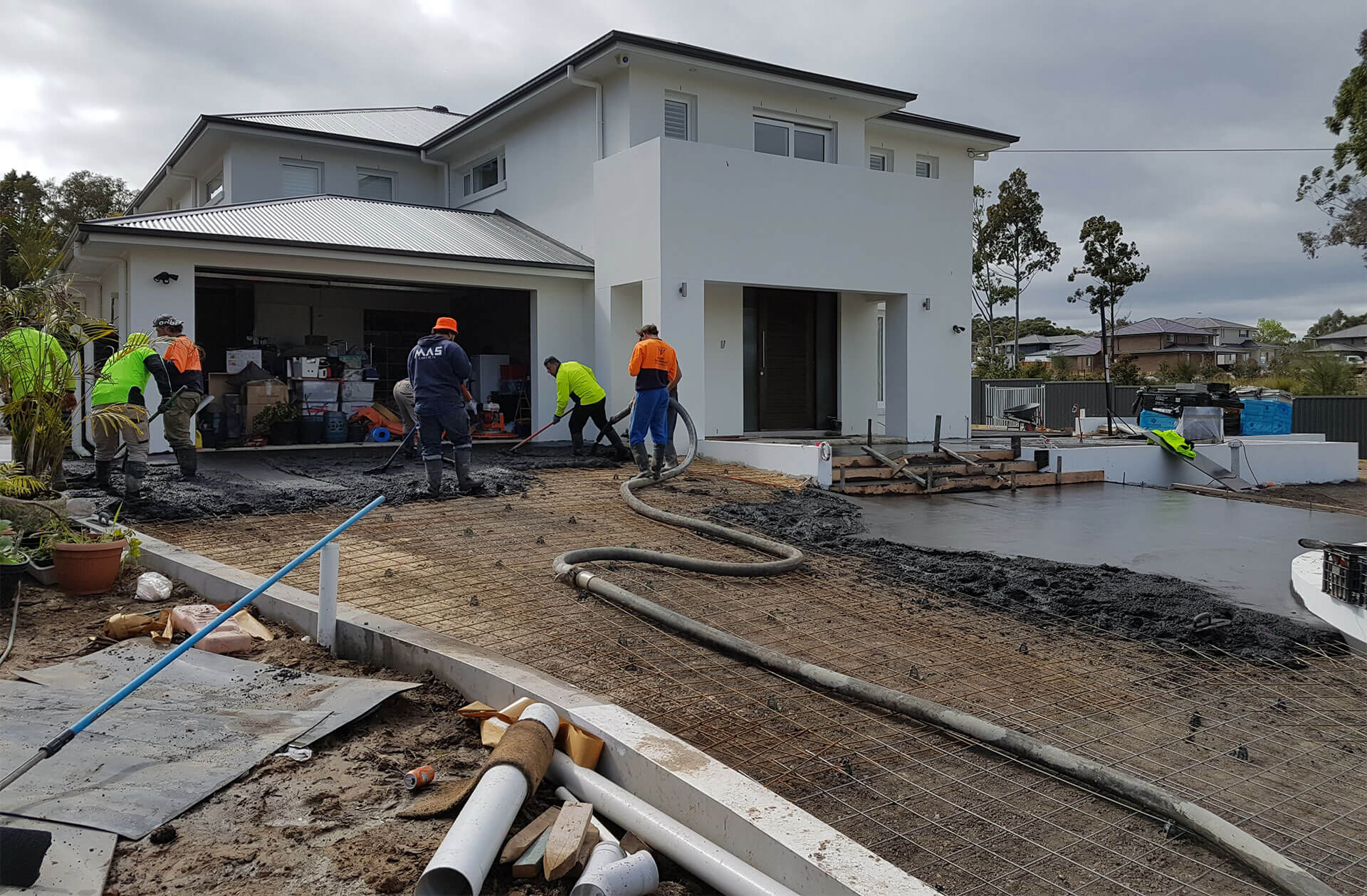
A quality residential concreting contractor will coordinate with your underground plumbers, electricians, and surveyors before the pour. They’ll handle excavation, compaction, formwork, reinforcement, and the pour itself — then finish the surface to spec. It’s a full process, not just “chucking cement down.”
Concrete Footpaths and Pathways — More Important Than You Think
People underestimate how much work a footpath actually does. Concrete footpaths in Sydney handle constant foot traffic, water runoff, and the slow settling of ground beneath them — all while looking neat enough not to embarrass you when visitors walk up.
Concrete pathways on residential properties — connecting your house to the garage, running alongside the garden, or linking a secondary dwelling — need to be properly graded for drainage, finished for slip resistance, and reinforced to handle load. A good pathway also improves accessibility for elderly family members and anyone with mobility considerations.
For sloping sites (and Sydney has plenty of those), an experienced concreter will factor in gradient, drainage direction, and even colour coding for differential-use areas. It’s not glamorous stuff to talk about at a barbecue, but it’s the difference between a pathway that works and one that turns into a swimming pool every time it rains.
Council Footpaths and Crossover Work — Don’t Get Caught Out
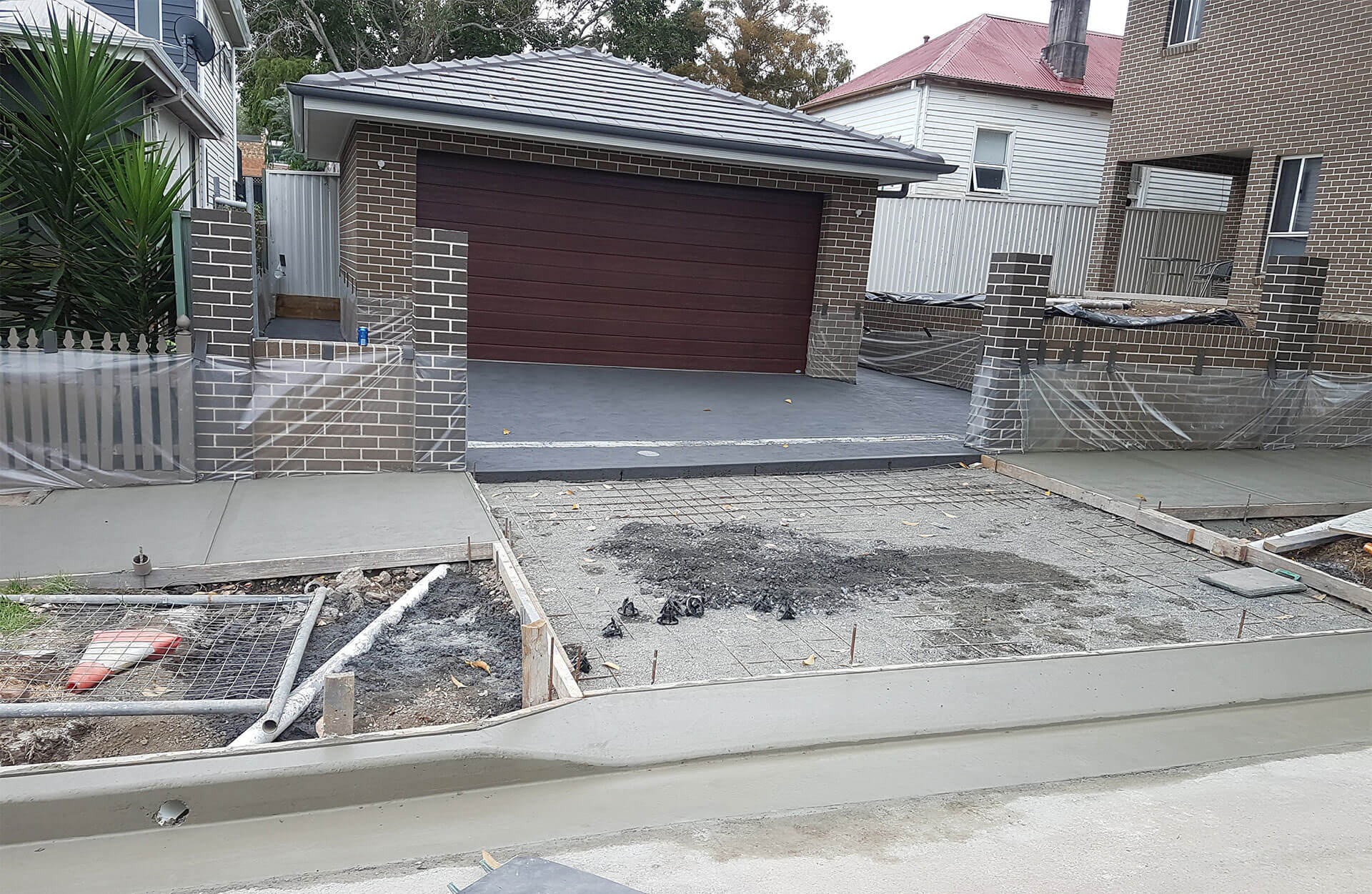
Here’s one that catches a lot of Sydney homeowners off guard: if your driveway crosses a council footpath, you’re dealing with council-regulated infrastructure. The vehicle crossover — the section between the kerb and your property boundary — often needs council approval and must be built to specific local government standards.
Professional concreting contractors in Sydney who are experienced in council work will know exactly which LGA standards apply to your suburb, handle the approval paperwork, and ensure the finished product passes inspection. Trying to DIY a council crossing or hiring someone who doesn’t know the regs? That’s a fine waiting to happen — plus the joy of having to rip it all up and redo it.
Oz Crete Concrete has long-standing relationships with councils across the Sydney metro area, which makes navigating this process significantly less painful for homeowners.
The Concreting Process — What Actually Happens on Your Property
Most homeowners have watched concrete work happen next door and thought, “how hard can it be?” Here’s the honest answer: not hard if you know what you’re doing, disastrous if you don’t.
Here’s what a proper residential concreting job looks like from start to finish:
1. Site Assessment and Quoting A reputable contractor comes to your property, assesses the scope, checks the ground conditions, and provides a written, fixed-price quote. No surprises, no vague estimates. If someone won’t put their price in writing, that’s your first red flag.
2. Excavation and Base Preparation The ground beneath your concrete does more work than the concrete itself. Proper excavation removes unsuitable material, and compacted road base or gravel is laid to create a stable, level platform. Skip this step and your slab will crack. Period.
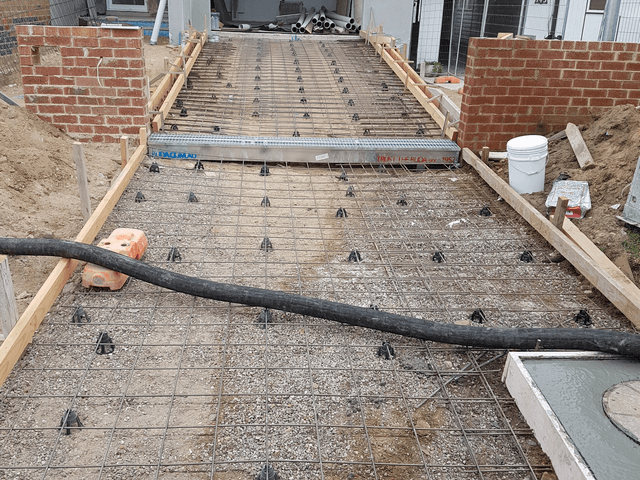
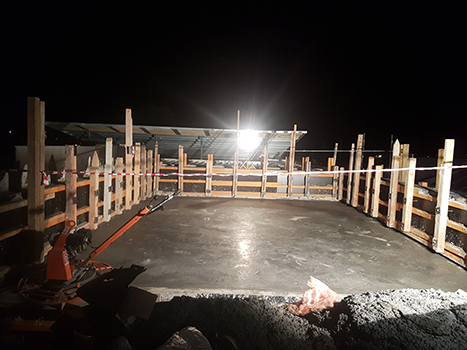
3. Formwork Timber or steel formwork is set up to define the edges and depth of the pour. This determines the final shape, level, and thickness of your concrete. Formwork needs to be sturdy, level, and properly braced — a sag or shift mid-pour is a nightmare to fix.
4. Reinforcement Steel mesh or rebar is laid within the formwork before the pour. This is what gives concrete its tensile strength and prevents cracking under load. For house slabs, engineering drawings specify exactly what reinforcement is required.
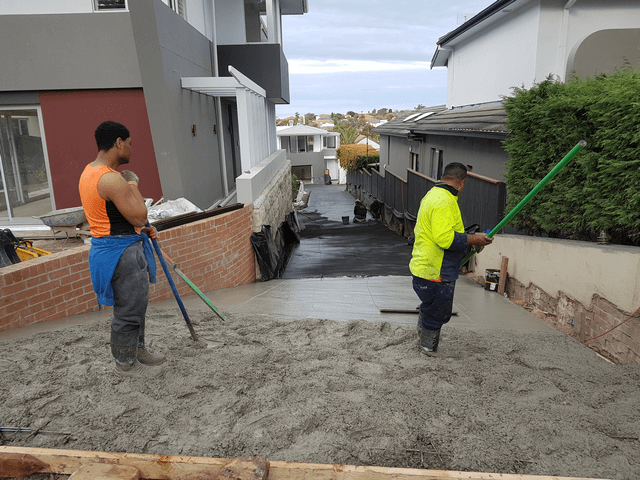
5. The Pour Concrete is ordered from a batching plant and arrives by agitator truck. Timing matters — concrete has a working window before it begins to set, so the team needs to move efficiently. It’s poured, spread, and screeded level.
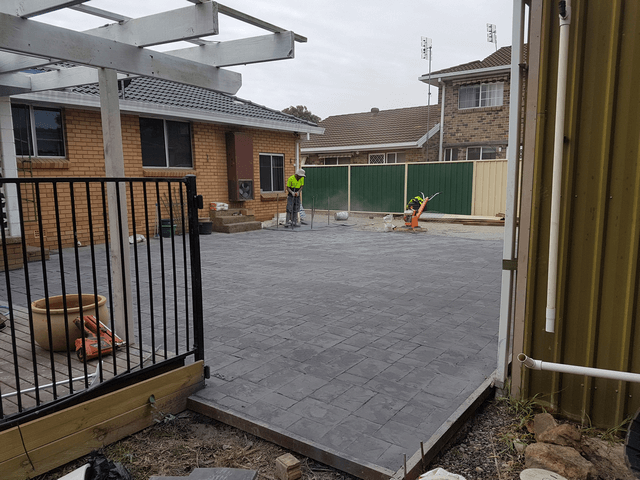
6. Finishing Once poured, the surface is trowelled, brushed, or otherwise finished to achieve the desired texture. This is where aesthetics come in — a broom finish for grip outdoors, a smooth trowel finish for internal surfaces, or a stencilled pattern if you’re after something decorative.
7. Curing Fresh concrete needs time and moisture to reach its full strength. Proper curing — usually involving curing compounds or wet hessian — prevents the surface from drying too quickly and cracking. New concrete should be kept off-load for at least 7 days.
How to Choose the Right Sydney Concrete Contractor (Without Getting Burned)
Sydney has no shortage of people willing to pour concrete for you. What it has a shortage of is people who’ll do it well, stand behind their work, and not disappear when you call about a crack three months later.
Here’s what to look for:
Licensed and insured. Non-negotiable. In NSW, contractors working on residential properties must hold a valid contractor licence. Ask for it. Check it. A quick search on the NSW Fair Trading website takes two minutes and could save you thousands.
Transparent pricing. Get everything in writing before a single shovel hits the ground. A quote should specify scope, materials, thickness, reinforcement, and finish type. “I’ll sort it for a couple of grand, mate” is not a quote — it’s a liability.
Experience with your specific job type. House slabs, footpaths, council crossovers, and decorative finishes all require different skill sets and knowledge. Ask how many similar jobs they’ve completed and whether they can show you examples or references.
Good communication. Sounds obvious, but you’d be surprised. A contractor who answers their phone, shows up when they say they will, and tells you what’s happening at each stage is worth their weight in gold. Residential concreting projects involve other trades — plumbers, builders, landscapers — and poor communication creates costly delays.
The Real Cost of Cheap Concreting in Sydney
Look, everyone wants a fair price. That’s completely reasonable. But there’s a difference between a competitive quote from a skilled contractor and a suspiciously cheap price from someone cutting corners on mix design, reinforcement, or base preparation.
Bad concrete work in Sydney costs more in the long run — always. Cracked slabs, heaving pathways, flaking surfaces, and council-non-compliant crossovers all require remediation work that often costs more than the original job should have.
The smart move is to explore the full range of professional concreting services available to Sydney homeowners, understand what’s included in a proper scope of work, and compare quotes on an apples-to-apples basis. A higher price that includes proper base prep and reinforcement is often cheaper than a low price that doesn’t — once you factor in what you’ll pay to fix it.
Why Local Experience in Sydney Actually Matters
It’s tempting to think concrete is concrete wherever you go. But anyone who’s worked across Sydney’s diverse geography knows better. The reactive clay soils in Western Sydney behave very differently to the sandy profiles along the coast. Sloping sites in the Hills District need drainage solutions that a flat-site specialist might not consider. Coastal suburbs bring salt air and humidity that affect curing times and finish options.
Experienced Sydney concrete contractors understand these regional nuances. They’ve poured slabs in Blacktown heat and finished pathways in Sutherland Shire sand. They know which council has what requirements, which engineers sign off on which soil types, and how to schedule a pour around Sydney’s unpredictable spring weather.
That local knowledge isn’t something you find in a national franchise or a bloke who’s just started his ute-and-a-mixer operation. It comes from years of working specifically in this city, on these soils, with these councils.
Concrete Finishes Worth Knowing About
If you think your only option is “grey and flat,” you’re working with outdated information. The decorative concrete options available to Sydney homeowners in 2026 include:
- Exposed aggregate — pebbles or crushed rock exposed on the surface for a textured, slip-resistant finish. Popular for driveways and pool surrounds.
- Stencilled concrete — patterns pressed into the surface using stencils, then coloured and sealed. Gives the look of pavers or tiles at a fraction of the cost.
- Coloured concrete — oxides mixed into the pour to achieve earthy reds, sandstone tones, charcoals, and more.
- Brushed or broom finish — the standard non-slip finish for outdoor pathways and footpaths. Practical and cost-effective.
- Honed or polished concrete — a smoother, more refined finish typically used for alfresco areas or internal floors.
The right finish depends on the application, your aesthetic preference, budget, and how much slip resistance you need. Any decent concreting contractor will walk you through the options and show you samples before you commit.
Ready to Get Moving? Here’s Your Next Step
Concrete work isn’t something you want to rush — but it also isn’t something worth putting off indefinitely, especially if your current surfaces are creating safety hazards, water drainage issues, or dragging down your property’s kerb appeal.
Whether you need a full new house slab for a build just getting underway, replacement council footpath work, a fresh pathway through your garden, or a complete driveway overhaul, the key is getting a proper assessment from experienced professionals who know the Sydney market inside out.
Oz Crete Concrete has been delivering residential concreting solutions across Sydney for over 20 years. Their team handles everything from the initial site assessment through to the finished surface — with transparent pricing, no hidden charges, and a genuine commitment to quality that’s earned them a long list of returning and referred clients across Greater Sydney.
Get your free, no-obligation quote and see what properly done concrete actually looks like.
Keywords naturally integrated: Sydney concrete contractors, concreting contractors Sydney, new house slabs Sydney, concrete footpaths Sydney, concrete pathways Sydney, council footpaths Sydney, residential concreters Sydney, concrete slab Sydney, concreting services Sydney, Sydney concreting, cheap Sydney concreting, decorative concrete Sydney, driveway concreting Sydney, formwork Sydney, concrete finishing Sydney.