Here’s a fun fact about Sydney that nobody puts on a postcard: a big chunk of the ground under your feet is reactive clay, and it treats every rainstorm and heatwave like an invitation to move house. It swells, it shrinks, it sulks, and if the concrete sitting on top of it wasn’t built with that in mind, you get the cracked driveways, the sunken paths, and the “why is my patio suddenly on a slight lean” conversations that keep local concreters in business.
That’s really what concreting in Sydney comes down to — not just pouring grey stuff into a shape, but reading the ground, respecting the council rulebook, and building something that’s still doing its job in twenty years, not twenty months. This is the long version of that story: what concreting services in Sydney actually involve, why your house slab isn’t a “just pick one” decision, what excavation and formwork are doing behind the scenes, and why council driveways and footpaths come with more paperwork than a home loan. Grab a cuppa.
What “Concreting Services Sydney” Actually Covers
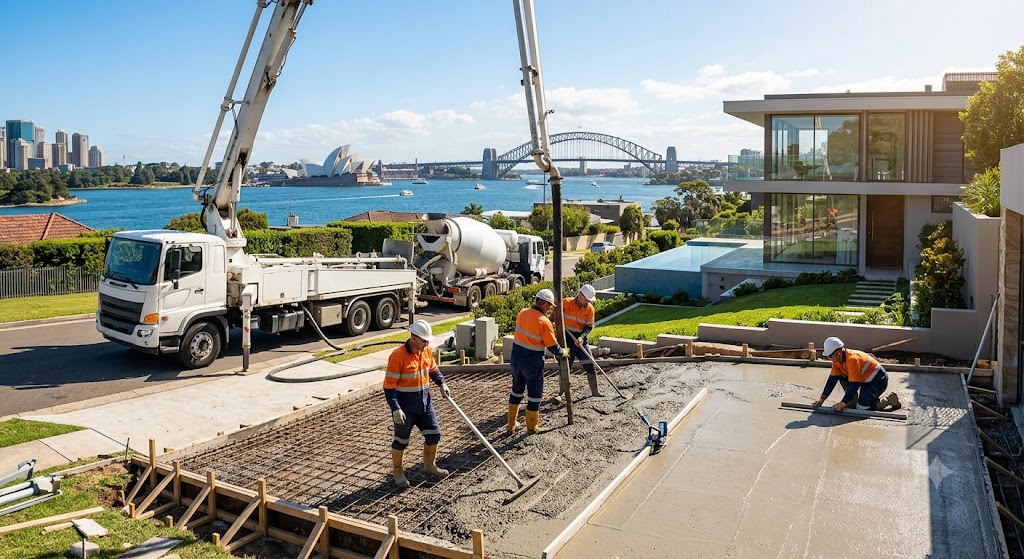
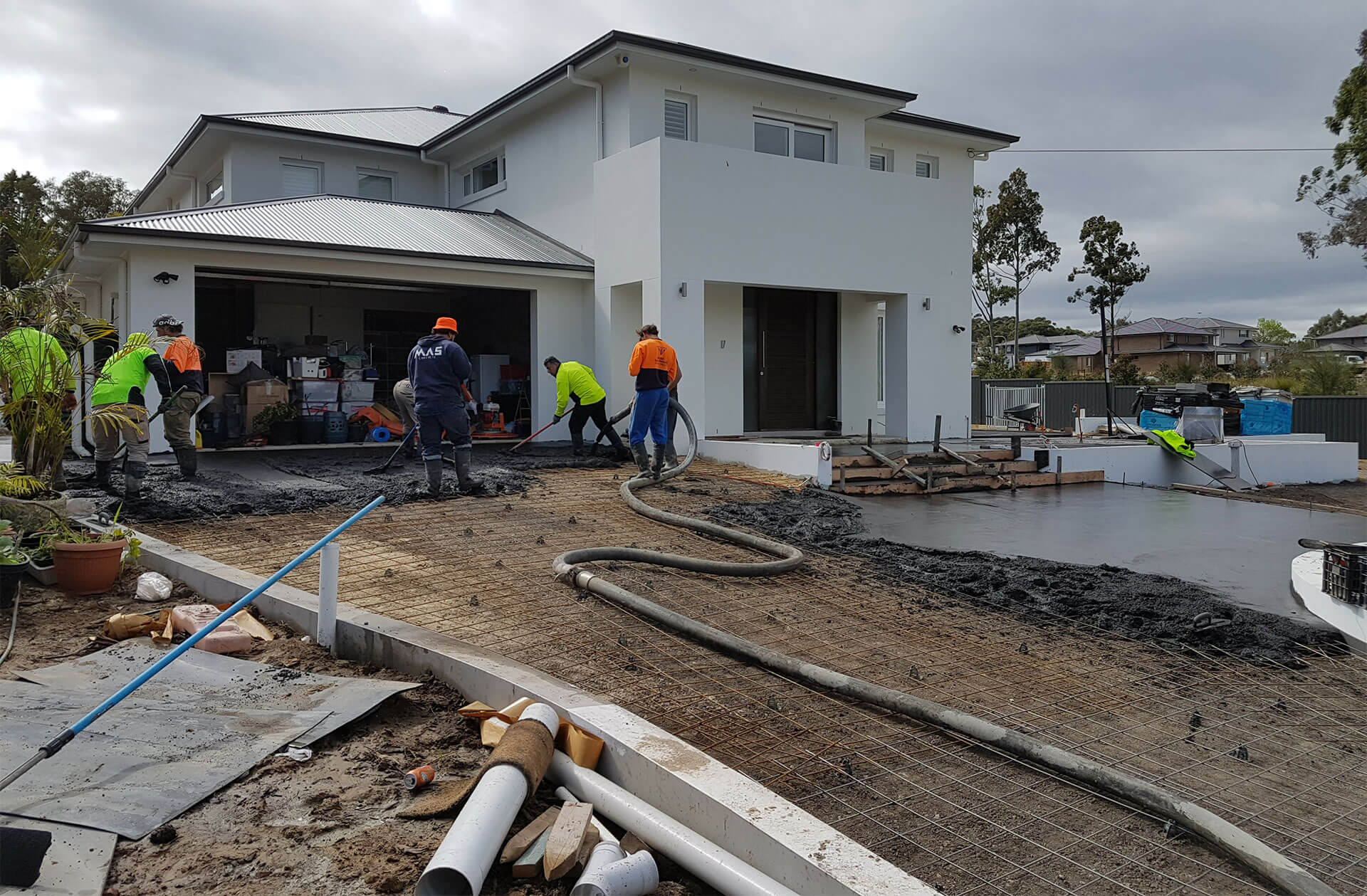
When people search for concreting services Sydney-wide, they’re usually picturing a driveway or a slab. Fair enough — that’s the visible bit. But a proper concrete contractor’s job list is longer than that: excavation and site prep, formwork, steel reinforcement, the actual pour, finishing (broom, exposed aggregate, plain, coloured — take your pick), curing, and then the joints and sealants that stop everything falling apart in year three.
At OzCrete Concrete, this is the bread and butter — residential and light commercial concreting across greater Sydney, handled by people who’ve argued with clay soil more times than they’d like to admit. If you want the full rundown of everything on offer, the services page breaks it down properly. And if you’re specifically hunting for concreting Sydney work in your suburb — driveways, slabs, paths, the lot — that’s covered in detail on the dedicated concreting Sydney page, which is worth a look before you get three quotes and three different opinions.
The Soil Story: Why House Slabs Sydney-Wide Aren’t One-Size-Fits-All
Right, the clay. Sydney soil ranges from solid sandstone in some pockets to properly reactive clay in others — the kind classified under AS 2870 as Class M, H1, H2, or in the worst cases, E (extremely reactive, as in “this ground has main character energy”). That classification isn’t optional trivia; it’s what determines the entire slab design.
Two systems dominate residential building here:
- Waffle pod slabs — a grid of polystyrene void formers topped with a slab of concrete ribs. They sit slightly proud of the ground, letting the clay move underneath without dragging the slab with it. Faster to build, use less concrete and steel, and popular on flatter, moderately reactive sites.
- Stiffened raft slabs — a solid slab with deepened edge beams and internal stiffening beams cast as one unit. More robust on tricky or sloping sites, and often the pick where soil movement is more aggressive.
Neither one is “better” in the abstract — it’s an engineering call based on a soil report, not a coin toss. Skip that step and you’re the person googling “why is there a crack running across my living room floor” in eighteen months. If you’re at the foundation stage of a build, granny flat, or extension, it’s genuinely worth reading through the house slabs Sydney page before locking anything in — getting the base right is the cheapest insurance you’ll ever buy for a house.
Excavation Sydney: The Unglamorous Bit That Decides Everything
Nobody puts excavation photos on their Instagram. There’s no dramatic reveal moment for “we dug a hole and made sure it drained properly.” But excavation Sydney-wide is where most future concrete headaches either get solved or get baked in permanently.
Good excavation means:
- Digging to the correct depth and levels, not just “close enough”
- Getting the base compacted properly so the slab doesn’t settle unevenly later
- Sorting drainage so water isn’t pooling under a slab or against a retaining structure
- Working around existing services — pipes, cables, the occasional surprise tree root system
On sloped blocks (and Sydney has plenty), excavation can also mean retaining work to hold the site in place before a single formwork panel goes up. It’s slow, it’s dusty, and it’s arguably the single most important stage of the entire job. More detail on how this fits into a build is on the excavation Sydney page, including what to expect if your block isn’t exactly billiard-table flat.
Formworking Sydney: The Mould That Makes the Magic
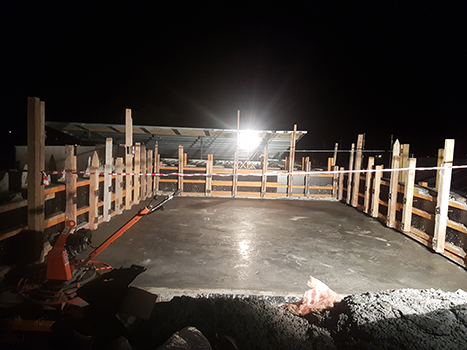
Formwork is the unsung middle child of concreting — the temporary timber or steel framing that holds wet concrete in its shape until it cures. It sounds simple. It is not simple. Formwork has to be dead level, properly braced, and strong enough to survive several tonnes of wet concrete pushing against it without bowing, shifting, or blowing out (yes, that’s a real term, and yes, it’s exactly as messy as it sounds).
This matters for everything from a simple slab edge to more complex jobs like stepped driveways, retaining walls, or anything with curves and angles. Sloppy formworking Sydney jobs show up later as wonky edges, uneven thickness, or a driveway that’s technically level but visually looks like it had a rough night. Precision here is what separates a crisp, clean finish from something that needs a “rustic charm” excuse. There’s more on how this stage is handled on the formworking Sydney page.
Council Driveway Concreting Sydney: Where Paperwork Meets Concrete
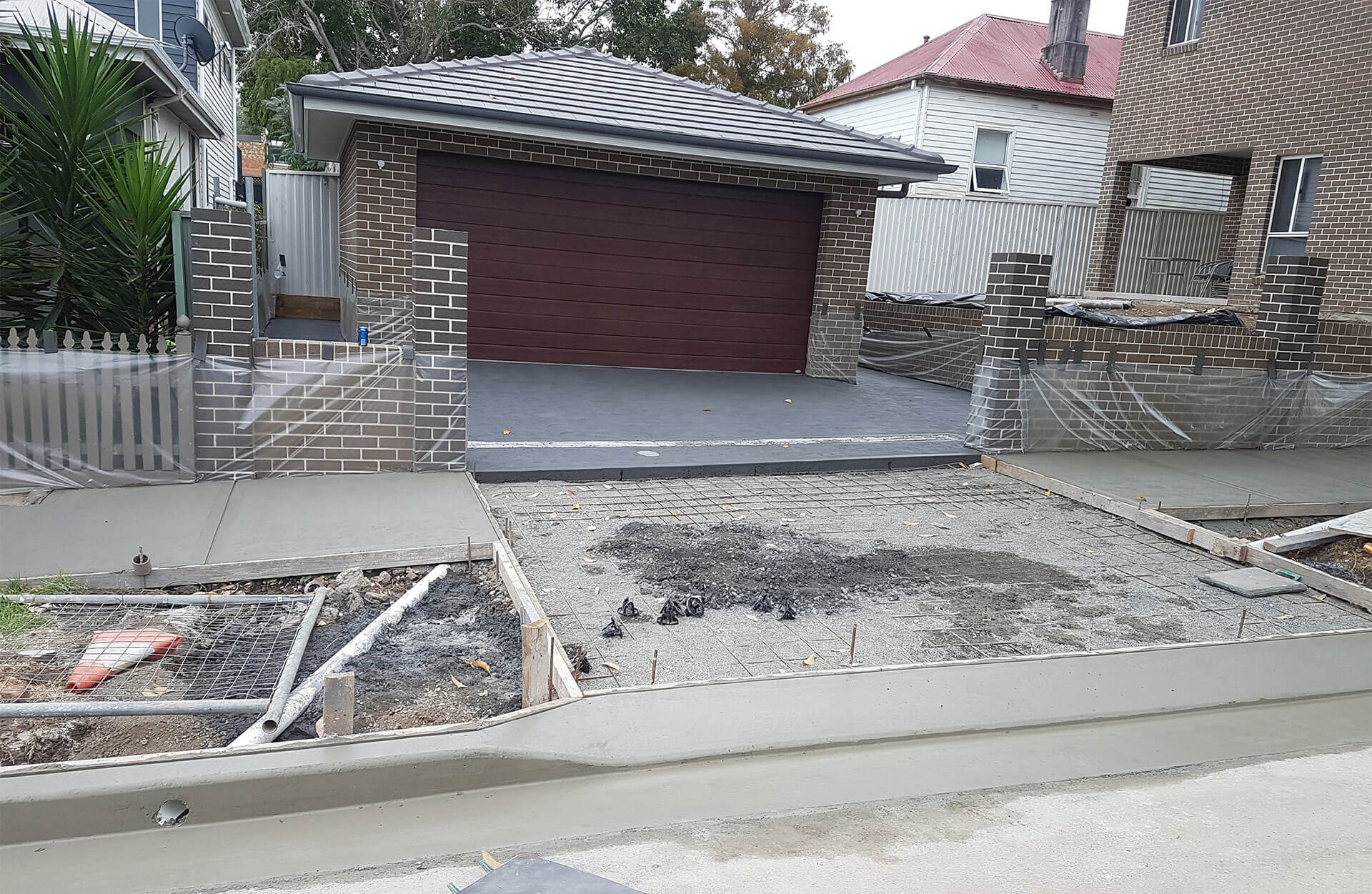
Here’s where things get bureaucratic. The moment your driveway crosses the nature strip — that stretch of council-owned land between your boundary and the road, officially called a vehicle crossing or crossover — you’re no longer just dealing with your own property. You’re dealing with council.
A few things worth knowing:
- Most Sydney councils require a permit or vehicle crossing application before any crossover work starts, and each council (Parramatta, Ku-ring-gai, Northern Beaches, the Hills, and so on) has its own specifications for width, gradient, concrete strength, and finish.
- Concrete strength for crossovers is typically specified around 25MPa, with some councils moving toward 32MPa given how much heavier modern vehicles have gotten.
- Inspections are common — council may want to check reinforcement and formwork before the pour, and again once it’s finished, before signing off.
- Skipping approval isn’t a “sort it out later” move. Non-compliant crossovers can be flagged on property records and cause real headaches at settlement if you ever sell.
It’s genuinely one of the more paperwork-heavy corners of residential concreting, which is exactly why homeowners hand it to a contractor who’s dealt with the specific quirks of Sydney councils before. That side of things — permits, inspections, the whole process — is covered on the council driveway concreting Sydney page, including what to expect timeline-wise (spoiler: budget a few weeks, not a few days).
Footpath Concreting Sydney: Small Job, Big Rules
Footpaths get lumped in with the same council-land logic as driveways, but they’ve got their own set of considerations — slip resistance, cross-fall for drainage, matching the existing public footpath grade, and staying within council-approved widths and materials. A footpath that looks fine to the eye can still fail an inspection if the fall isn’t right or it doesn’t tie in cleanly with the existing path.
Whether it’s a private path connecting your front door to the street, or a section of public footpath that needs reinstating after other works (renovations, tree removal, a skip bin that lived there a bit too long), footpath concreting Sydney jobs need the same council-savvy approach as driveways. Have a look at the footpath concreting Sydney page for the specifics on how that process runs.
Picking a Concrete Contractor without Losing Your Mind
Sydney isn’t short on concreters — a quick search throws up dozens of outfits all promising the same “quality workmanship, free quotes, ten-year warranties.” Cutting through that noise comes down to a few practical checks:
- Licensing and insurance — non-negotiable, especially for anything touching council land
- Experience with your specific job type — a crew great at exposed aggregate patios isn’t automatically across waffle pod engineering
- Local council knowledge — since every LGA in Sydney has its own quirks for approvals and inspections
- A written scope and quote — so “concrete driveway” doesn’t quietly become a different job halfway through
- Actual finished jobs you can see — photos are nice, a drive-past of a real driveway is better
That’s the approach behind how OzCrete Concrete works — combining the boring-but-critical stuff (soil reports, council process, proper formwork) with finishes that actually look good once the barriers come down. If you’re weighing up options, the homepage has a broader picture of past work and how jobs typically run from quote to final pour.
Frequently Asked Questions
How long does a typical house slab take from excavation to pour in Sydney? Depending on soil conditions and slab type, expect roughly one to two weeks for excavation, formwork and steel, followed by the pour and a curing period before load-bearing work starts on top.
Do I need council approval for a footpath repair, or just new driveways? Both, generally — any concrete work touching the nature strip or public footpath, new or repair, typically needs council sign-off, since it’s technically public land.
What’s the difference between a waffle pod slab and a raft slab? Waffle pod slabs use polystyrene formers to create a ribbed slab that sits slightly above the ground, suiting flatter, moderately reactive sites. Raft slabs are a solid, more heavily reinforced system better suited to sloping blocks or more aggressive soil movement — a soil report and engineer’s advice should guide the choice.
How much does council driveway concreting in Sydney typically cost extra compared to a private driveway? Crossover works usually cost more per square metre than a standard private driveway section, largely due to council-specified concrete strength, permit fees, and required inspections.
Can I get a footpath and driveway done in the same job? Yes — many Sydney homeowners combine both since they’re often adjoining works, and doing them together can streamline council approvals and reduce overall disruption.
How do I know if my block has reactive clay soil? A geotechnical soil test (required under AS 2870 for new slabs) will classify your site from Class A (stable) through to Class E (extremely reactive) or Class P (problem soil), which then dictates the slab design.
Got a driveway that needs sorting, a footpath in council limbo, or a slab that needs someone who actually reads soil reports before pouring anything? Have a chat with the team — get in touch here — or have a browse through more concreting explainers over on the OzCrete Concrete blog.