Let’s get one thing straight: concrete looks simple. It’s grey, it’s heavy, it goes hard. What could possibly go wrong?
Quite a lot, actually. Ask anyone who’s poured a driveway on reactive clay without checking the soil report, or tried to sneak a footpath crossover past council without a permit, and you’ll get a very honest, very Australian answer involving the words “should’ve” and “bloody.”
Residential concreting in Sydney isn’t just wheelbarrows and elbow grease — it’s soil classification, drainage falls, reinforcement schedules, and a council inspector who will absolutely notice if your crossover gradient is 2 degrees off spec. So before you crack open a home reno forum at 11pm and convince yourself you can DIY a house slab, let’s walk through what proper Sydney concrete services actually involve, why the process matters more than the pour, and where most backyard projects come unstuck.
1. Skipping the Soil Report (a.k.a. Building on Hope)
Sydney sits on a patchwork of sandstone, shale, and some genuinely temperamental reactive clay — especially out west and across the Hills District. That clay swells when it’s wet and shrinks when it’s dry, and if your slab isn’t designed for the site’s actual soil classification under AS2870, you’ll get cracking, doming, or a floor that slopes gently toward the laundry within a couple of years.
This is the bit nobody photographs for Instagram, but it’s the whole game. Before any concrete touches ground, a proper Sydney concreting outfit will have your site classified, your engineer’s drawings checked, and your sub-base prepared to suit — not just whatever slab type happened to be cheapest.
2. Treating Excavation as an Afterthought
Excavation is the unglamorous cousin of concreting — nobody asks for photos of a dug-out block — but it’s where most slab problems actually begin. Cut and fill needs to be done properly so water runs away from the structure, not toward it. Get the levels wrong here and no amount of steel or extra cement will save you later.
Reputable excavation contractors Sydney homeowners can trust will handle site benching, drainage falls, and compaction before a single form goes up — because a slab is only as good as the ground it’s sitting on. It’s the foundation of the foundation, if that makes sense (it should, we’ve had a few coffees thinking about it).
3. Underestimating Formwork (It’s Not Just a Wooden Box)
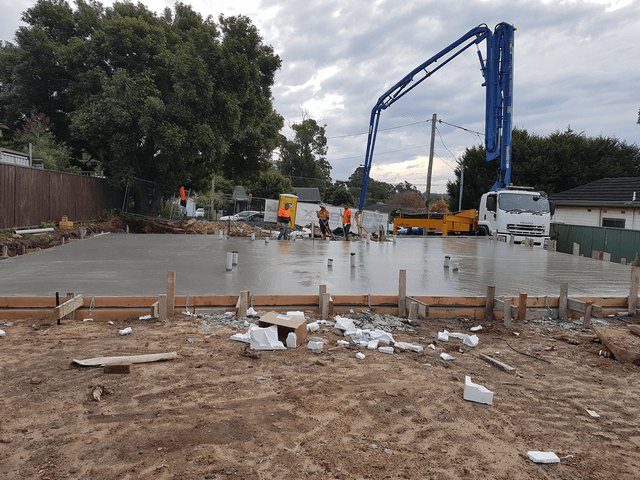
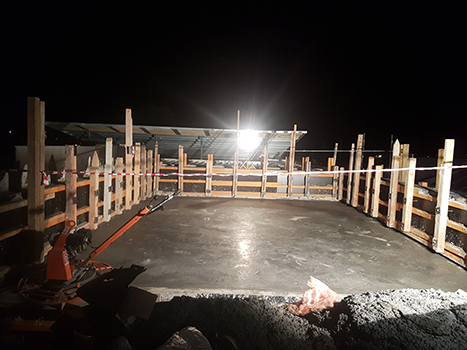
Formwork is the unsung hero of concreting. It’s the temporary structure that holds wet concrete in its correct shape while it cures, and if it’s not built dead straight, level, and properly braced, your finished slab, footpath, or driveway edge will show every wobble for the next 50 years.
Good formwork also determines your slab’s thickness consistency, edge finish, and whether your control joints actually line up where they’re supposed to. Experienced formwork contractors Sydney builders rely on know how to account for site slope, expansion gaps, and reinforcement cover — all the fiddly bits that separate a professional edge from a “rustic” one.
4. Assuming Council Doesn’t Care About Your Driveway
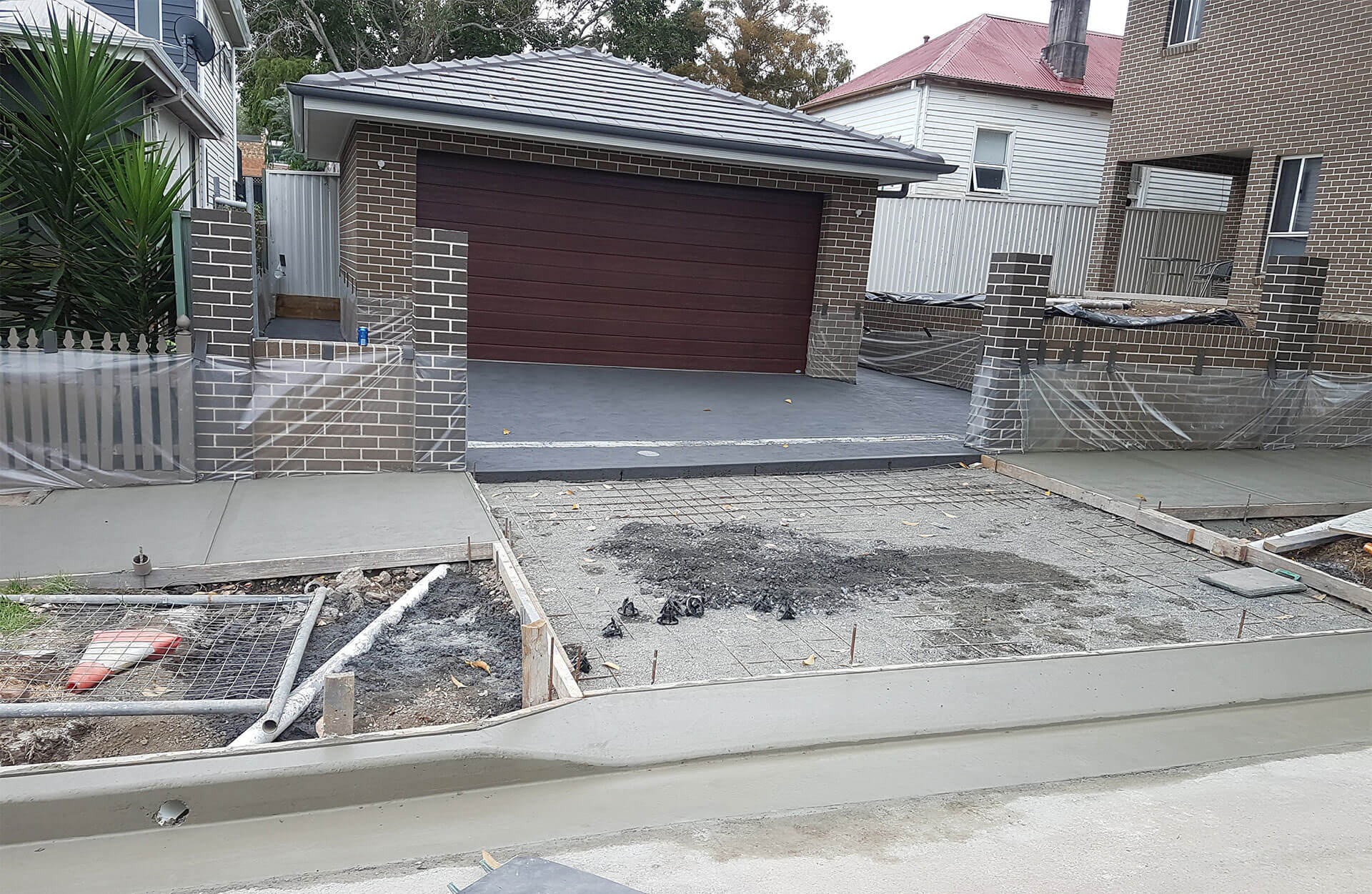
Here’s a fun fact that catches a lot of Sydney homeowners off guard: the section of your driveway between the footpath and the road isn’t actually yours. It’s council land, and most councils across Sydney — from the inner city right out to the Hills and Hornsby — require an approved application before you touch it. Get the gradient, the finish, or the materials wrong, and you might be digging it all up again.
This is where a lot of DIY dreams die a quiet, expensive death. A council driveway crossover has to meet gradient limits, drainage requirements, and often a specific finish (some councils only allow plain concrete on the road-facing section, believe it or not). Sorting a compliant council driveway Sydney approval and build means someone on your team actually knows which forms to lodge and which inspector to call — so you’re not left arguing with council about a driveway that’s already poured.
5. Forgetting Footpaths Are Council Territory Too
Same story with footpaths. If your property borders a public footpath and it’s damaged, uneven, or needs replacing as part of a build, that’s council-regulated work — not a weekend job with a bag of Rapid Set from the hardware shop. Councils inspect these installations once formwork, reinforcement, and base prep are down, and if it doesn’t meet spec, you’re doing it again on your own dime.
Getting your council footpaths Sydney work signed off properly the first time saves you the headache of a failed inspection and the very Aussie experience of explaining to your neighbours why there’s a temporary trench out front for three extra weeks.
6. Choosing the Wrong Slab Type for a New Build
Not all house slabs are created equal, and picking blind is a genuinely expensive mistake. Waffle pod slabs suit low-to-moderate reactivity sites and are generally more cost-effective. Raft slabs are the go-to for highly reactive clay, where the whole slab needs to move as one rigid unit rather than crack under pressure. Your soil classification, block size, and site accessibility all factor in — and getting it wrong isn’t a “redo the finish” problem, it’s a “jackhammer the whole thing out” problem.
Proper new house slabs Sydney builds start with the engineer’s specs, not a guess based on what the last job needed. Whether it’s a granny flat, a duplex, or a full knockdown rebuild, the slab type should match your site — not the other way around.
7. Trusting “She’ll Be Right” Over Actual Process
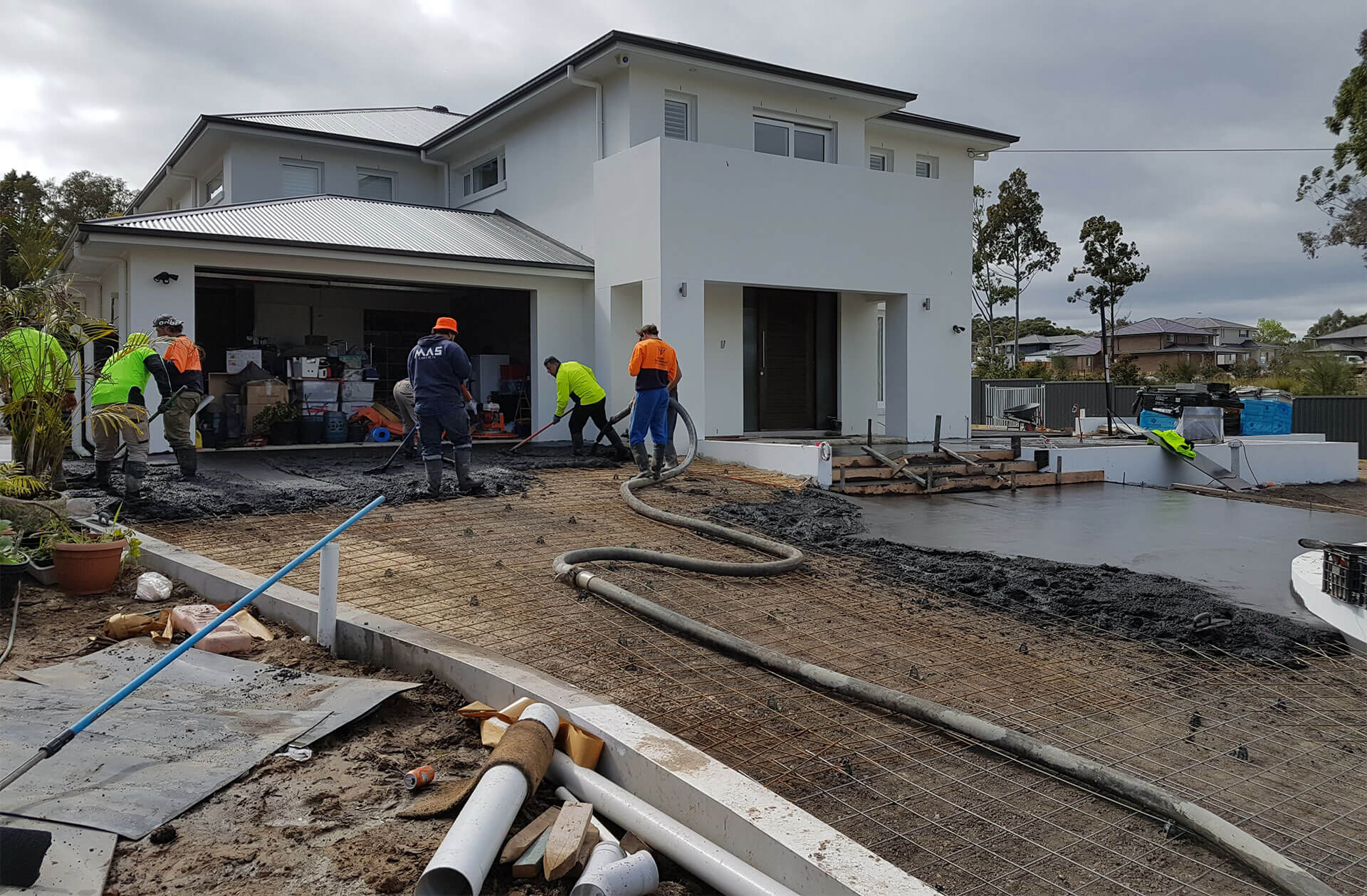
This is the big one. Concreting in Sydney has a genuine process — soil check, excavation, formwork, steel, pour, cure, finish — and skipping steps to save a weekend almost always costs more in the long run. Whether it’s a full house slab, a driveway upgrade, or just replacing a cracked section of path, the sequence matters more than the speed.
If you want the full rundown on how residential concreting in Sydney actually comes together from go to whoa — dirt to driveway, so to speak — that’s exactly what we do day in, day out across the Sydney metro area.
What Actually Drives the Cost of a Concreting Job?
This is the question everyone wants answered in one number, and the honest answer is “it depends” — but here’s what it depends on:
- Slab type — waffle pod vs raft, driven entirely by your soil classification
- Site access — a tight inner-city terrace with no truck access costs more to pump than a wide-open Hills District block
- Excavation scope — how much cut and fill is needed to get your levels right
- Finish — plain concrete, broom finish, exposed aggregate, or a coloured and stamped design all sit at different price points
- Council requirements — driveway and footpath work on public land can involve permit fees and specific finish requirements depending on your LGA
None of this is a mystery once someone’s actually looked at your site and your soil report. It’s the “quote off a phone call with zero site visit” approach that tends to cause budget blowouts later.
A Word on Finishes (Because Concrete Doesn’t Have to Look Like a Car Park)
One thing that gets lost in all this talk of soil and steel: concrete doesn’t have to look boring. Exposed aggregate finishes give driveways and paths a textured, stone-flecked look that hides everyday wear far better than plain grey. Coloured and stamped concrete can mimic pavers or natural stone at a fraction of the cost and maintenance. Even a simple broom finish, done well, can lift a front path from “functional” to “actually looks like someone planned it.”
The finish is the last five percent of the job, but it’s the bit everyone sees every single day — so it’s worth getting a say in before the pour, not after.
So What Does “Doing It Properly” Actually Look Like?
Strip away the jargon and a solid concreting job follows roughly the same rhythm every time:
- Site assessment and soil classification — working out what you’re actually building on
- Excavation and site prep — cutting, filling, and setting correct falls for drainage
- Council approvals (where needed) — driveways, footpaths, and crossovers on public land
- Formwork — building the temporary structure that shapes your pour
- Steel reinforcement — placed to engineer spec, not “close enough”
- The pour — timed, finished, and cured properly rather than rushed before knock-off
- Finishing — exposed aggregate, plain, broom, or stamped, depending on what you’re after
Skip a step and you’re not saving time, you’re just moving the pain further down the calendar.
Why Bother Getting It Right the First Time?
Because concrete is basically permanent — that’s the whole point of it. A slab poured badly today is a cracked, uneven, drainage-nightmare tomorrow, and by “tomorrow” we mean in about eighteen months, right after your builder’s warranty runs out. Getting the process right — soil to finish — means you’re not back here in two years wondering why there’s a hairline crack running straight through your new alfresco.
It’s also just less stressful. Council applications, engineer sign-offs, and inspection timing are a lot easier to navigate when someone’s actually done it a hundred times before, rather than for the first time on your place.
Wrapping It Up
Concreting in Sydney sits at this odd intersection of “dead simple material” and “genuinely technical process,” and that gap is exactly where most backyard projects go wrong. Soil classification, excavation, formwork, council compliance — none of it is optional, even if it’s not the bit anyone posts about.
If you’re planning a new slab, sorting a driveway that actually gets past council, or just want it done properly the first time, have a browse through our blog for more on what’s involved, or get in touch and we’ll talk you through your specific site — no jargon, no upsell, just straight answers.
FAQs
Do I actually need council approval for a driveway in Sydney? In most cases, yes. If your driveway crosses a public footpath or connects to the road (which almost all of them do), your local council needs to approve the design and gradient before work starts, and often inspects it once formwork and reinforcement are down.
What’s the difference between a waffle pod slab and a raft slab? Waffle pod slabs suit sites with low to moderate soil reactivity and are generally the more budget-friendly option. Raft slabs are used on highly reactive clay sites where the whole slab needs to act as one rigid structure to resist ground movement.
How long does a typical house slab take from start to finish? It depends on size and soil conditions, but between site prep, formwork, steel, the pour, and curing time, most residential slabs take one to a few weeks before they’re ready for the next stage of the build.
Can I replace a footpath or driveway crossover myself? Technically you can attempt it, but if it’s on council land — which most crossovers and footpath sections are — you’ll need council approval and licensed contractors in many cases, or you risk having to redo it at your own cost.
Why does soil testing matter so much for a new slab? Because Sydney’s soil varies wildly from suburb to suburb, and the wrong slab design for reactive clay is one of the most common (and expensive) causes of cracking and structural movement down the track.