Into a Nightmare
Let’s be honest for a second. Nobody grows up dreaming about concrete. You don’t see kids running around the backyard yelling “when I grow up I want to talk about compacted road base all day.” And yet here you are, googling things like “house slabs Sydney” at 9pm because your builder just asked whether you want a waffle pod or a raft slab and you have absolutely no idea what either of those things are.
Don’t stress. Grab a cuppa, because we’re about to walk you through everything that actually matters about residential concreting in Sydney — the good, the ugly, and the bits that tradies don’t usually bother explaining because they assume you already know. We don’t assume that. We’d rather you understood exactly what’s going into the ground under your house, your driveway, or your new alfresco, because a slab isn’t something you get to redo next year if you don’t like it. Concrete is patient. It’ll sit there quietly cracking for a decade before it tells you it was never happy in the first place.
Why Sydney Soil Makes Concreting Way Trickier Than It Looks
Here’s the bit most homeowners never think about until it’s too late: Sydney doesn’t have “one” type of soil. Depending on whether you’re out west in the clay belt, up on the sandstone shelf of the North Shore, or down near the coast where everything is basically sand with delusions of grandeur, the ground under your feet behaves completely differently. Reactive clay soils expand when it rains and shrink again in a dry spell, and if your slab wasn’t designed with that movement in mind, you’ll eventually see cracks creeping across your garage floor or your new driveway looking like a roadmap of the Blue Mountains.
This is exactly why proper concreting in Sydney isn’t a one-size-fits-all job. Before a single truck rolls in, a decent concreter should be asking about your site’s soil classification, your drainage, and what’s actually going on structurally. If you want the full rundown on how we approach this across different suburbs and soil types, our concreting services page breaks down exactly how the process changes depending on where you live.
House Slabs: The Unsung Hero under Every Sydney Home
Your slab is basically the unsung hero of your whole build. Nobody photographs it for Instagram, nobody compliments it at a barbecue, but if it’s wrong, everything built on top of it inherits the problem — doors that won’t close, tiles that crack, walls that develop hairline fractures that keep you up at night wondering if your house is slowly falling apart (it’s probably not, but that slab really should’ve been done properly).
For most Sydney homes, you’re looking at either a waffle pod slab or a raft slab, and the choice really does come down to your soil classification and your engineer’s say-so. Waffle pods are the popular option on more stable ground because they use less concrete and go in faster, which your wallet will appreciate. Raft slabs are the heavier-duty option for reactive or sloping sites where the ground is going to move around more than you’d like.
Getting this right the first time saves you an absolute fortune down the track, because retrofitting a dodgy slab is one of those jobs where the fix costs three times more than doing it properly to begin with. If you’re planning a new build, a granny flat, or even an extension, our house slabs page has more detail on how we match the slab type to your site conditions rather than just pouring whatever’s quickest.
Excavation: The Job Nobody Sees But Everyone Relies On
Before any concrete gets anywhere near your property, someone has to dig. Excavation isn’t glamorous — there’s no ribbon-cutting ceremony for a well-cut trench — but it’s genuinely where a lot of projects either succeed quietly or fail spectacularly six months later. Cut and fill work has to account for drainage, existing services (hello, unexpected Sydney Water pipe you didn’t know was there), and making sure the ground underneath is compacted properly before anything gets poured on top.
Skimp on excavation and you’re basically building a house of cards on a wobbly table. We’ve been called in more than once to fix slabs that were poured over soil that hadn’t been compacted properly, and it’s never a cheap or fun conversation to have with a homeowner. If your project involves any digging at all — basements, sloped blocks, new driveways — it’s worth reading through our excavation services to understand what proper site prep should actually look like before your quote even mentions concrete.
Formwork: Boring Name, Massive Job
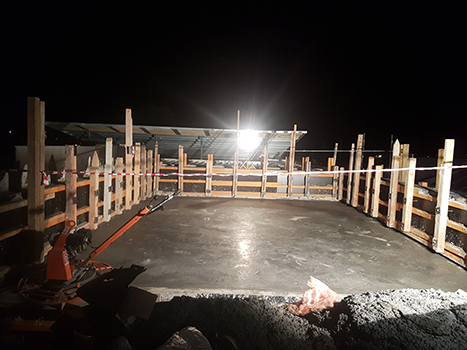
Formwork is one of those trade terms that sounds dull until you realise it’s literally the mould your entire slab, driveway, or footpath gets shaped in. Get the formwork wrong — not level, not rigid, not properly braced — and your finished concrete will inherit every single one of those mistakes permanently. There’s no “we’ll sand it out later” option once concrete has set.
Good formworking Sydney crews use the right materials for the job (timber for most residential work, sometimes steel or plastic systems for bigger commercial pours) and they take the time to get levels dead right before the truck even shows up. It’s the least Instagrammable part of the whole process and arguably the most important. Curious how it actually comes together on site? Our formworking page walks through the process in a bit more depth.
Council Driveways: Where Paperwork Meets Concrete
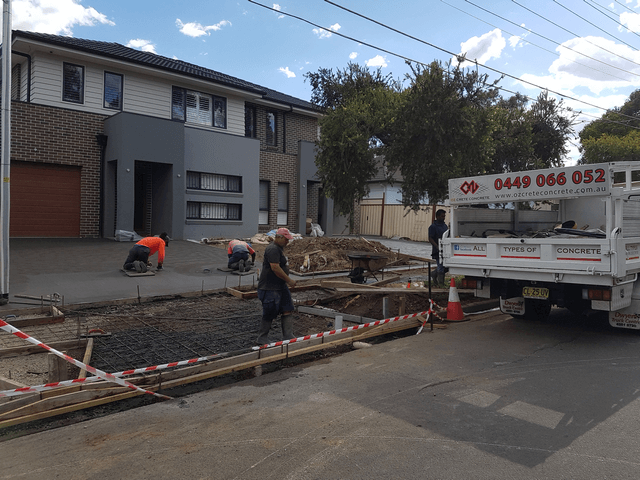
Right, buckle up, because this is the part that turns even the most patient Sydneysider into a person who mutters at their laptop. If your driveway crosses the nature strip and connects to the road, you’re not just dealing with concrete anymore — you’re dealing with council. Every single council across Sydney (Parramatta, Ryde, Hornsby, Ku-ring-gai, the Hills, you name it) has its own standard drawings, its own crossover widths, its own inspection requirements, and its own timeframes that can stretch out for weeks.
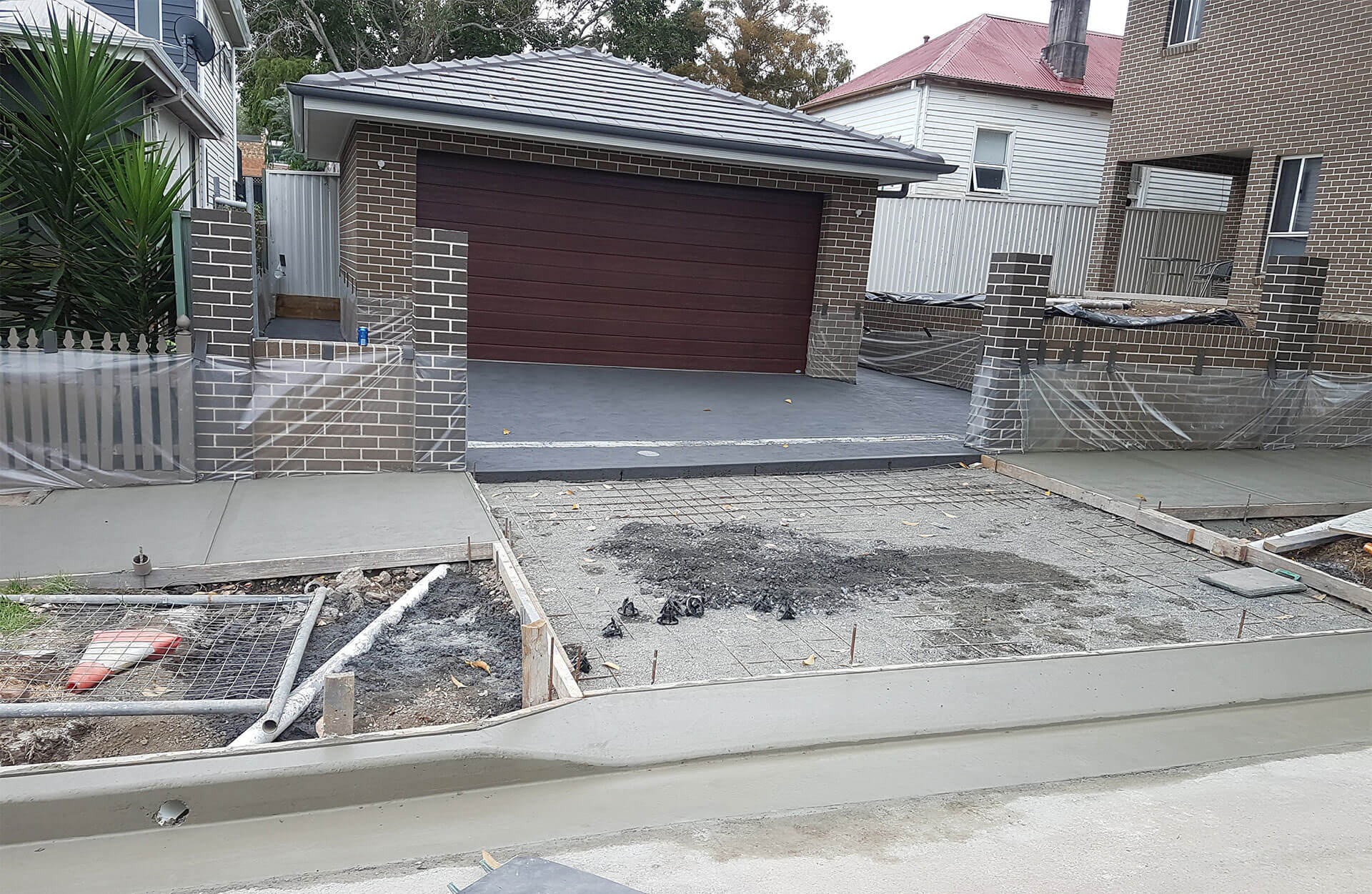
Most councils want a minimum concrete strength for the crossover section, proper reinforcement mesh, an inspection before the pour and another one after, and correct falls so water actually drains where it’s supposed to instead of pooling at your letterbox. Skip the approval process and build without a permit, and you’re not just risking a fine — some councils will make you rip the whole thing out and start again, which is about as fun as it sounds.
This is genuinely one of those jobs where hiring someone who already knows the local council quirks saves you weeks of back-and-forth. We handle the applications, the standard drawings, and the inspections as part of our council driveway concreting service, so you’re not the one on hold to council trying to figure out what a Section 138 application even is.
Footpaths: Small Job, Big Liability
Footpath concreting doesn’t get much attention because, let’s face it, it’s a strip of concrete leading to your front door. But footpaths matter more than people think — both for the look of your property and for the very real liability that comes with a cracked, uneven path where someone could trip and hurt themselves. Councils have specific standards here too, covering things like slip resistance, gradient, and drainage, particularly for public-facing sections.
A well-poured footpath should have a broom or exposed finish for grip, proper falls so it doesn’t turn into a slip-n-slide every time it rains, and control joints placed to stop random cracking. Our footpath concreting work covers both the private path leading to your door and any council-facing sections that need to meet local standards.
What Actually Happens On Site (So You’re Not Surprised)
Here’s the process in plain English, no jargon:
- Site assessment and design — soil classification, drainage, and slab or driveway design confirmed before anything is ordered
- Excavation and base prep — digging out, compacting, and laying road base where needed
- Formwork — the mould goes in, levels get checked (and checked again)
- Reinforcement — steel mesh or bar goes in to stop cracking and give the concrete tensile strength
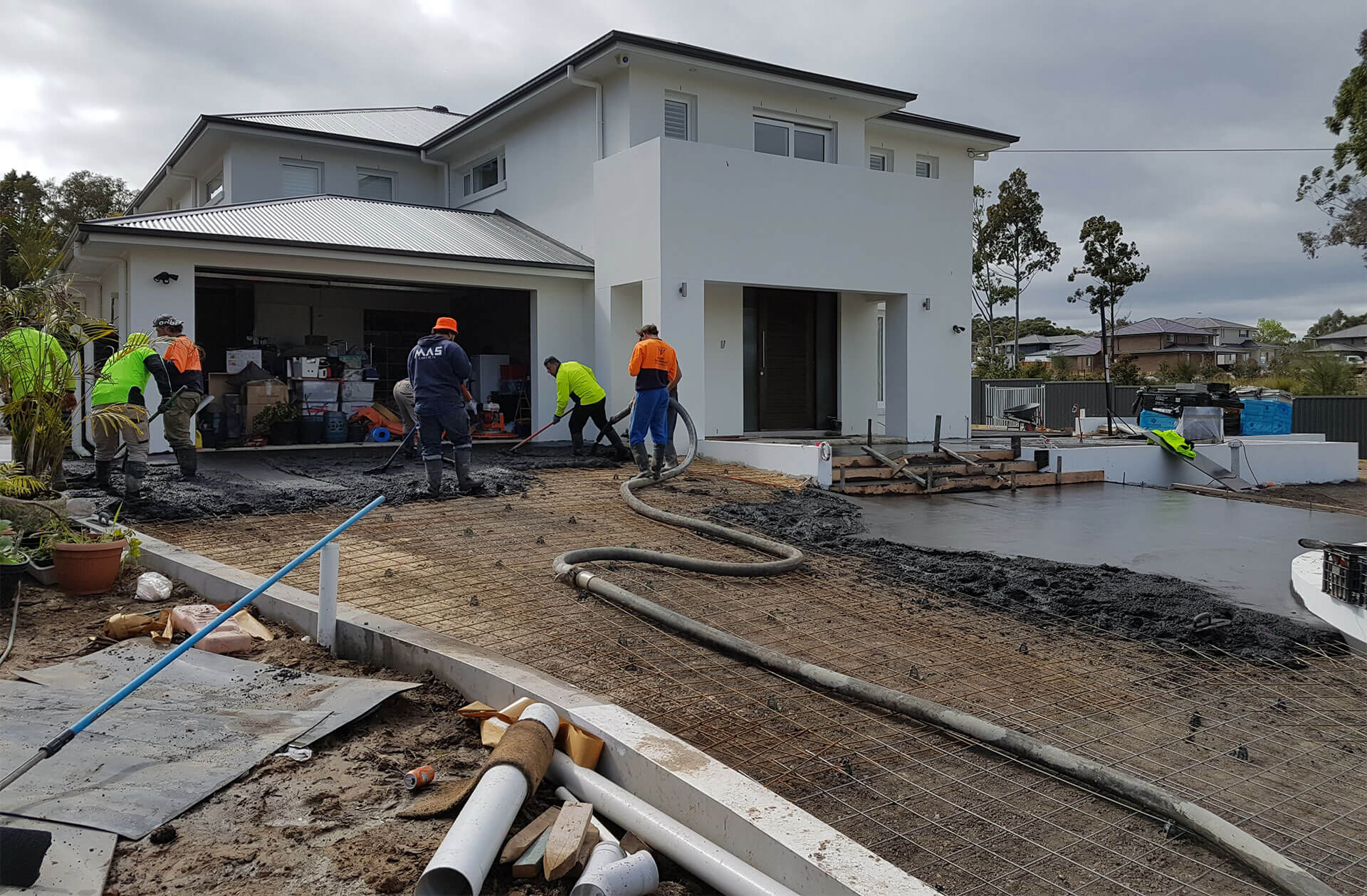
- The pour — concrete arrives, gets placed, screeded, and worked before it starts setting
- Finishing — broom, exposed aggregate, plain trowel, or your finish of choice
- Curing — the part everyone forgets about; concrete needs time (and sometimes protection from Sydney’s mood-swing weather) to reach full strength
Skipping or rushing any one of these steps is how you end up with the classic Sydney concrete complaints: hairline cracking, pooling water, uneven surfaces, or a driveway that looks tired after two summers.
The Real Benefits Of Getting It Done Properly
A well-poured slab or driveway isn’t just structurally sound — it adds genuine value to your property, cuts down on ongoing maintenance, and honestly just looks better for longer. Concrete done right can handle Sydney’s swing between baking hot days and sudden downpours without drama, it doesn’t need repainting or resealing every other year like some alternatives, and a tidy driveway or path does more for street appeal than people give it credit for. Does it once, do it properly, and you genuinely don’t have to think about it again for decades.
FAQs
How long does a house slab take to cure before you can build on it? Concrete reaches enough strength to build on within about a week, but full curing strength typically takes closer to 28 days. Your builder’s schedule usually accounts for this.
Do I need council approval for a driveway in Sydney? Yes, if it crosses the nature strip or connects to the road. Every council has slightly different requirements, standard drawings, and timeframes, so it pays to check before you plan a pour date.
What’s the difference between a waffle pod slab and a raft slab? Waffle pod slabs suit more stable soil and use less material, while raft slabs are the go-to for reactive clay or sloping sites where more ground movement is expected. Your engineer’s soil report decides which one applies to your block.
Can I get my footpath and driveway done in the same job as my house slab? Absolutely, and it’s often more cost-effective to schedule it all together rather than bringing a crew back separately for each stage.
How do I know if my old concrete just needs resealing or a full replacement? Surface staining or minor wear can often be resealed, but structural cracking, sinking, or crumbling usually points to a base issue underneath, which means it’s time for a proper replacement rather than a patch-up.
Got a slab, driveway, or footpath job on your mind and want it done without the guesswork? Have a browse through our blog for more Sydney concreting deep-dives, or just skip straight to the good part and get in touch for a quote. We’ll tell you straight what your site actually needs — no upselling, no jargon, just concrete done properly.