Slab, Rack and Roll: The Real Story behind Sydney’s Best Concrete Jobs
Let’s be honest — nobody grows up dreaming about concrete. Nobody’s staring out the window as a kid thinking “one day, I’ll have a beautifully compacted subgrade under a 100mm reinforced slab.” And yet, here you are, reading a blog about it, because somewhere along the way your driveway started looking like a jigsaw puzzle assembled by a toddler, or your builder mentioned “formwork” and you nodded like you knew exactly what that meant.
You didn’t. That’s fine. Nobody does until they need to.
Here’s the thing about concreting Sydney properties, though: it’s one of those trades where “close enough” genuinely isn’t good enough. Between the clay pockets in the west, the sandstone shelves on the North Shore, the salty air near the coast, and councils that treat a driveway application like a small international treaty, Sydney concrete work has to earn its keep. This guide walks through what actually happens on a proper concrete job — the slabs, the digging, the timber, the paperwork — and why cutting corners on any of it tends to come back and bite you, usually around year three, usually on a weekend, usually when you least expect it.
Why Sydney Concrete Isn’t Like Concrete Anywhere Else
Sydney’s geology is a bit of a split personality. Head out west and you’re often dealing with reactive clay that swells when it’s wet and shrinks when it’s dry, which is exactly the kind of mood swing you don’t want under your slab. Head towards the harbour or the Northern Beaches and you’ll hit sandstone shelves that need to be broken out before anyone can even think about pouring. Add in Sydney’s habit of throwing a downpour at you the day after you’ve finished a pour, and you start to understand why concrete contractors Sydney homeowners actually trust are the ones who read the site before they read the plan.
This is really the whole philosophy behind proper concreting Sydney work — it isn’t a one-size-fits-all trade. Soil testing, drainage falls, expansion joints, and reinforcement all get adjusted based on what’s actually under your feet, not what a generic quote assumed. If you want the deeper technical rundown on how this plays out suburb by suburb, it’s worth browsing through how OzCrete approaches concreting across Sydney before you get quotes from anyone else.
Residential Slabs: The Bit Nobody Sees (Until It Cracks)
A house slab is one of those jobs where the actual concrete is honestly the easy part. The hard part is everything that happens before the truck turns up — site cut, compaction, vapour barriers, mesh or bar placement, and getting the levels dead-on so your walls, door frames and tiling all line up later without an apprentice swearing at a spirit level for three days straight.
For residential slabs Sydney-wide, most builds now use a waffle pod or raft slab system on reactive sites, which spreads the load and lets the slab move (slightly) with the ground instead of fighting it. On more stable ground, a standard slab-on-ground with edge beams does the job just fine. Either way, the engineering has to match the soil classification your site actually gets — not a guess.
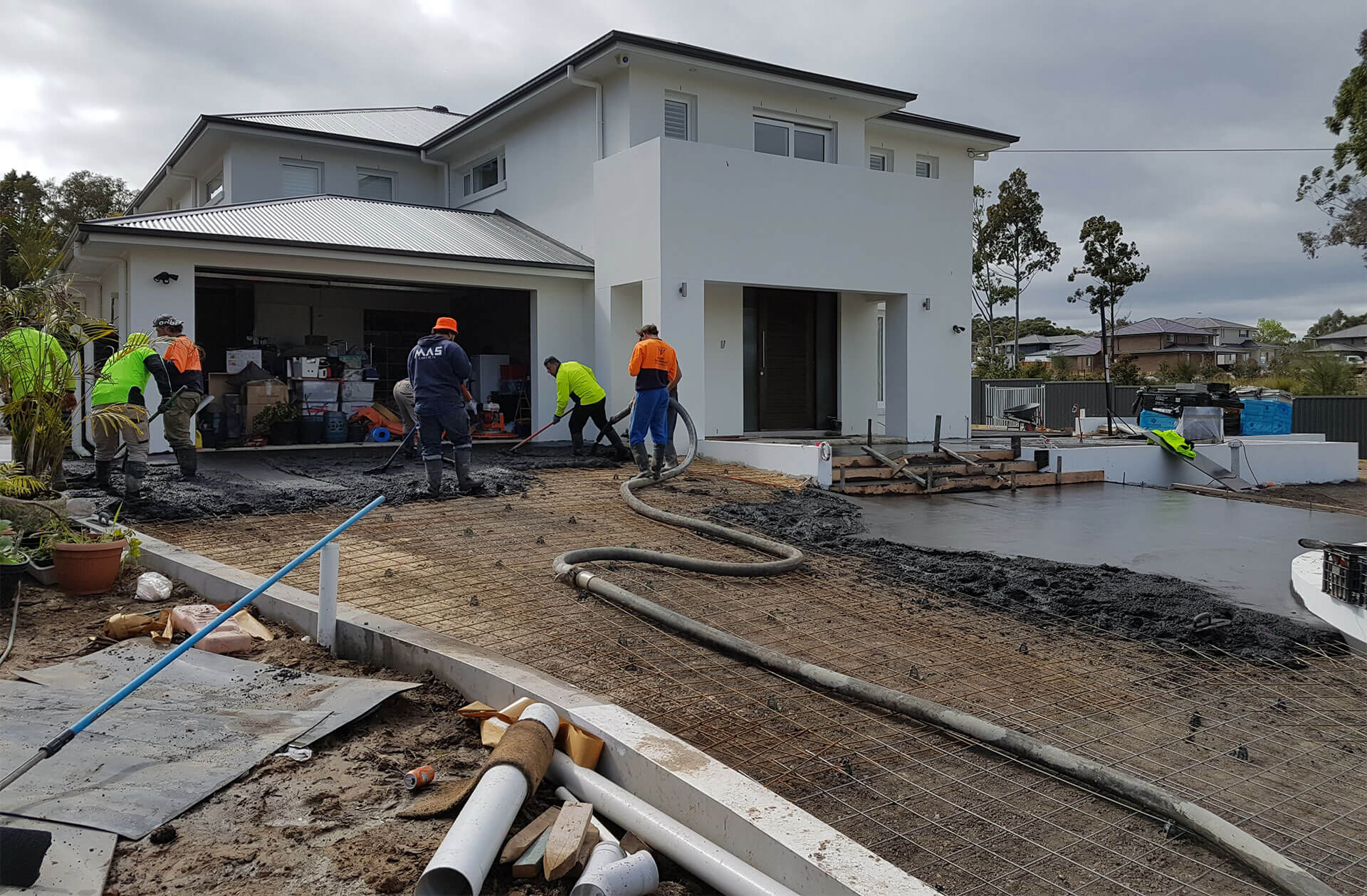
This is also where a lot of budget jobs quietly cut corners: thinner slabs than specified, skipped vapour barriers, or reo that’s sitting on the ground instead of properly chaired up in the middle of the pour. None of it’s visible once it’s covered in tiles or floorboards, which is exactly why it matters who’s doing the work rather than who’s cheapest. If a new home, granny flat, extension or shed base is on the cards, it’s worth seeing how house slabs get done properly around Sydney before signing off on anyone’s quote.
Pool Excavation: Where the Real Drama Happens
If you’ve ever watched a pool build, you’ll know the excavation stage is where all the suspense lives. Everything looks straightforward on the drawings, right up until the excavator hits a shelf of sandstone that wasn’t mentioned in anyone’s soil report, and suddenly your “two week dig” becomes a rock-breaking saga with its own soundtrack.
Pool excavation Sydney jobs are genuinely unpredictable because of exactly this — sandy coastal blocks dig like butter, while inner-west and North Shore properties can hit hard rock that needs hydraulic hammering just to get to design depth. A decent excavation crew will locate underground services first (utility strikes are not a fun Tuesday), manage spoil removal, get the base compacted to a consistent level for the steel and formwork crew, and account for drainage so the hole doesn’t turn into an accidental water feature overnight.
This stage sets up literally everything that follows — the shape of your pool, how evenly the shell forms, where your plumbing runs, even how flat your surrounding paving ends up. Get it wrong here and every trade after you is compensating for someone else’s mistake. If a pool build, retaining wall dig, or general site excavation is on your radar, it’s worth having a look at how excavation work is handled across Sydney sites — the crew have dealt with more sandstone surprises than most people would care to imagine.
Timber Formwork: The Unsung Hero of a Straight Edge
Nobody ever compliments formwork. You’ll hear people rave about a polished driveway or a clean exposed-aggregate path, but the timber formwork that shaped it into a perfectly straight line? Total anonymity. Which is a bit unfair, because without it, concrete is just a puddle with ambitions.
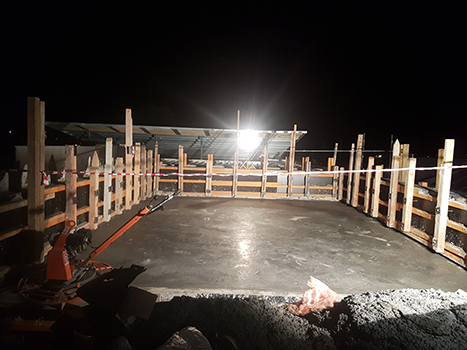
Timber formwork Sydney tradies use has to be dead straight, properly braced, and set to the exact fall and level the job needs — because once the pour goes in, whatever shape the formwork holds is the shape you’re stuck with. This matters for edge beams on slabs, stepped driveways on sloped blocks (which, let’s face it, describes half of Sydney), pool coping, retaining walls, and anywhere a curve or angle needs to be held firm against a few tonnes of wet concrete pushing against it.
Good formwork also determines how clean your finish looks — wobbly boards mean wobbly edges, and no amount of sealing fixes a driveway that curves when it shouldn’t. For anything involving steps, curves, or tricky site levels, it’s worth checking out how formwork gets handled on Sydney building sites before the pour ever happens.
Council-Approved Driveways: Yes, You Actually Need the Paperwork
Here’s a fun fact that trips up almost every homeowner at some point: the bit of driveway between your boundary and the road isn’t actually yours. It’s council land, called the road reserve, and putting concrete on it without approval is not a “she’ll be right” situation.
In NSW, any new driveway crossover, or any change to width, material or location of an existing one, needs a Section 138 approval under the Roads Act 1993, separate from any building or development approval you might already have. Councils have their own standard drawings dictating things like slab thickness, mesh grade, crossover width, gradient limits (generally capped around 1:20 to 1:8 depending on the verge), and how close you can get to street trees or drainage infrastructure. Skip this step and you’re looking at fines, rework orders, or a driveway you have to literally dig up and redo at your own cost.
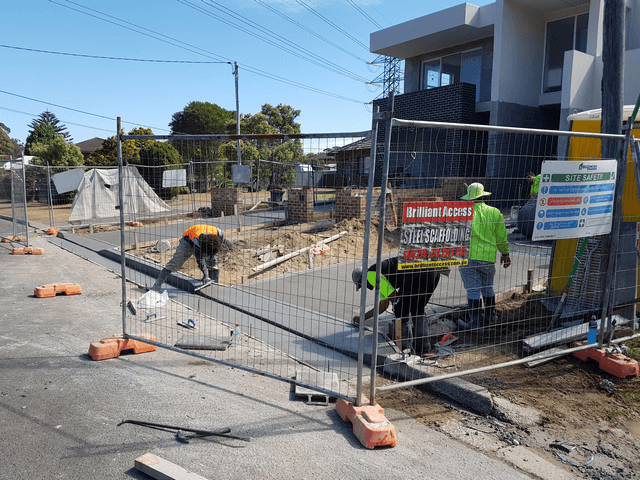
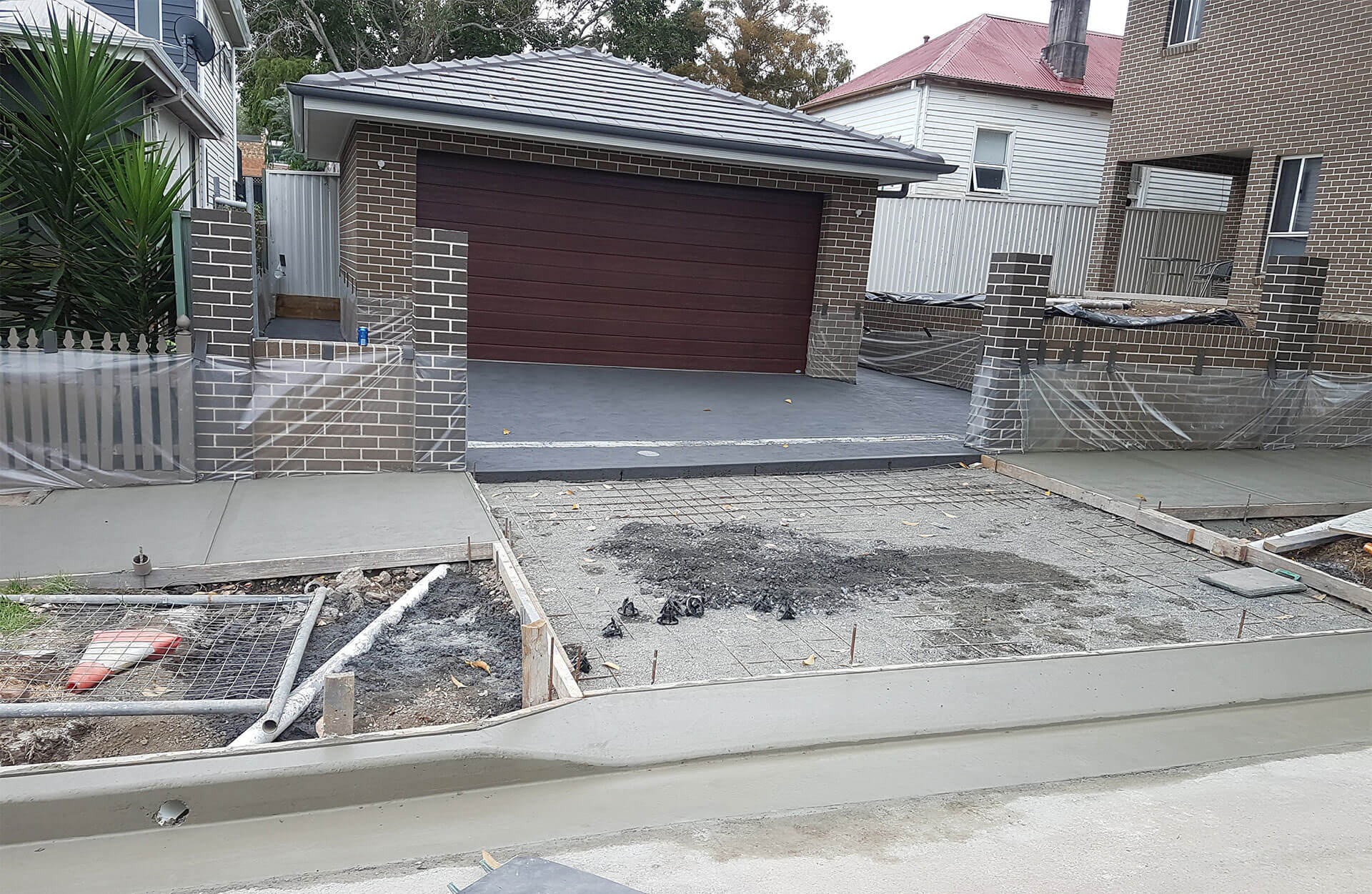
A council approved driveway Sydney job done properly means someone’s already lodged the application, knows your specific council’s quirks (because yes, every LGA does it slightly differently), and builds to the drawing they actually approved — not a rough approximation of it. It’s genuinely one of the least glamorous parts of a concreting job and one of the most important. OzCrete’s council driveway service handles the compliance headache so you’re not the one on hold with council for forty-five minutes explaining what a crossover even is.
Concrete Pathways: Small Job, Surprisingly Big Impact
Pathways get overlooked constantly, probably because they’re low, flat, and don’t shout for attention the way a driveway or a pool does. But a good concrete path does a lot of quiet work — it ties your front yard together, gives you a dry, non-slip route to the bin on a rainy Tuesday, and honestly makes a house look finished rather than half-built.
Concrete pathways Sydney-wide range from simple broom-finished strips to exposed aggregate or stencilled paths that pick up the colours of your house. The trick with paths is drainage and jointing — falls need to shed water away from the house, not towards it, and control joints need to be spaced properly so any cracking (and some hairline cracking is normal with concrete, whatever anyone tells you) happens in a straight, deliberate line rather than a random crack straight across your favourite stepping stone.
If your current path is more trip hazard than feature, it might be time for an upgrade — OzCrete’s footpath and pathway concreting service covers everything from a basic side path to a full front-yard makeover.
So Why OzCrete Concrete, Specifically?
Fair question. Sydney isn’t short on concreters — you can’t drive past a hardware store without seeing three trade utes with “Concreting Sydney” stuck on the side in Comic Sans. What tends to separate a decent job from a “why is there a puddle forming on my new driveway” job comes down to a handful of things: proper site assessment before any concrete is ordered, engineering that actually matches your soil, formwork that’s set dead straight and level, correctly placed reinforcement (not reo resting on dirt), adequate curing time instead of rushing to get the next job started, and — critically — someone who actually handles the council paperwork instead of leaving you to figure out Section 138 applications on a Sunday night.
OzCrete Concrete works across residential slabs, pool excavation, formwork, council-approved driveways, and pathways, which means the same crew that digs your site is coordinating with the same crew forming it and finishing it — no gaps for miscommunication between three different subbies who’ve never met each other. For a full rundown of what’s on offer, the OzCrete Concrete homepage is a good starting point, and there’s plenty more to dig into (pun very much intended) over on the OzCrete blog if this one’s whetted your appetite for concrete trivia.
Frequently Asked Questions
How thick should a residential concrete slab be in Sydney? Standard house slabs are typically poured at 100mm for the main slab with thickened edge beams, though this varies depending on soil classification, engineering requirements, and what’s sitting on top (a shed slab and a house slab under load-bearing walls are not the same job).
Do I really need council approval for a driveway in Sydney? Yes. The section between your property boundary and the road is council land, and any new or modified crossover needs approval under Section 138 of the Roads Act 1993, separate from any DA or CDC you may already hold.
How long does concrete need to cure before I can drive on it? Concrete typically reaches enough strength to walk on within 24–48 hours, but most driveways need at least 7 days before light vehicle use and closer to 28 days to reach full design strength.
What’s the difference between excavation and formwork? Excavation is digging and preparing the ground to the right depth and shape; formwork is the timber (or steel) framework that holds wet concrete in place until it sets. One happens before the pour, the other during it.
Why does Sydney concrete work often cost more than other cities? A mix of factors — reactive clay soils, sandstone rock in many suburbs, strict council compliance requirements, and higher labour and disposal costs all push Sydney concreting prices up compared to regional areas.
Can I get a quote before deciding on a full design? Yes — most concreters, OzCrete included, will do an initial site assessment to flag any rock, drainage, or access issues before locking in a final price, which saves everyone a nasty surprise halfway through the job.
Got a slab, driveway, pool site or path that needs sorting? Get in touch with the OzCrete team for a proper site assessment before you commit to anything — your future self, and your driveway, will thank you.