So You Reckon Pouring Concrete Is Easy? Sydney Concreters Beg to Differ
Right, let’s get one thing straight before we go any further: concrete is not “just grey stuff you pour and walk away from.” If you’ve ever watched a bloke on YouTube smash out a driveway in a weekend and thought “yeah, nah, I could do that,” you’re about to learn why half the driveways in Sydney look like they’ve survived an earthquake.
Sydney’s clay-heavy soil, its wild swings between bone-dry summers and sideways rain, and its famously particular councils make concreting here a genuinely different beast to slapping down a slab in the country. That’s where a proper crew of concreters Sydney homeowners actually trust comes in — and yes, we’re going to talk our own book a bit, because we’re OzCrete Concrete and we happen to think we’re pretty good at this. But mostly, we want to walk you through how good Sydney concrete services actually work, why each step matters, and what to expect before you sign anything with anyone.
Grab a cuppa. This one’s a bit of a read, but you’ll come out the other side knowing more than most builders’ reps.
Why Concrete Still Runs the Show in Sydney
Timber rots, steel rusts, and pavers shift the second a tree root gets ambitious. Concrete, poured properly, just sits there being stubborn for decades. That’s why it underpins nearly everything from Bondi to Blacktown — house slabs, driveways, footpaths, retaining structures, the lot.
But “poured properly” is doing a lot of heavy lifting in that sentence. A slab that looks fine on day one can crack, heave, or sink within a year if the groundwork was rushed. That’s the difference between a concreter who’s after a quick job and one who treats every pour like their name’s going on it — which, frankly, is how our team at OzCrete Concrete approaches every single site we touch.
Concrete House Slabs Sydney Homeowners Can Actually Rely On
Your slab is the one part of the house nobody sees again after handover — and the one part you absolutely cannot afford to get wrong. A dodgy slab means doors that stop closing properly, hairline cracks creeping up the walls, and tiles popping in the kitchen five years down the track.
Getting concrete house slabs Sydney conditions demand means accounting for reactive clay soils (very common across Western Sydney and the Hills District), proper moisture barriers, correctly spaced reinforcement mesh, and a pour thickness that actually matches the load the slab needs to carry — whether that’s a single-storey renovation or a double-brick two-storey build. We run through soil classification, footing design and slab type (waffle pod, raft, or stiffened raft) before a truck even gets booked, which you can read more about on how we build a solid foundation from the ground up.
The Bit Nobody Gets Excited About: Site Excavation
Nobody daydreams about excavation. Nobody’s ever said “I can’t wait to see that dirt moved.” But skip this step, or rush it, and everything you build on top is basically a house of cards on a soggy foundation.
Proper site excavation Sydney projects need starts with understanding what’s actually under your feet — sandstone shelf, clay, fill, or (Sydney’s favourite surprise) old building rubble from three renovations ago. Add in stormwater considerations, retaining wall requirements on sloped blocks, and access constraints on tight inner-city terraces, and you can see why “just dig a hole” is never quite that simple. Our crew handles bulk excavation, trenching, and site levelling before any formwork goes in — our excavation and site prep process covers the full breakdown.
Residential Formwork Sydney Builders Don’t Skip (And Neither Should You)
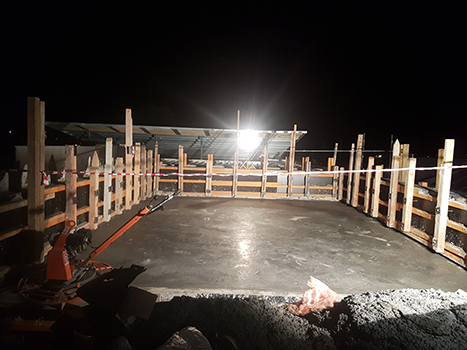
Formwork is the quiet achiever of concreting. It’s the timber or steel mould that holds wet concrete in its intended shape while it cures — and if it’s built even slightly out of square, your whole slab, footing, or driveway edge comes out wonky. Nobody wants a driveway that looks like it was designed by someone with one eye closed.
Good residential formwork Sydney projects rely on needs to handle everything from simple slab edges to complex stepped footings on sloping blocks, all while staying watertight enough that the concrete doesn’t bleed out and weaken the pour. It’s precise, slightly unglamorous work, and it’s exactly the kind of detail that separates a slab that lasts 50 years from one that starts crumbling at the edges in five. Have a look at how our team sets out and checks every mould before a pour if you want the full rundown.
Council Driveways: Where Concrete Meets Bureaucracy
Ah, council driveways. The one part of concreting where the paperwork can genuinely take longer than the pour itself.
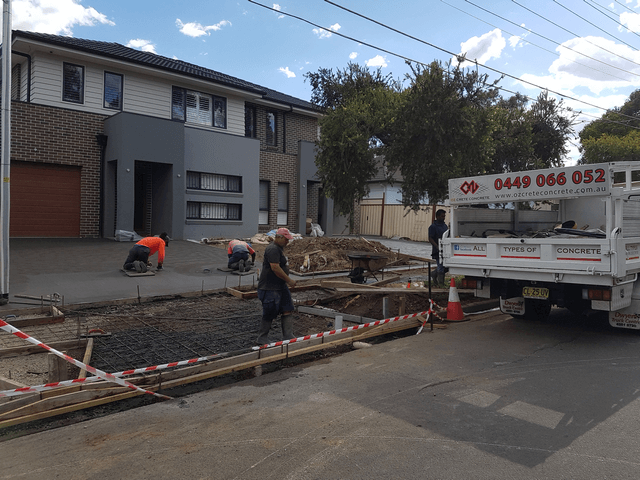
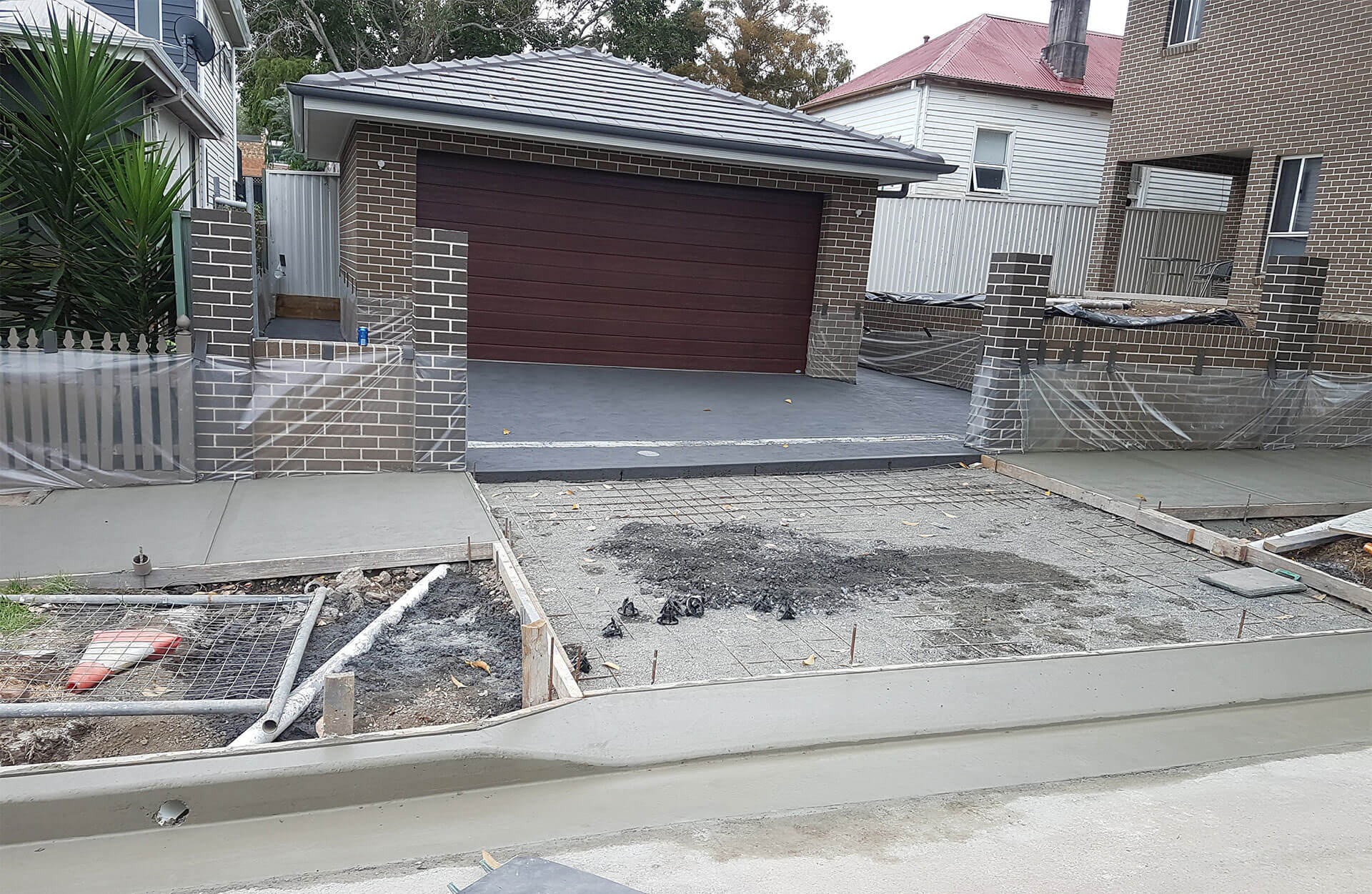
Here’s the thing most homeowners don’t realise: the section of your driveway between the kerb and your property boundary usually isn’t “yours” to build however you like. That strip crosses the road reserve, which puts it under council jurisdiction — commonly requiring what’s known as a Section 138 or vehicle crossing approval, depending on your LGA. Skip it, and you could be staring down fines, a demolition order, or an Occupation Certificate that gets held up right when you need it most.
Every council across Sydney — from the Inner West to the Northern Beaches to Parramatta — has its own quirks on crossover width, materials, gradient limits and inspection requirements. Some council insist on plain grey concrete for the crossover section even if you want exposed aggregate on your own driveway. Others cap gradients to stop your car from scraping on the way in. Sorting a council driveway Sydney approval without a concreter who’s dealt with your specific council before is a bit like trying to read IKEA instructions in the dark.
We handle the applications, the standard drawings, the inspections, and the actual pour, so you’re not the one on hold with council for forty-five minutes listening to hold music. More on how that process plays out is on our guide to getting a compliant driveway crossover approved.
Concrete Footpaths Sydney Streets (and Your Neighbours) Will Approve Of
Footpaths might seem like the least exciting concrete job going — until yours cracks, lifts, or becomes a trip hazard your neighbour mentions every time they walk past with the dog. A footpath is also one of those jobs where public liability really matters, since it’s used by people who aren’t you.
Solid concrete footpaths Sydney properties need factor in correct falls for drainage, control joints to manage cracking, and finishes that meet council’s slip-resistance expectations for public and semi-public areas. We’ve poured footpaths for everything from single residential frontages to multi-lot developments, and you can check out some of our completed footpath and pathway work.
DIY Concrete vs Hiring a Pro: What You’re Actually Paying For
Every mate with a trailer and a bag of Rapid Set thinks they can pour a slab. And sure, for a small garden edge or a stepping stone path, have at it. But the moment you’re talking driveways, footings, or anything council will inspect, the maths changes fast.
Here’s what you’re really paying a professional concreter for:
- Correct mix design — the wrong water-to-cement ratio is the single biggest reason DIY slabs crack early.
- Compliance knowledge — knowing which council wants what, and in what order, before you’ve wasted a permit fee.
- Equipment access — laser levels, vibrating screeds and proper compaction gear that most sheds don’t have lying around.
- Weather timing — Sydney’s humidity and sudden storms can wreck a pour if you don’t know how to read them.
- Warranty and accountability — if something goes wrong, there’s someone to call other than yourself at 11pm with a torch and a bad feeling.
A slab redo, once concrete’s already cured wrong, isn’t a “chip a bit off and patch it” job — it’s jackhammers, skip bins, and starting again. Getting it right the first time is almost always cheaper than getting it rights the second time.
What Actually Happens When You Book a Concreter (Step by Step)
Since we’ve covered the “why,” here the practical “how it all works” bit that most blogs skip:
- Site assessment and quote — we look at soil, access, drainage and existing structures before quoting, not after.
- Approvals and paperwork — if council sign-off is needed (driveways especially), we handle the application and standard drawings.
- Excavation and site prep — levelling, compaction, and removing anything that shouldn’t be there (old slabs, tree roots, mystery rubble).
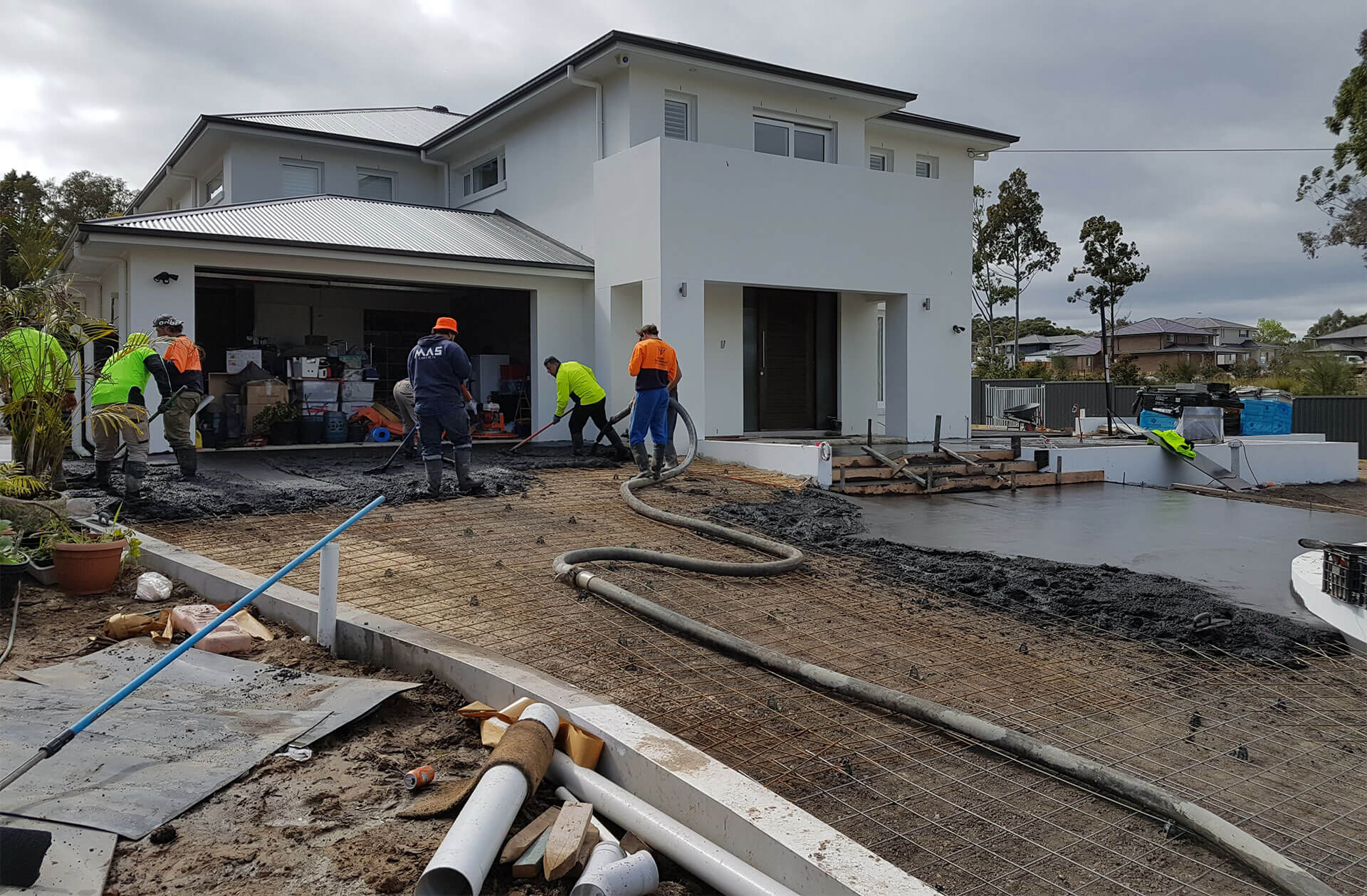
- Formwork and reinforcement — the mould goes in, mesh or reinforcement bar goes down, plumbing or conduit sleeves get placed if needed.
- The pour — timed around weather, because Sydney concrete and a sudden southerly change do not get along.
- Finishing and curing — broom finish, exposed aggregate, or a trowelled surface, followed by a proper curing period so it doesn’t crack from drying too fast.
- Final inspection — especially for council-regulated work like driveways and footpaths.
Miss a step, or rush one, and you’re the homeowner googling “why is my new driveway cracking already” eighteen months from now.
Why Homeowners Keep Choosing OzCrete Concrete
We’re not going to pretend we’re the only decent concreters in Sydney — there are plenty of good tradies out there, and plenty of average ones too. What sets our approach apart is that we treat the boring bits (soil testing, council paperwork, formwork accuracy) with the same seriousness as the finished, photo-worthy surface. A driveway that looks sharp on install day means nothing if it’s heaving by year three.
Our full range of concreting services across Sydney — from house slabs and excavation through to driveways and footpaths — is built around getting the groundwork right so the visible finish actually lasts. If you want to see more real-world project breakdowns and concreting tips, we regularly post fresh guides and tips covering materials, maintenance and common Sydney-specific issues.
Frequently Asked Questions
Do I need council approval for a new driveway in Sydney? Almost always, yes — at least for the section crossing the road reserve or nature strip. Requirements vary by council, covering width, materials and gradient, so it’s worth checking with your local council or getting your concreter to handle the application for you.
How long does concrete take to cure before I can drive on it? Foot traffic is usually fine after 24 to 48 hours, but most driveways need around 7 days before vehicles should be driven on them and closer to 28 days for full strength.
What’s the difference between a slab, footing and formwork? A slab is the flat concrete surface itself, footings are the deeper support structures (often under load-bearing walls), and formwork is the temporary mould that holds everything in shape while the concrete sets.
Why does Sydney soil matter so much for concreting? A lot of Sydney sits on reactive clay, which expands and contracts with moisture. Without the right slab design and site prep, this movement can crack concrete that wasn’t built to handle it.
Can I get exposed aggregate or coloured concrete for a council driveway? Sometimes only for the private section of your driveway — many councils require plain grey concrete for the section within the road reserve to keep a consistent streetscape.
How much does concreting cost in Sydney? It varies a lot depending on access, site prep and finish, but as a rough guide, standard slabs and driveways typically fall somewhere between $65 and $150 per square metre once materials, reinforcement and labour are factored in. Getting a proper site assessment is the only way to get an accurate number for your job.
What happens if my site has poor or unstable soil? It’s more common than you’d think across Sydney’s clay belts. Your concreter should test and classify the soil first, then design the slab or footings (thicker sections, extra reinforcement, or a different slab system entirely) to suit — rather than pouring a standard slab and hoping for the best.
Ready to Get Started?
Whether you’re after a fresh house slab, a council-compliant driveway, or just need someone to sort the site excavation before your build starts, drop our team a line and we’ll walk you through what your project actually needs — no vague quotes, no disappearing after the deposit.