Everything Sydney homeowners actually need to know before a single bag of cement gets mixed.
Let’s be honest — most people don’t think about concrete until they absolutely have to. You’re standing in your driveway, coffee in hand, watching the car sink half a centimetre into a crack that wasn’t there last summer, and suddenly you’re Googling at 11pm wondering what a “residential slab” even costs. Sound familiar?
Whether you’re building a brand new home, resurfacing a crumbling driveway, laying a footpath out the front, or getting the council off your back about that kerb crossing — concrete touches almost every corner of your property. And in Sydney, where soil conditions shift from sandstone ridges to clay-heavy flats depending on what suburb you’re in, getting the right concreters on site is the difference between a job that lasts 30 years and one that cracks before the BBQ even gets assembled.
This guide breaks down everything — what the processes actually involve, why professional concreting matters, and how to make smart choices for your home or project. No fluff. No jargon salad.
What Is Residential Concreting — And Why Does It Matter in Sydney?
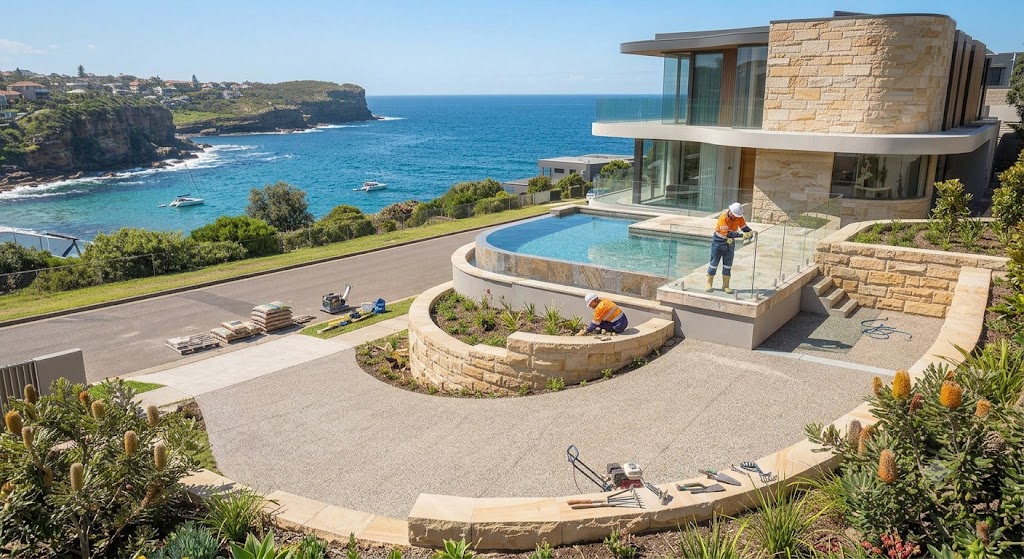
Residential concreting covers a broad sweep of work: house slabs, driveways, footpaths, formwork, pool excavation, council-compliant crossovers, and more. It’s not just about pouring grey stuff on the ground and hoping for the best (though some operators make it look that way).
Good concreting is a combination of engineering, timing, materials knowledge, and site management. Sydney’s climate throws plenty at a concrete job — hot summers that can dry out a fresh pour too fast, wet winters that delay curing, and coastal air in suburbs like Bondi or Manly that can accelerate surface deterioration if the mix isn’t right.
The full range of residential concreting services includes everything from laying your home’s foundation slab to building the footpath out front that your council expects to meet their exact specifications. When it’s done right, it adds real value to your property. When it’s done wrong? You’ll be back on Google in two years.
The Concreting Process: What Actually Happens on Your Site
A lot of homeowners get surprised by how involved a proper concreting job is. It’s not a one-arvo-and-done deal for anything significant. Here’s what the process typically looks like from start to finish:
1. Site Assessment and Planning
Before a single formwork board goes in, the site needs to be assessed. What are the soil conditions? Is there rock just below the surface? (In parts of the Hills District and the Northern Beaches, this is very common.) Are there drainage requirements? What do the council or your engineer’s plans specify for thickness and reinforcement?
Experienced Sydney concreters read a site the way a mechanic reads an engine — and what they spot before the pour can save you a fortune later.
2. Excavation and Ground Preparation
For slabs, driveways, and footpaths, the ground needs to be prepared properly. That means excavating to the required depth, compacting the sub-base, and ensuring appropriate fall for drainage. Skip this step, or rush it, and you’ll have a slab that moves, cracks, or holds water in all the wrong places.
Pool and landscape projects often require more significant earthworks — this is where professional pool excavation Sydney services come in. Cutting into Sydney ground (especially in older suburbs with buried services, tree roots, or sandstone ledges) is skilled work that can’t be improvised.
3. Formwork
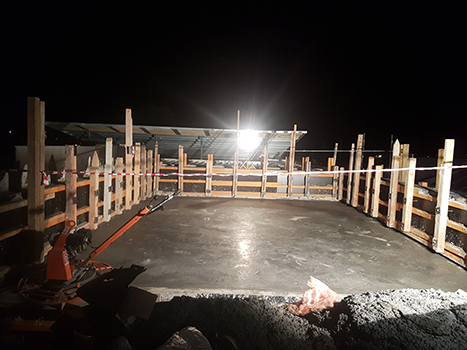
This is one of the most underrated parts of the whole job. Residential formwork in Sydney involves constructing the temporary moulds — usually timber or steel — that give concrete its shape before it sets. Think of formwork as the scaffolding of the slab world.
Get formwork wrong and you’ll end up with a slab that’s uneven, overhangs at the edges, or doesn’t meet the required dimensions. Formwork needs to be level, rigid, and properly braced. On complex residential projects — split-level homes, sloping blocks (very common in Sydney’s hilly suburbs like Balmain or Hunters Hill) — the formwork stage requires real precision.
4. Steel Reinforcement
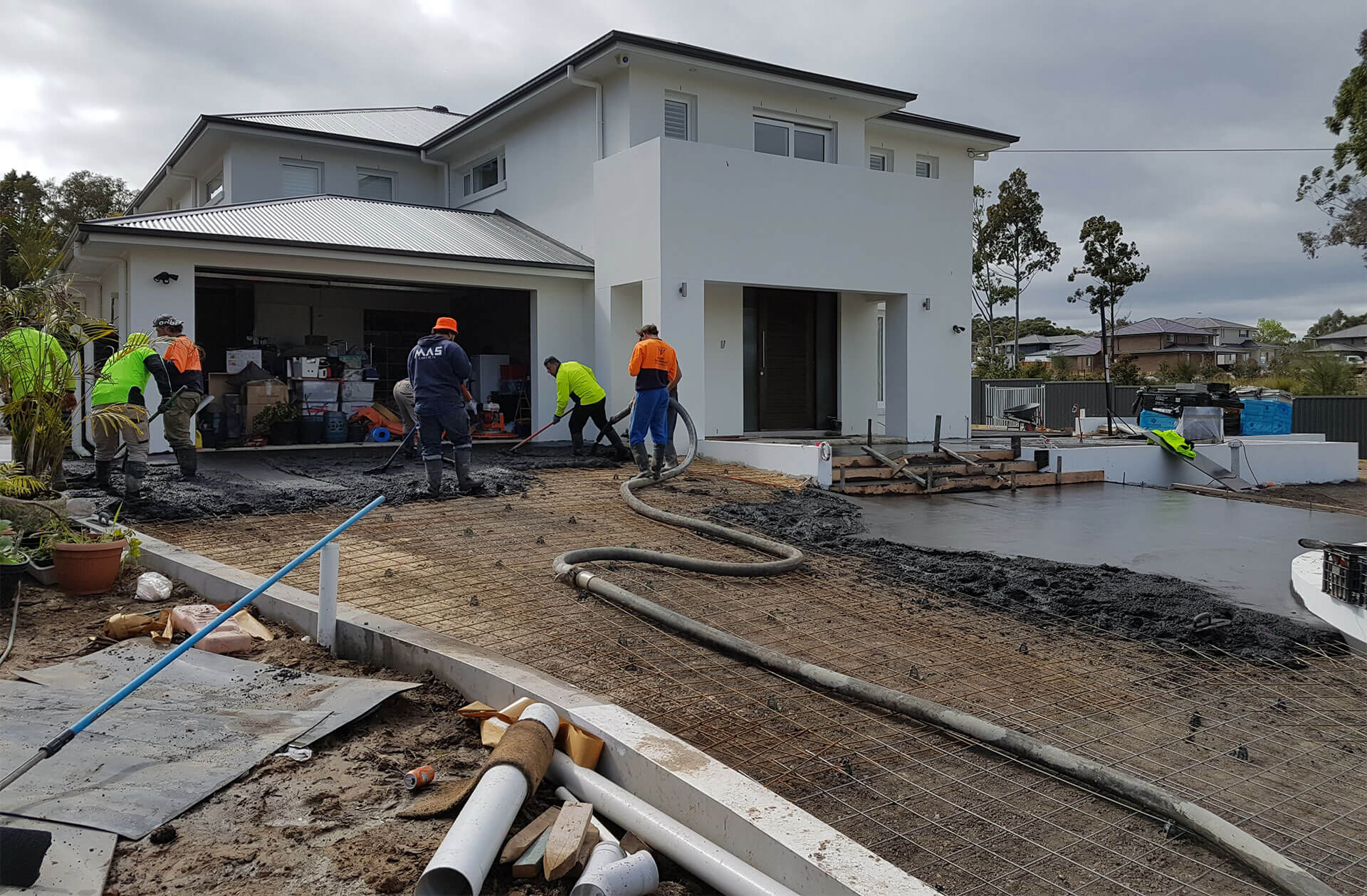
Concrete is strong in compression but weak in tension. That’s why reinforcing steel — mesh or rebar depending on the application — goes in before the pour. A driveway slab under vehicle load needs heavier steel than a garden path. A house foundation slab needs to meet engineering specifications to the letter.
5. The Pour
Here’s where it gets time-sensitive. Once the truck arrives, the clock is ticking. Concrete starts to set, and there’s a window to get it placed, spread, vibrated (to remove air pockets), and finished to the right surface texture. Too dry, and it won’t work properly. Too wet, and you’ve weakened the mix.
A professional concreting team in Sydney will coordinate the truck timing, the pour sequence, and the finishing process — whether that’s a broom finish for grip, a smooth trowel finish for aesthetics, or an exposed aggregate finish for a more decorative look.
6. Curing
Concrete doesn’t “dry” — it cures, which is a chemical reaction. In Sydney’s summer heat, fresh slabs need to be protected and kept moist to cure properly. Rushing this stage or neglecting it leads to surface cracking, dusting, and reduced strength. The 28-day cure period is when concrete reaches its design strength.
House Slabs Sydney: Getting the Foundation Right
If you’re building a new home, the slab is quite literally the foundation of everything. There are different slab types depending on your site — waffle pod slabs, raft slabs, and strip footings all have their place depending on soil classification (which in Sydney varies wildly from reactive clay to loose fill).
Residential slabs in Sydney need to be designed and poured to the engineer’s specifications. This isn’t an area where cutting corners saves money — a poorly constructed slab can cause structural movement, doorframes that stick, tiles that crack, and a very uncomfortable conversation with your insurance company.
Getting this right means working with experienced concreters who understand Sydney’s soil conditions, liaise with your builder and engineer, and take the site prep and formwork as seriously as the pour itself.
Council Driveways and Footpaths: The Bit Most People Overlook
Here’s something a lot of Sydney homeowners don’t realise until they get a council notice: the driveway crossing from your property to the road is not entirely yours to do what you like with.
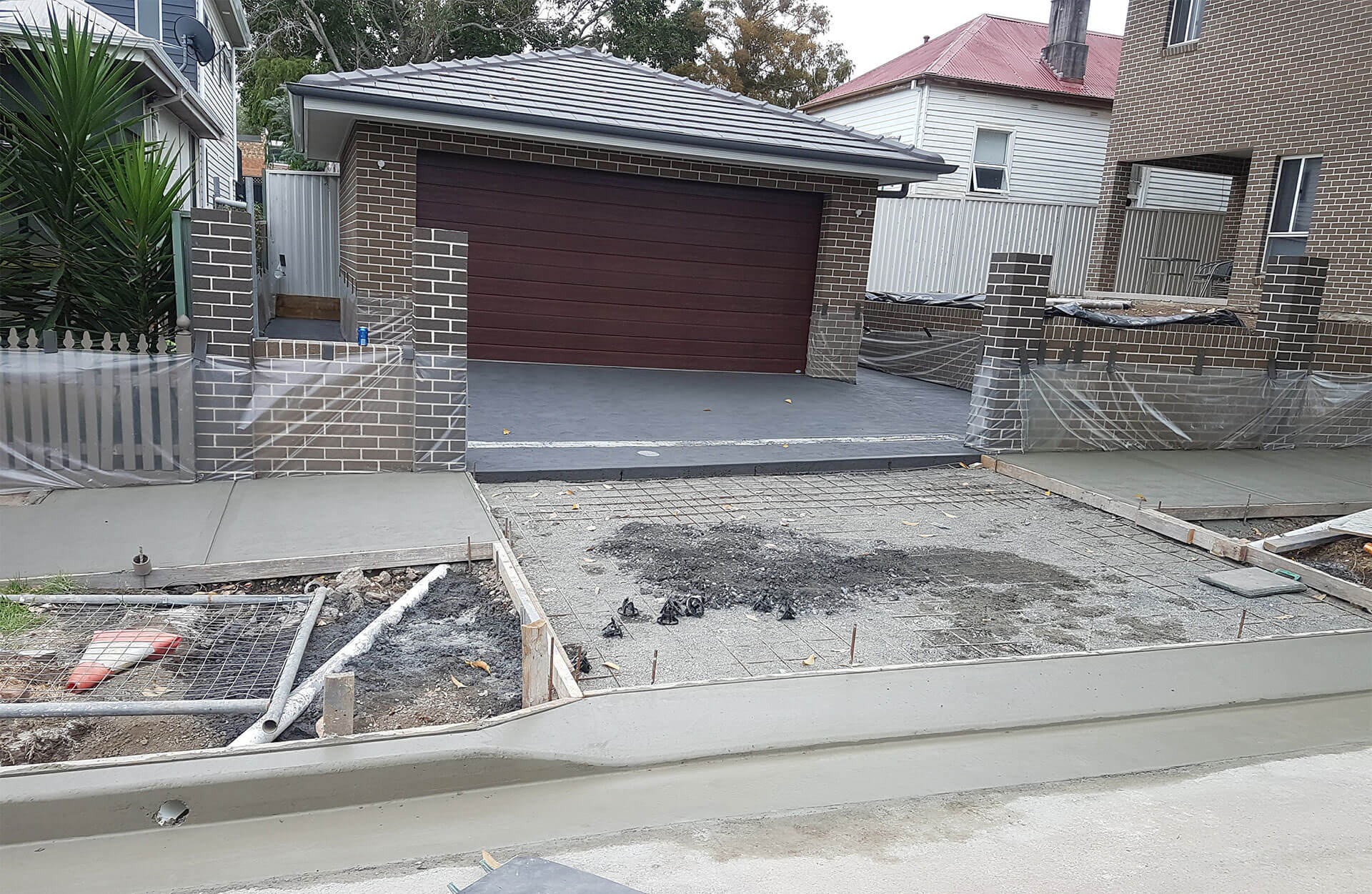
The section of driveway that crosses the nature strip or kerb — known as a vehicle crossing or crossover — is council property, and any works on it need to be council approved. Different councils across Greater Sydney have different specifications: minimum and maximum widths, required materials, drainage requirements, and sometimes even specific concrete finishes.
Council approved driveway concreting in Sydney requires concreters who know the relevant local council requirements, can prepare the correct documentation, and won’t leave you with a completed crossing that gets knocked back on inspection. Trust us — you don’t want to be digging it up and starting over because someone used the wrong width or finish.
Similarly, council footpath concreting in Sydney follows strict standards. Whether your footpath needs replacement after tree root damage, or you’re required to install a new path as part of a DA (Development Application) condition, the work needs to meet council specs for width, gradient, surface finish, and edge treatment.
Get this wrong and council won’t sign it off. Get it right and you’re done — no defect notices, no re-work orders, no awkward letters from the local council’s assets team.
Why You Should Never DIY a Significant Concrete Job
Look, this is Australia. We love a good weekend project. Bunnings trips, mates with utes, YouTube tutorials — all part of the national character. And there are plenty of small concrete jobs that a capable DIYer can handle: patching a step, filling a small crack, setting a fence post.
But a driveway? A house slab? A footpath that’s going to sit on council land? That’s a different animal entirely.
Here’s why professional concreting services in Sydney are worth every dollar:
Licensing matters. In NSW, any residential concreting work valued over $5,000 (including materials) legally requires the contractor to hold a valid licence with NSW Fair Trading. An unlicensed operator can leave you with no warranty, no legal recourse, and potentially invalid home insurance if something goes wrong.
The mix matters. Concrete isn’t one thing — there are different grades, additives, and slump ratings for different applications. The mix for a driveway is not the same as the mix for a structural slab. Getting this wrong is a silent disaster that doesn’t announce itself until years later.
The timing matters. Sydney summers are brutal. An experienced concreting team knows how to manage a pour in hot weather, when to add fibres to control shrinkage cracking, and when the conditions are simply too windy or too hot to pour without compromising the result.
The paperwork matters. Council approvals, engineering certificates, owner-builder licences — this stuff is real and it matters for your property’s resale value, for insurance, and for your peace of mind.
What to Look for in Sydney Concreting Services
When you’re comparing quotes and checking credentials, here’s the checklist that actually matters:
- Are they licensed? NSW Fair Trading licence — verify it online, don’t just take their word for it.
- Are they insured? Public liability insurance protects you if something goes wrong on site.
- Do they handle council approvals? Especially critical for driveways and footpaths.
- Can they show previous work? Photos and ideally references from similar projects in your area.
- Is their pricing transparent? Upfront, itemised quotes — no vague “around $X” estimates that balloon later.
- Do they manage the full job? From prep and formwork through to the pour and curing — not just the pour itself.
The team at Oz Crete Concrete ticks all of these boxes. With over 20 years of residential concreting experience across Sydney, they’re fully licensed and insured, and they’ll give you a straight-talking, no-obligation quote without the runaround.
The Benefits of Quality Concrete Work: More Than Just a Hard Surface
Good concreting isn’t just functional — it adds genuine value to your home. Here’s what quality Sydney concrete services actually deliver:
Property value. A well-finished concrete driveway, clean footpath, or properly laid slab improves your home’s kerb appeal and can meaningfully increase its value at sale. Real estate agents in Sydney will tell you that first impressions count, and the driveway is one of the first things a buyer sees.
Longevity. A properly poured and cured concrete slab or driveway should last 25 to 40 years with minimal maintenance. Compare that to pavers (which shift and weed), or asphalt (which softens in Australian summer heat), and the value proposition is clear.
Low maintenance. Concrete doesn’t need sealing every year or constant replacement of individual units. An occasional clean and a crack repair if needed — that’s about it for decades.
Structural integrity. For house slabs and foundations, getting it right at the start means the entire structure above performs as designed. This isn’t just comfort — it’s a structural requirement.
Council compliance. Footpaths and driveway crossings done to council spec means no defect notices, no re-work bills, and no drama at resale or during property inspections.
Oz Crete Concrete: Sydney’s Residential Concrete Specialists
Oz Crete has been doing this work across Sydney for over two decades. They’re not a franchise, not a national call centre with subcontractors — they’re a local Sydney concreting team that handles everything from residential house slabs and precision formworking to council-compliant driveways and footpaths.
Their services cover:
- General residential concreting — slabs, paths, steps, entertaining areas
- House slab installations — in coordination with your builder and engineer
- Excavation works — including pool excavation Sydney projects
- Residential formwork — precise, properly braced, and built to the engineered specs
- Footpath concreting — meeting all Sydney council requirements
- Council driveway crossings — approved, compliant, and done right the first time
What sets them apart? Simple: honest pricing, no hidden fees, 20+ years of Sydney-specific experience, and a job management approach that keeps your project on time and on budget. They work with homeowners, builders, and architects — adapting to whatever your project needs rather than offering a one-size-fits-all package.
Ready to Get Started?
Whether you’re at the planning stage, mid-build, or dealing with concrete that should have been replaced three years ago — the smartest move you can make right now is getting a proper assessment and quote.
Contact Oz Crete Concrete for a free, no-obligation consultation. Call 0449 066 052 — they’ll come out, look at the site, and give you a straight answer on what needs to be done, how long it’ll take, and what it’ll cost. No jargon, no inflated “Sydney tax” on the quote, just solid advice from people who’ve been doing this across Sydney for over 20 years.
Because honestly? Life’s too short to watch your driveway slowly turn into a gravel car park. Let the professionals handle the concrete — and go enjoy your weekend.