A no-BS guide to concreting in Sydney — what it actually involves, why cutting corners costs a fortune, and how to pick a contractor who won’t disappear after the pour.
If you’ve ever driven past a cracked driveway or watched a newly laid pathway start lifting within two years, you already know the truth that most people learn the hard way: concrete is only as good as the crew that lays it.
Sydney’s building scene is booming. New homes are going up across the Greater Sydney basin faster than a tradie can finish his flat white. But with that boom comes the flood of inexperienced operators who’ll give you a rock-bottom quote, disappear after day one, and leave you with a slab that looks like the surface of the moon.
This guide is for homeowners, developers, and anyone who wants to understand what proper concreting actually looks like — from the excavation stage right through to the finished footpath. We’ll walk you through every step, bust a few myths, and tell you exactly what to look for in a reliable Sydney concrete contractor.
Let’s get into it.
Why Concrete Is Still King in Sydney Residential Construction
You might be wondering: with all the building innovations out there, why is concrete still the go-to material for foundations, driveways, pathways, and slabs across Sydney?
Simple. It works.
Concrete is strong, durable, fire-resistant, low-maintenance, and — when poured correctly — it can outlast the house sitting on top of it. In Sydney’s variable climate, where summer heat cracks materials and winter moisture softens the ground, a properly engineered concrete structure is about as close to bulletproof as residential building gets.
Compare it to alternative materials like pavers or timber — both of which require regular maintenance, are more vulnerable to shifting soil, and tend to struggle with Sydney’s clay-heavy subsoil. Concrete, done right, stays put.
The key phrase there is done right. And that brings us to the meat of this guide.
Step 1: Excavation — The Part Nobody Photographs for Instagram
Before a single drop of concrete is poured, the ground needs to be prepared. This is the stage that separates professional excavation contractors in Sydney from the cowboys who skip it.
What does excavation actually involve?
- Clearing the site of vegetation, tree roots, rocks, and debris
- Cutting and filling the land to achieve the correct level
- Establishing drainage paths and fall directions so water doesn’t pool under your slab
- Compacting the subgrade to prevent future subsidence
- Laying a gravel or roadbase layer where required
In Sydney, soil types vary dramatically across suburbs. You’ve got expansive clay in the west, sandy loam in coastal areas, and shale in the inner suburbs. Each soil type requires a different approach — which is why a local contractor with Sydney-specific experience is non-negotiable.
A contractor who skips proper site prep is handing you a ticking time bomb. The slab might look perfect on day one, but once the soil below shifts (and in Sydney clay country, it will shift), you’re looking at cracking, lifting, and subsidence.
At Oz Crete Concrete, every job starts with a thorough site assessment. No shortcuts, no skipped steps.
Step 2: Formwork — Building the Mould That Shapes Everything
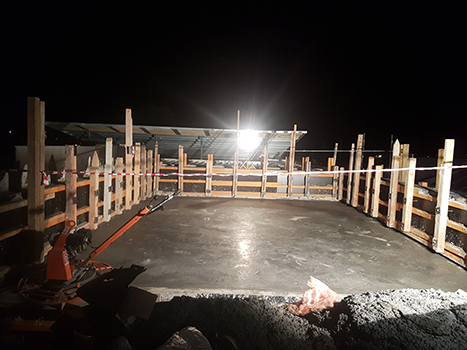
Once the ground is prepped and compacted, formwork goes in. Think of it as the temporary skeleton that holds liquid concrete in shape while it cures.
Good formwork is an art form. Bad formwork means blowouts, uneven edges, structural weaknesses, and a finish that’ll make your neighbours wince.
Here’s what proper formwork in Sydney looks like:
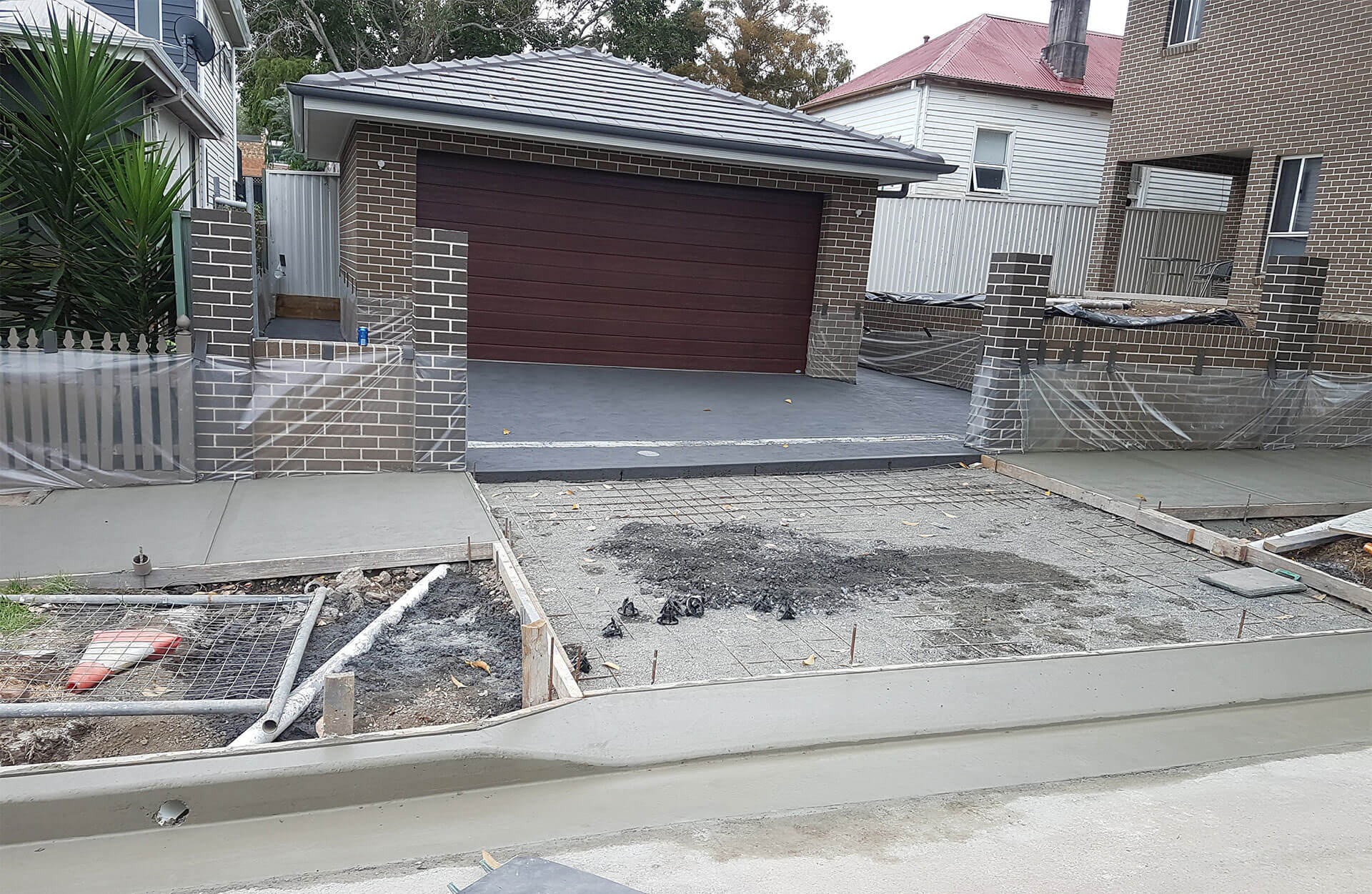
- Timber or steel boards are set to the exact dimensions of the pour
- Boards are braced and staked so they won’t flex or shift under the weight of wet concrete
- Levels are checked multiple times — because if your formwork is off, your slab is off. Forever.
- Expansion joints are planned and positioned to allow for natural concrete movement
- Drainage falls are incorporated so water runs away from the structure
The formwork stage is where experienced tradespeople earn their keep. It requires an understanding of concrete behaviour, local council requirements, and structural engineering principles. It’s not glamorous work, but it’s the difference between a slab you’re proud of and one you have to jackhammer in five years.
Step 3: Reinforcement — What’s Actually Inside Your Slab
Here’s something a lot of homeowners don’t know: the strength of a concrete slab isn’t just about the concrete. It’s about what’s inside it.
Steel reinforcement — either mesh or rebar — is embedded within the slab before the pour. It acts like the skeleton of the structure, distributing loads and resisting the tensile stresses that would otherwise cause cracking.
For residential concreting in Sydney, standard reinforcement typically includes:
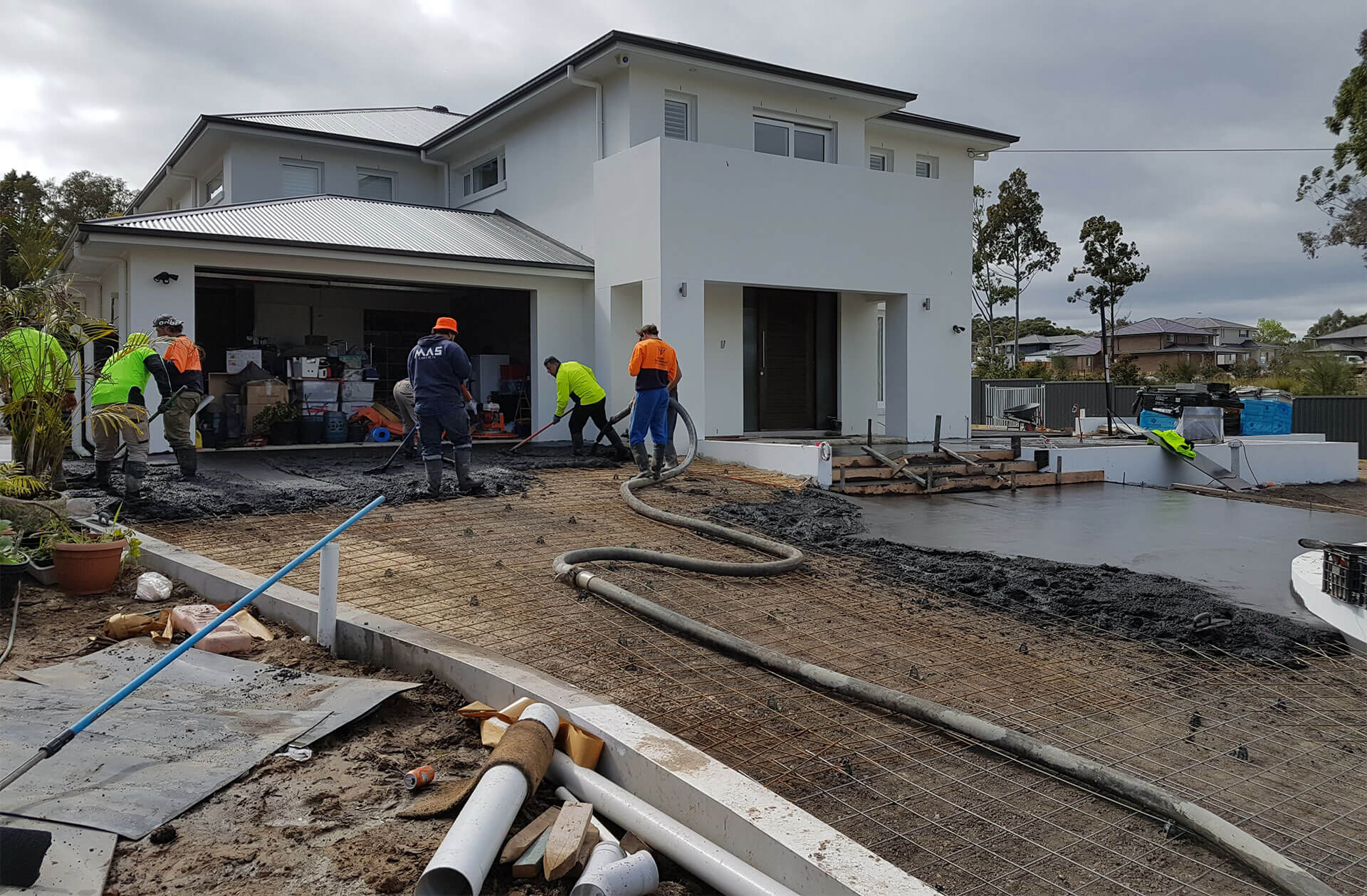
- SL72 or SL82 mesh for standard house slabs and driveways
- Trench mesh or N-bar rebar for footings and load-bearing sections
- Plastic chairs (bar chairs) to hold the mesh at the correct height within the slab — crucial, because mesh sitting on the ground provides zero reinforcement value
This is another area where the cheap quote often costs you more. Skipping or undersizing reinforcement is a shortcut that’s invisible until it isn’t — usually about three years down the track when your driveway starts fracturing along invisible fault lines.
Step 4: The Pour — Where It All Comes Together
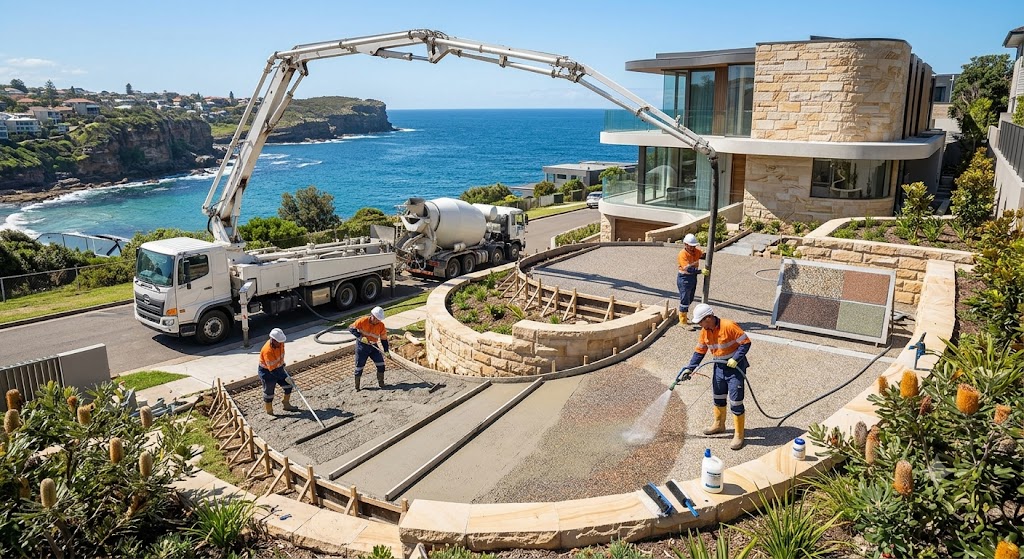
The concrete pour is the moment that looks the most impressive on a job site, and it is impressive — but only when the preparation has been done properly.
In Sydney, most residential concrete is delivered by a ready-mix truck and placed via a concrete pump or wheelbarrow, depending on site access. The mix design matters: the strength rating (measured in MPa), the slump (how workable the mix is), and the aggregate size are all specified by the contractor based on the job requirements.
A standard residential concrete pour on a Sydney job site includes:
- Ordering the correct mix — typically 25MPa for slabs, 32MPa for driveways with heavy vehicle use
- Placing the concrete in lifts and vibrating it to eliminate air pockets (honeycombing)
- Screeding the surface to the correct level and fall
- Floating and finishing — bull float, power float, or hand float depending on the finish required
- Applying the specified surface texture: broom finish, exposed aggregate, steel trowel, or pattern imprint
Timing is everything during a pour. Concrete begins to hydrate (set) from the moment water contacts the cement. In Sydney’s summer heat, this window is shorter than you’d think. An experienced concreting crew works efficiently and adapts to conditions.
Curious about what Oz Crete’s full range of concreting services covers? From residential slabs to commercial pours, the scope is broader than most people realise.
Step 5: Curing — The Part Everyone Ignores
Here’s an industry secret: most concrete failures aren’t caused by a bad pour. They’re caused by bad curing.
Curing is the process of keeping freshly poured concrete moist and at a stable temperature for the first 7–28 days after placement. During this time, the chemical hydration process is completing, and the concrete is developing its final strength.
If concrete dries out too quickly (common in Sydney’s summer heat or on windy days), the surface shrinks faster than the interior, causing plastic shrinkage cracks. These aren’t just cosmetic — they’re entry points for moisture, which leads to reinforcement corrosion over time.
Professional Sydney concrete contractors will:
- Apply a curing compound immediately after finishing
- Cover slabs with wet hessian or plastic sheeting in hot/dry conditions
- Advise clients not to apply loads (foot traffic, vehicles) until adequate strength is achieved
Don’t let anyone tell you a freshly poured slab is ready to drive on in 24 hours. It’s not.
New House Slabs in Sydney: What You Need to Know Before You Build
If you’re building a new home anywhere in Greater Sydney, your house slab is the single most important concrete element in the project. Get it wrong and every other trade — plumbing, electrical, framing — is compromised.
The main types of house slabs used in Sydney are:
Waffle Pod Slabs — The most common type for residential construction in Sydney. A waffle pod slab uses polystyrene pods to create a grid of internal ribs, reducing the amount of concrete needed while maintaining strength. They’re engineered to AS 2870 (the Australian Standard for residential slabs) and are ideal for the reactive clay soils common across western and south-western Sydney.
Raft Slabs — A solid concrete slab with thickened edge beams. Used on sites with less reactive soils or where additional structural load is anticipated.
Strip Footings with Slab — Common on sloping blocks or sites with significant level changes. Strip footings are poured first, then the slab is poured on top.
The type of slab your new home needs is determined by a geotechnical site investigation (soil report) and the structural engineer’s specifications. A good concreting contractor coordinates with these professionals to ensure the slab design is built exactly to spec.
Oz Crete specialises in new house slabs across Sydney, working closely with builders, architects, and engineers to deliver foundations that last.
Council Driveways and Vehicle Crossings: The Bit Most People Don’t Know Is Regulated
Here’s one that catches a lot of Sydney homeowners off guard: you cannot simply pour a new driveway crossing over a council footpath without approval. Full stop.
A vehicle crossing (also called a driveway crossover or layback) is the section of concrete between your property boundary and the road. Because it crosses council-owned land — the nature strip and footpath — any works in this area require a permit from your local council.
Different Sydney councils have different requirements. Some manage the work themselves. Others require a licensed contractor to do it and submit engineering drawings and compliance certificates.
The typical process for getting a vehicle crossing approved in Sydney:
- Submit a development application or vehicle crossing permit to your local council
- Council assesses the application against their crossover specifications (width, levels, drainage, sight lines)
- Approval is issued with conditions
- A licensed contractor completes the works to council standards
- Council inspects and certifies the crossing
Mess this up and council can require you to remove and redo the work at your expense. That’s a costly lesson.
The good news? Oz Crete handles the full council driveway concreting process — including paperwork, liaison with council, and construction — so you don’t have to become an expert in local government bureaucracy.
Concrete Pathways in Sydney: More Than Just a Strip of Grey
A concrete pathway might seem like a simple job, but the difference between a well-constructed path and a poorly built one becomes obvious within a few years.
What makes a good concrete pathway?
- Correct depth (typically 80–100mm for pedestrian paths, more for areas with vehicle overhang)
- Properly compacted base material to prevent settlement
- Correct drainage falls (min 1% cross fall away from structures)
- Control joints at regular intervals to manage cracking
- A slip-resistant finish — particularly important in Sydney’s humid summers when algae growth can make smooth concrete treacherous
- Edging that provides a clean termination against garden beds, grass, or boundary walls
Concrete pathways also need to comply with AS 1428.1 (Design for Access and Mobility) if they serve as a principal pedestrian route — relevant for properties with disability access requirements or for anyone planning to sell in the future.
Whether you need a simple garden path or a complete footpath concreting solution connecting multiple areas of your property, the process deserves the same attention as any other concrete element.
Why You Should Never Hire a Concreter Based on Price Alone
Right. This one needs to be said bluntly.
Sydney is full of operators who’ll quote you 30–40% less than the market rate. And yeah, it’s tempting. Concrete looks the same going in, right?
Wrong.
The price difference almost always comes from one or more of these shortcuts:
- Thinner slabs — Reducing from 100mm to 75mm seems minor but significantly reduces load capacity and lifespan
- No reinforcement — Or using undersized mesh that provides minimal structural benefit
- Skip the base prep — Pour straight onto uncompacted fill and wait for the subsidence
- Wrong mix design — Using a cheaper, lower-strength mix that won’t meet design requirements
- No curing — Leaving without any curing regime in place
- Unlicensed work — In NSW, residential concrete work over $5,000 requires a contractor licence issued by NSW Fair Trading. An unlicensed contractor voids your home warranty and potentially your insurance.
When you get two quotes and one is dramatically lower, don’t just ask “why is this one cheaper?” Ask “what is this one NOT including?”
A reputable concrete contractor in Sydney will provide a written quote that specifies: slab depth, mix design (MPa), reinforcement type, finish, and inclusions. If the quote doesn’t include these details, ask for them. If the contractor won’t provide them, walk away.
The Oz Crete Difference: 20 Years, Every Suburb, No Drama
Oz Crete Concrete has been delivering residential concreting across Sydney for over two decades. That’s not a marketing line — that’s 20 years of poured slabs that haven’t cracked, driveways that still look sharp, and footpaths that don’t trip anyone up.
The team handles the full scope of residential concrete work:
- Concreting Sydney-wide — driveways, patios, shed slabs, pool surrounds, retaining wall footings
- New house slabs — waffle pod, raft slab, strip footings — coordinated with your builder
- Formwork contracting — precision formwork for slabs, walls, steps, and custom structures
- Footpath concreting — residential pathways built to last
- Council driveway crossings — including permit applications and council liaison
- Excavation — cut and fill earthworks, site preparation, soil removal
Every job — big or small — is quoted transparently, completed to industry standards, and backed by real experience. You’re not getting a tradie who started laying concrete last summer. You’re getting a team that’s been doing this since before half of Sydney’s new suburbs existed.
Common Questions Sydney Homeowners Ask About Concreting
How long does a concrete driveway last in Sydney? A properly constructed concrete driveway should last 30+ years with minimal maintenance. Sealing every 2–3 years helps protect the surface from oil stains and UV exposure.
Do I need council approval for a new driveway? If your driveway crosses a footpath or nature strip (which most do), yes — you need a vehicle crossing permit from your local council. Oz Crete manages this process for you.
How long before I can drive on my new slab? Generally 7 days for light vehicles, 28 days before the concrete reaches full design strength. Your contractor should advise you based on the specific mix used.
What’s the difference between a house slab and a shed slab? Primarily engineering. A house slab is designed to AS 2870 based on soil classification and structural loads. A shed slab is typically a simpler domestic slab but should still be reinforced and properly prepared.
Can concreting be done in winter in Sydney? Yes — Sydney’s winters are mild enough that concrete placement is fine year-round. Cold weather actually slows the hydration process, which can be beneficial. Just avoid pouring if temperatures are forecast to drop below 5°C within the curing period.
Ready to Get Your Concrete Done Properly?
If you’re planning a new build, renovation, driveway replacement, or any concrete works across Greater Sydney, don’t leave it to chance — and don’t leave it to someone who’ll ghost you after the pour.
Get in touch with the Oz Crete team for a free, no-obligation quote. We’ll assess your site, give you a straight answer on what’s involved, and price the job honestly.
Because good concrete isn’t just about what you see on the surface. It’s about everything that went into it before you ever looked at it.
And that’s exactly what we do.