Right, let’s talk about the bit nobody puts in the brochure. Everyone loves looking at glossy photos of a fresh exposed aggregate driveway or a dead-flat house slab, but almost nobody talks about what happens in the days before the truck rolls up. And that’s a shame, because prep is where most concreting jobs are actually won or lost. A concreter can be the best in Sydney, but if your gate’s too narrow for the truck or there’s a Telstra cable sitting where the excavator wants to dig, you’re going to have a very awkward Tuesday.
At OzCrete Concrete, we’ve turned up to enough Sydney properties to know that a bit of homeowner prep can shave days off a project, save you money, and stop your neighbours from getting the shakes when a concrete pump truck tries to squeeze down a laneway built for horse carts. So consider this your no-nonsense, slightly cheeky guide to getting your property genuinely ready for a concreting job, whether it’s a new driveway, a garage slab, a footpath, or a full site regrade.
Why Prep Actually Matters More Than the Pour Itself
Here’s the uncomfortable truth: concrete itself is forgiving. It’s a well-mixed slurry that does exactly what physics tells it to do. The ground underneath it, though, is not forgiving at all. Sydney sits on a patchwork of sandstone, shale, and some genuinely stroppy reactive clay soils, particularly out west and in pockets of the inner suburbs. Skip the prep and you’re not just risking a messy pour, you’re risking cracks, uneven settling, and a slab that looks sad within eighteen months.
Whatever the job, whether it’s part of a broader renovation or a standalone driveway upgrade, it pays to understand the full scope of residential concreting in Sydney before a single peg goes in the ground. Have a browse through our full range of concreting services if you’re still working out exactly what your project needs, because “just pour some concrete” is rarely the whole story.
Step One: Nail down What You’re Actually Building
Sounds obvious, but you’d be amazed how many jobs start with a vague idea and end with scope creep that would make a project manager cry. Are you after a driveway, a slab for a granny flat, a patio extension, or a full backyard makeover? The answer changes everything downstream, from the depth of excavation to the steel reinforcement to the finish.
If a new slab is on the cards, whether it’s under a shed, an alfresco, or the footings for an extension, it’s worth getting familiar with how house slabs in Sydney are actually engineered here. Local soil classification (more on that shortly) dictates whether you need a standard slab or something beefed up, and that decision needs to be locked in before excavation starts, not halfway through.
Step Two: Find Out What’s Lurking Underground
This is the step people skip, and it’s the one that causes the most expensive headaches. Before anyone touches a shovel or a bobcat, you need to know what’s running under your property. Water mains, sewer lines, stormwater, gas, and telecommunications cables don’t announce themselves, and striking one mid-dig is a fast way to turn a weekend job into a multi-week saga involving three different utility companies and a very unimpressed neighbour.
The free Dial before You Dig service is the starting point here, and a proper concreter will run this check as standard before any site excavation in Sydney begins. Our team handles this as part of every job, because guessing where the pipes are not a strategy, it’s a gamble. If your project involves any significant digging or regrading, it’s worth reading up on how we approach excavation in Sydney, since the groundwork stage is genuinely the foundation (pun very much intended) for everything that follows.
Step Three: Sort out Access before It Becomes a Problem
A standard loaded concrete truck is a genuinely enormous vehicle. We’re talking around 32 tonnes fully loaded, roughly 2.5 metres wide, and needing a decent turning circle to manoeuvre. If your driveway, side gate, or laneway can’t comfortably fit that, or if there’s a pergola beam, low tree branch, or overhead wire in the way, the driver may have to stop short, and you could end up wearing a short-load or wait-time fee.
Before your job is booked in, walk the access route yourself. Measure the narrowest point, whether that’s a gate, a fence post, or a car parked half on the nature strip. Check overhead clearance too, since the chute on a concrete truck extends out and up, and a low-hanging jacaranda branch will absolutely win that fight. If access genuinely won’t work for a standard truck, don’t panic, this is exactly the kind of logistical puzzle we sort out during the quoting stage, including pump trucks or barrow runs where needed.
Step Four: Chase Up Council Approvals Early
Sydney councils are, let’s be honest, not known for moving at lightning speed. If your project touches the footpath, nature strip, kerb, or involves a new or widened driveway crossover, you’ll almost certainly need council sign-off before work begins. This typically falls under what’s known as a Section 138 approval under the Roads Act, and it exists to make sure new driveways and footpath works meet engineering standards and don’t mess with drainage or street trees.
The paperwork can take a few weeks to clear, so this is not a “sort it out the day before” task. If you’re planning a new crossover or an upgrade, get familiar with how council driveway concreting in Sydney works, because a concreter who’s dealt with your local council before, whether that’s the Inner West, Northern Beaches, or Parramatta, will know exactly what documentation gets a tick faster. Similarly, if your job involves public footpath sections, councils have specific finish and reinforcement requirements, so it’s worth reading up on how proper footpath concreting in Sydney is handled before you assume it’s the same as your private driveway.
Step Five: Clear the Site Like You Mean It
Old garden beds, a half-dead Hills Hoist, a stack of besser blocks left by the last owner, that section of cracked path nobody’s used since 2014, these all need to go before excavation can start properly. Trees are their own conversation entirely. Sydney councils generally require permits before removing established trees, even on private land, so if a tree is sitting where your new slab or driveway needs to go, sort that approval out well in advance rather than discovering the problem on pour week.
Clearing also means thinking about what’s staying. If there’s a garden bed or retaining wall nearby that needs protecting from machinery, flag it early. A decent crew will fence off or plank over anything delicate, but they can only do that if they know it’s there.
Step Six: Get to Know Your Soil (Yes, Really)
This is the unglamorous bit that genuinely separates a slab that lasts thirty years from one that starts cracking before the barbecue’s even been christened. Sydney’s soil varies wildly by suburb, from sandstone shelf in the north to seriously reactive clay in parts of the west and south-west. Reactive clay expands when it’s wet and shrinks when it dries out, and in some areas that movement can be significant enough to crack an under-engineered slab within a couple of years.
A proper site assessment classifies your soil (often referred to as Class M, H1, or H2 for reactive sites) and that classification determines slab thickness, reinforcement, and whether extra sub-base preparation is needed. This isn’t optional box-ticking, it’s the difference between a slab that sits flat for decades and one that develops hairline cracks that slowly turn into actual problems. It’s a core part of how we scope every job under our broader concreting Sydney service, because guessing at soil conditions is how homeowners end up with an expensive lesson.
Step Seven: Understand the Formwork and Drainage Side of Things
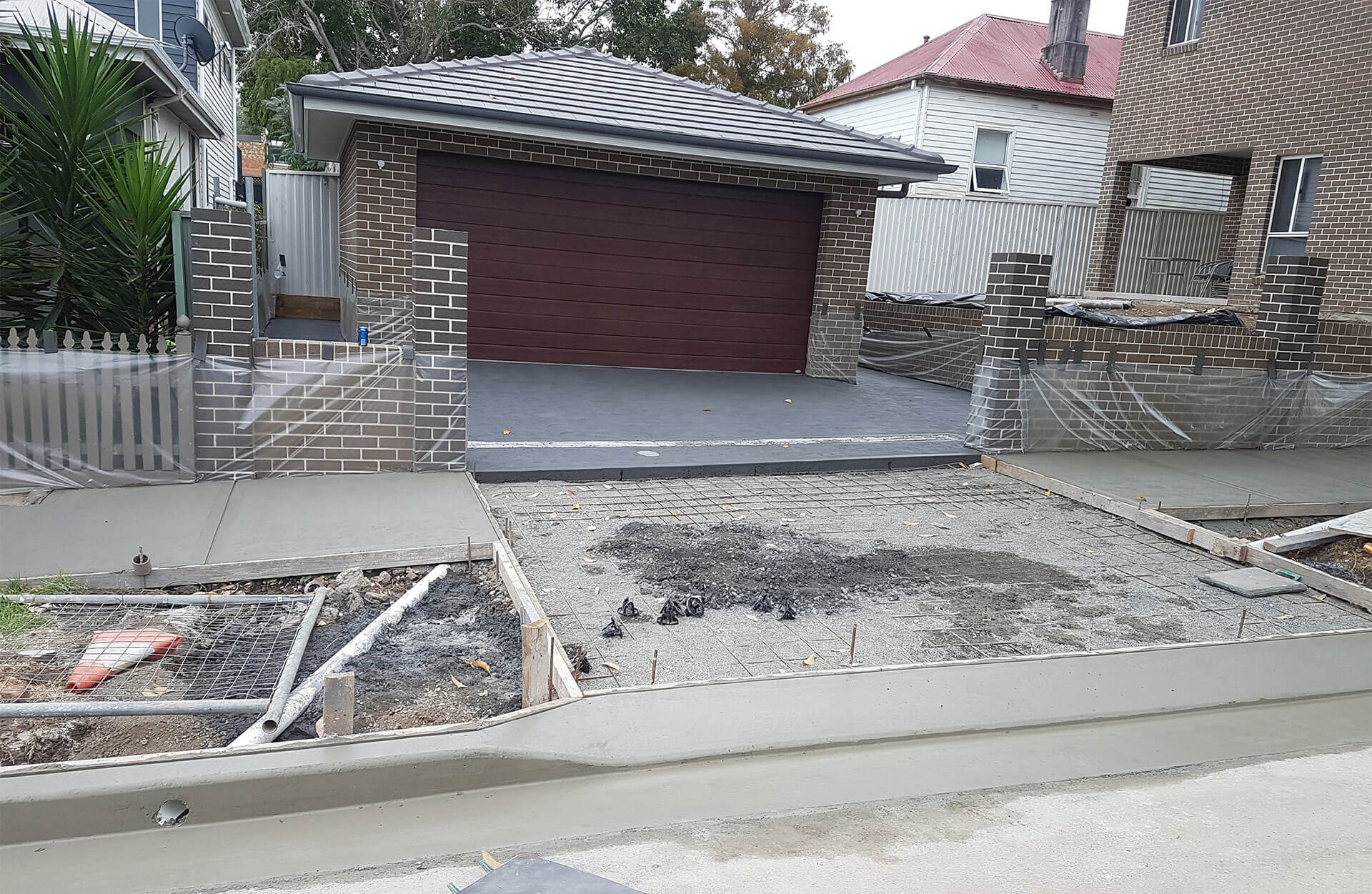
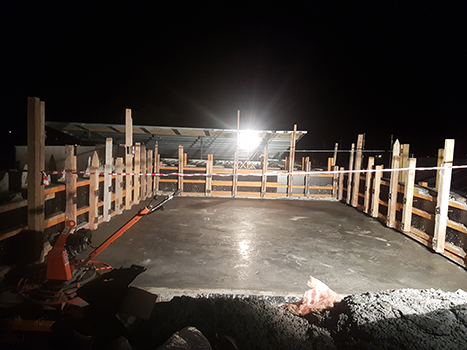
Formwork is the timber or steel framework that holds your wet concrete in its intended shape until it cures, and it’s a lot more precise than “knock some boards together.” Levels need to be spot-on, falls need to be calculated so water actually drains away from your house rather than pooling against the foundations, and control joints need to be planned in before the pour, not chiselled in afterwards as an afterthought.
Poor drainage planning is one of the sneakiest causes of long-term slab damage, since water sitting against or under concrete will eventually find a way to undermine it. If you want the technical rundown on how this stage actually works, our page on formwork in Sydney breaks down why this “invisible” step matters so much to the finished result.
Step Eight: Think About Weather and Timing
Sydney’s climate throws a fair bit at a concrete pour. Summer heat accelerates curing, which sounds handy until you realise it also increases the risk of surface cracking if the crew isn’t managing it properly. Sudden downpours, which Sydney is not exactly short of, can wreck a freshly poured surface if timing isn’t watched closely. A good concreter keeps an eye on the forecast and won’t book a pour into a weather window that’s asking for trouble. If your project has some flexibility, avoiding the peak of summer or the wettest weeks of autumn generally makes for a smoother, less stressful process.
Step Nine: Pick a Concreter Who Actually Does All of This
You could, in theory, try to manage soil testing, council approvals, service locating, and access logistics yourself. You could also try to cut your own hair. Both are technically possible and both usually end in regret. A concreter worth hiring will walk you through every one of these steps as a matter of course, not charge it as a surprise add-on halfway through.
Have a look through our homepage for a sense of how we approach residential jobs across Sydney, and if you’re at the research stage and want more detail on how a typical project runs from first site visit to final finish, our blog has plenty of deeper dives worth a read.
What Pour Day Actually Looks Like
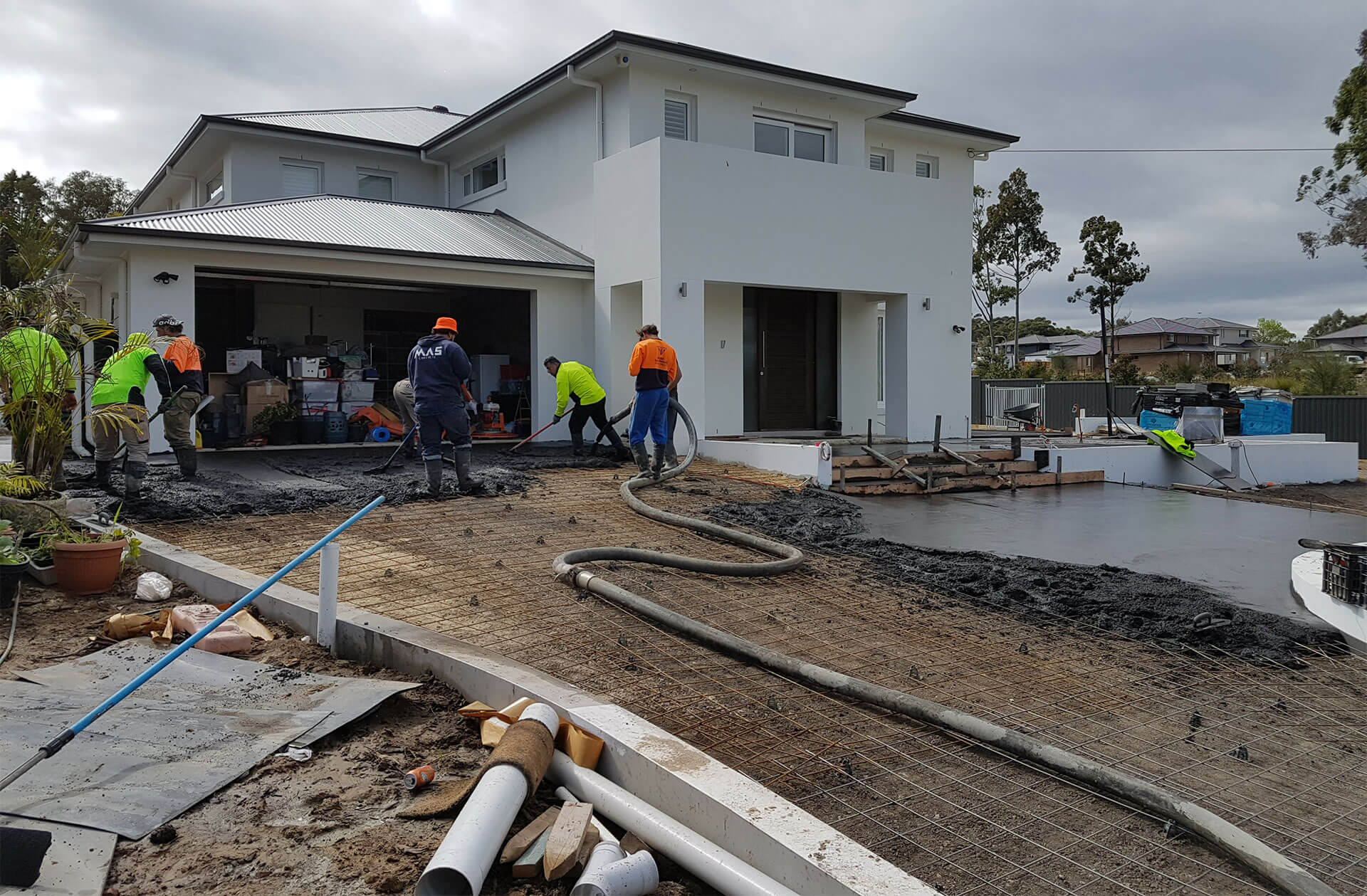
Once the prep is sorted, pour day itself is refreshingly straightforward, at least from your end. The truck arrives, the crew places and screeds the concrete, control joints get cut, and depending on the finish you’ve chosen (broom, exposed aggregate, coloured, plain), there’s some finishing work before it’s left to cure. You’ll typically be able to walk on it within 24 hours, but it needs somewhere between 7 and 28 days to reach full strength before it’s ready for vehicle traffic. Rushing this last part is how brand-new driveways end up with tyre-shaped regrets.
Frequently Asked Questions
Do I need council approval for a driveway that’s entirely on my own property? Generally, work that stays fully within your private boundary doesn’t need council sign-off, but the moment your project touches the footpath, kerb, or nature strip, or involves a new or altered driveway crossover, council approval kicks in. It’s worth checking with your local council or asking your concreter to confirm before work starts, since requirements vary between Sydney councils.
How long before a pour should I start organising things like Dial Before You Dig and council paperwork? As early as possible, ideally four to six weeks out if council approval is involved, since some councils take longer than others to process Section 138 applications. Service location checks can be turned around faster, but there’s no downside to getting them sorted early.
What happens if my site has poor truck access? It’s not a dealbreaker. Options include using a smaller truck, a concrete pump to reach awkward areas, or barrowing the mix in manually for tight sites. It does affect quoting though, so flag any access constraints upfront rather than on the day.
Is reactive clay soil something I need to worry about even for a small slab? Yes, size doesn’t exempt you from soil movement. Even a small garden shed slab on reactive clay can crack if it’s not designed with the right thickness and reinforcement for the site classification.
Can I keep using my existing driveway or path while a new concreting project is underway? Sometimes, depending on layout, but staging is important. If the new work cuts off your only access, your concreter should plan the sequencing so you’re not locked out of your own property for days at a time.
What’s the difference between excavation for a slab and general site clearing? Site clearing removes obstacles like old structures, garden beds, and vegetation. Excavation is the more technical process of digging to the correct depth, grading falls for drainage, and preparing a compacted base ready for formwork. Both matter, but excavation is where the engineering really happens.
How much should I expect to pay in council fees on top of the concreting cost itself? This varies significantly by council and by the scope of footpath or crossover work involved, and it’s genuinely worth getting a written estimate from council directly rather than guessing. A concreter familiar with your local council can usually give you a realistic ballpark based on similar past jobs.
Ready to Get Started?
Preparation isn’t the exciting part of a concreting project, we get it. Nobody’s pinning “measured the gate width” to their Pinterest board. But it’s the part that determines whether your new driveway, slab, or footpath is still looking sharp in fifteen years or starting to crumble in three. If you’re planning a project anywhere across Sydney and want a team that handles the unglamorous groundwork properly, not just the pretty finish, get in touch through our contact page and we’ll walk you through exactly what your site needs before anything gets booked in.