There’s a moment every Sydney homeowner has had, standing at the top of their own driveway, coffee in hand, looking at a slab that’s cracked like a dry creek bed or gone the colour of old chewing gum. You tell yourself it’s fine. It’s “character.” Then a mate visits, parks on it, and says, “Ooft, that’s seen some things,” and suddenly you’re googling residential concreting in Sydney at 11pm.
Good news: you’re not being dramatic. Concrete is one of the few home upgrades that’s doing three jobs at once — holding your house up, keeping water where it should be, and quietly deciding what your place is worth the second someone pulls up outside it. This is the bit nobody puts on the “before and after” reel, but it’s the part that actually matters for your bank balance.
We’re OzCrete Concrete, and we spend our days elbow-deep in Sydney clay, council paperwork, and wet cement, so we’ve got some opinions on why quality concreting is one of the smartest, least glamorous investments a Sydney property owner can make. Let’s get into it — properly, not the Pinterest-board version.
Why Concrete Is Doing More Than You Think
Concrete gets treated like the boring middle child of home improvement. Kitchens get the renovation shows, gardens get the influencer accounts, and concrete just… sits there, holding everything up, unbothered, for decades. But peel back the surface and it’s doing serious structural and financial work.
A property’s concrete — its slab, its driveway, its paths — is essentially the skeleton and the skin. The house slabs in Sydney we pour are the literal foundation everything else sits on. Get that wrong (wrong mix, wrong depth, wrong prep for our infamous reactive clay soils) and you’re not looking at a cosmetic problem in ten years, you’re looking at hairline cracks working their way up internal walls, doors that stop closing properly, and a builder wincing at your quote request.
And it’s not just structural. Australian research on driveway finishes has actually put numbers on the kerb-appeal effect: homes with a quality exposed aggregate driveway were rated more attractive and more contemporary than plain slab alternatives, with a decent chunk of respondents saying it added real, measurable value against a standard grey pour. Buyers form an opinion about your place before they’ve touched the front door handle. Concrete is doing PR for your property whether you’ve thought about it that way or not.
If you want the full rundown of what falls under this umbrella, our concreting services page covers everything from slabs to driveways to the unglamorous groundwork that makes them all possible.
The Property Value Conversation Nobody Has Properly
Let’s talk numbers, because “adds value” gets thrown around a lot without anyone explaining why.
A tired, cracked, or subsided driveway doesn’t just look average — it actively signals neglect. Buyers (and their building inspectors) read a crumbling entrance as a proxy for what else might’ve been left unattended. Flip that around: a clean, correctly engineered driveway or slab tells a buyer the boring-but-critical stuff has been looked after. Some industry estimates suggest homeowners can recover a meaningful chunk of driveway costs through the eventual sale price, particularly where the new concrete corrects an existing issue like pooling water or a trip hazard near the entry.
There’s also a Sydney-specific angle here that interstate blog posts tend to miss: our clay soil moves. It swells when it’s wet, shrinks when it’s dry, and an underprepared slab or driveway poured without proper excavation and compaction will crack faster than one done right. So “quality concreting” in Sydney isn’t really about looking flash — it’s about outsmarting the ground you’re building on. That’s the difference between a driveway that’s still dead flat in fifteen years and one that’s got a “welcome” lip forming after three Christmases.
Where It Actually Starts: Excavation and Site Prep
Nobody gets excited about excavation. It’s dirt, it’s noise, it’s a bobcat parked on your nature strip for a day. But if we’re honest with you (and we always are), this is the step that decides whether your concrete lasts twenty years or needs patching by year five.
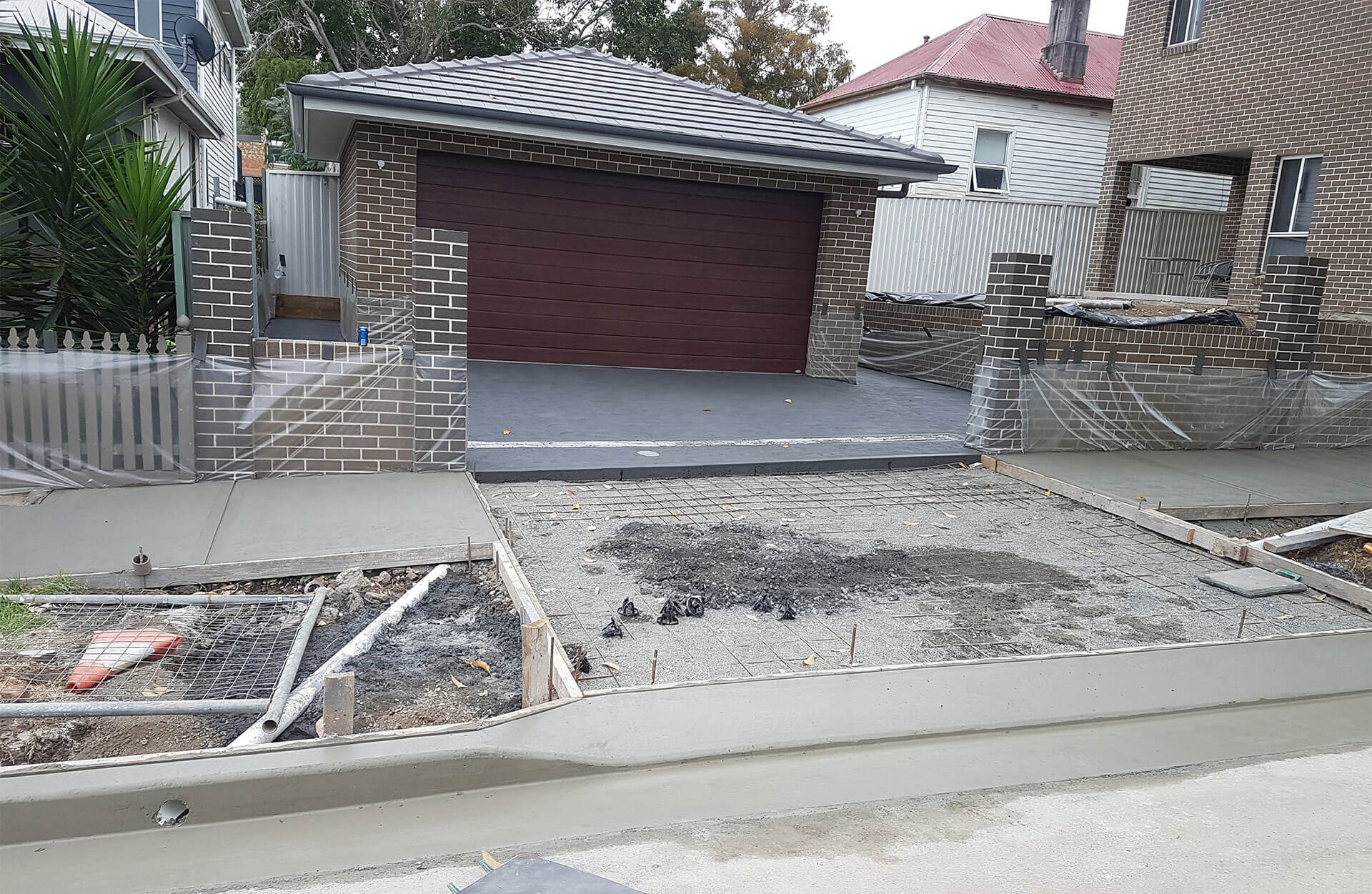
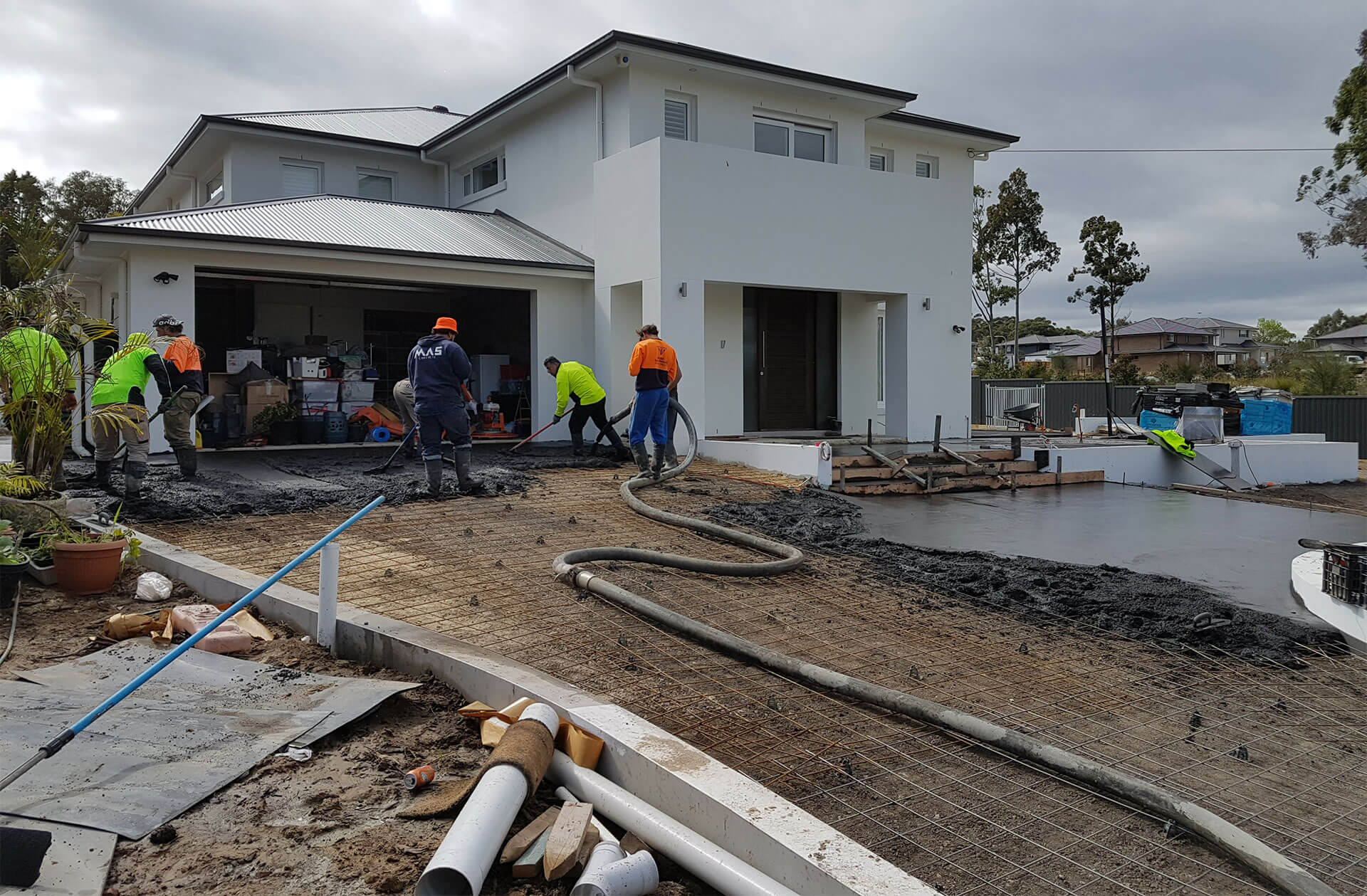
Proper excavation in Sydney involves stripping back to solid, stable ground, correcting the fall so water runs away from your house instead of pooling against your foundations, and compacting the base so it doesn’t settle unevenly underneath the pour. Skip or rush this step and you can have the most expensive concrete mix in the country on top and it still won’t save you — cracks don’t care what you paid per square metre if the ground underneath was never sorted.
We’ve turned up to plenty of “just repour it” jobs where the real issue was never the old slab. It was what was (or wasn’t) done underneath it the first time.
Formwork: The Unsung Hero of a Straight Edge
If excavation is the boring bit, formwork is the invisible bit. Nobody looks at a finished driveway and thinks “gee, that’s a crisp edge, I bet the formwork was spot on” — but they’d absolutely notice if it wasn’t.
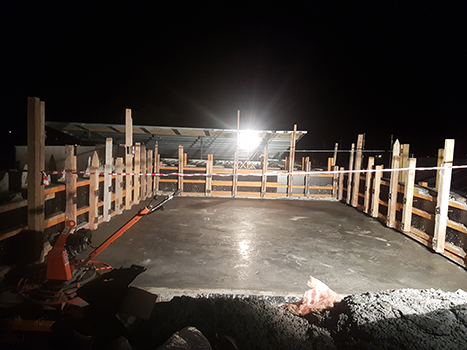
Formworking in Sydney is essentially the mould that holds wet concrete in its intended shape while it cures — the timber or steel edging that keeps your driveway a driveway and not a slow-motion puddle spreading into the garden bed. Good formwork gives you clean lines, correct levels, and the right thickness right through the pour, not just at the edges where it’s easy to see. It’s the difference between a slab that photographs well from the street and one that photographs well from the street and also survives a decade of Sydney storms.
House Slabs: Getting the Foundation Right the First Time
Whether it’s a new build, a granny flat, a garage, or an extension, the slab is the one part of the job you really don’t want a “she’ll be right” attitude on. It’s the part you can’t easily see once everything’s built on top of it, and it’s the part that’s brutally expensive to fix retroactively.
Our approach to house slabs in Sydney leans on correctly specified concrete strength, the right steel reinforcement for the load the slab needs to carry, and site-specific prep that accounts for drainage, soil classification, and what’s actually going on top of it — a granny flat has different demands to a double garage. This is where the “8 years in and still deciding what to write on a blog” version of us would tell you: don’t shop a slab purely on price. It’s the one job on a build where cutting corners is invisible right up until it very much isn’t.
Driveways, Footpaths and the Council Paperwork Nobody Warns You About
Here’s where a lot of Sydney homeowners get genuinely blindsided. You can’t just rock up and pour a new driveway or crossover connecting to the street — that strip between your fence and the road is public land, and most Sydney councils require formal approval (commonly a Section 138 application under the Roads Act) before any work touches it.
Council driveway concreting in Sydney means navigating things like minimum thickness, correct steel mesh specification, crossfall for drainage, and a layback profile that matches the existing kerb — and every LGA has its own quirks. Get it wrong and, in the worst case, council can order you to pull it out and redo it at your own cost. Approval timelines typically run somewhere between two and six weeks depending on the council, so this isn’t a job for last-minute planning if you’ve got a settlement date or a family barbecue circled on the calendar.
It’s a similar story with footpath concreting in Sydney — the strip out the front that pedestrians actually use. Councils are understandably fussy about trip hazards and drainage here too, since it’s public liability territory, not just your own front yard. We handle the approval logistics as part of the job so you’re not the one on hold to council for forty-five minutes trying to figure out what form you need.
Okay, But What Does “Quality” Actually Look Like on the Day?
Fair question. It’s not just a marketing word we slap on a page. In practice, a genuinely well-executed concreting job in Sydney involves:
- Correct site assessment — understanding your soil, your drainage, and what the slab or driveway needs to handle (cars, caravans, foot traffic, water flow).
- Proper excavation and compaction — no shortcuts on the bit you’ll never see again once it’s poured.
- Right mix, right strength — a driveway that might one day host a caravan needs a different spec to a garden path.
- Correctly installed formwork and reinforcement — for straight edges, even thickness, and structural integrity.
- Weather-aware pouring and curing — Sydney’s humidity and sudden downpours are notorious for catching out a rushed pour.
- A finish that actually suits the property — plain, exposed aggregate, broom finish, or coloured, chosen for the house it’s sitting in front of, not just whatever’s cheapest that week.
None of that is flashy. All of it is the reason one driveway is still flat and crack-free after fifteen years while the one two doors down is already getting patched.
A Few Home Truths Before You Get Quotes
A cheap quote on concreting is one of those things that look great on paper and terrible in five years. Concrete isn’t like paint — you can’t just do a second coat if the first one goes wrong. A poorly prepped slab or driveway is a demolition-and-redo job, not a touch-up, and that’s a genuinely painful invoice to open.
We’d rather have the honest conversation up front: what’s your soil like, what’s the drainage situation does council need to sign off on any of it, and what’s actually going to hold up long-term for your specific property. That’s the whole philosophy behind how we run jobs — less sales pitch, more “here’s what your place actually needs.”
Wrapping It Up
Quality concreting isn’t the sexiest home improvement conversation you’ll have this year, but it might be the one doing the most quiet, unglamorous heavy lifting for your property’s value, safety, and street appeal. A well-poured slab holds your home up for generations. A well-built driveway is the first thing every visitor, valuer, and prospective buyer forms an opinion about before they’ve even reached your front door.
If your place is overdue for some proper concrete attention — new slab, tired driveway, a footpath that’s become an ankle hazard, or you’re just not sure where to start — have a browse of our concreting Sydney page for the full picture of how we work, or head straight to our contact page and get a real conversation going. We’re also always adding fresh tips and local know-how over on the blog, if you like to do your homework before committing to anything (we respect that, honestly).
FAQs
How do I know if my existing slab needs replacing or if it can be repaired? It depends on what’s actually causing the damage. Surface-level cracking from age or minor settling can often be patched or resurfaced. But if you’re seeing cracks that run through the full depth of the slab, noticeable unevenness, or doors and windows in the building above starting to stick, that usually points to a foundational issue — often movement in the clay beneath it — and patching just delays a bigger job. Worth getting an actual site assessment rather than guessing from the surface.
Do I need council approval for a driveway that doesn’t touch the street? Generally, no — work entirely within your private property boundary doesn’t typically require the same crossover approval as work connecting to the road. But if your driveway ties into the council-owned verge or nature strip (which most do, at some point), that section falls under council jurisdiction and usually needs sign-off. It’s worth checking before you start, because retrofitting an unapproved crossover is a much bigger headache than getting it right the first time.
How long does concrete actually take to cure before I can use it? Concrete is typically safe to walk on after about 24 to 48 hours, but full structural strength takes closer to 28 days. Driving a car on a new driveway too early is one of the most common causes of premature cracking we see — even if it looks solid on the surface, it hasn’t reached its full strength yet. We’ll always give you specific timing for your job, since weather and mix type change the numbers.
What’s the difference between plain, exposed aggregate, and coloured concrete, and does it affect cost? Plain concrete is the most budget-friendly and lowest maintenance option. Exposed aggregate (where the stone is revealed in the surface finish) generally costs more but tends to hide minor wear better and is a common choice for driveways because of the added grip and street appeal. Coloured or stencilled finishes sit at the higher end and are more about matching a specific aesthetic. The “right” one really comes down to your budget, your home’s style, and how much slip-resistance you need for the area.
Can concreting work go ahead in winter or during Sydney’s wetter months? Yes, with the right approach. Concrete can be poured in cooler or wetter conditions, but it does need proper planning around curing time and weather windows — rain hitting a fresh pour before it’s set enough is a real problem, so timing and site protection matter more in the wetter months. A contractor who’s watching the forecast, not just the calendar, will manage this properly.
Why does my quote vary so much between different concreters for what sounds like the same job? Usually it comes down to what’s included. A lower quote might be skipping proper excavation depth, using a lighter mix or thinner slab than your site actually needs, or leaving out reinforcement that a higher quote includes. It’s worth asking each contractor exactly what mix strength, mesh, and base preparation is included, rather than comparing the bottom-line number alone — otherwise you’re not really comparing like for like.
How much does reactive clay soil in Sydney actually affect a concrete driveway or slab? More than most people expect. Reactive clay expands when it absorbs moisture and contracts as it dries out, and that movement can crack concrete that wasn’t prepared with it in mind. This is why proper excavation, base compaction, and sometimes specific reinforcement or control joints matter so much here — it’s less about the concrete itself and more about respecting what’s happening underneath it.