There’s a moment every Sydney homeowner hits — standing in the backyard, coffee in hand, staring at a patch of dirt or a cracked old driveway, thinking “right, we’re doing this.” And then, about four minutes later, the questions start piling up. Do I need council approval? What’s this “reactive clay soil” thing my neighbour keeps banging on about? Timber or steel formwork — does it even matter? Can I just get a quote and pour next Tuesday?
Short answer: not quite. Concreting is one of those jobs that looks simple from the footpath (pour it, smooth it, done) but has about six layers of decision-making hiding underneath. Get those decisions right early and you’ll have a driveway, slab or path that outlasts your mortgage. Get them wrong and you’ll be explaining hairline cracks to future buyers in about eight years’ time.
We’re OzCrete Concrete, and between us we’ve poured a fair few thousand square metres of Sydney dirt into something you can actually walk, drive and build on. This is the “before you pick up the phone” guide — the planning tips that separate a smooth job from a stressful one.
Why Planning Actually Matters More than the Pour
Everyone obsesses over the pour day. Understandable — it’s the dramatic bit, trucks rolling in, concrete going down and the whole street coming out to have a squiz. But the pour is really just the last chapter of a story that started weeks earlier with soil tests, site prep, formwork and paperwork.
Residential concreting in Sydney done properly is a sequence, not an event. Skip the planning stage and you’re basically hoping the ground underneath cooperates, the council doesn’t send a please-explain letter, and the finish doesn’t crack the first time we get a proper Sydney downpour. Hope is not a construction method.
Step One: Know What You’re Actually Building
“I want a concreting job done” is a sentence that means about nine different things. A driveway has different thickness and reinforcement needs than a garden path. A slab for a granny flat has completely different engineering requirements than a pool surround. Before you get quotes, nail down the actual scope — because vague briefs get vague quotes, and vague quotes turn into arguments halfway through the job.
Our team walks through this with every client, whether it’s a full new build or a weekend patio refresh — you can see the breadth of what falls under our concreting services to get a sense of where your project sits. Driveways, footpaths, slabs, exposed aggregate, plain broom finish, coloured concrete — each has its own spec sheet, and that spec sheet drives everything downstream: excavation depth, formwork type, reinforcement mesh, and cure time.
Step Two: Get the Ground Sorted Before You Get the Concrete
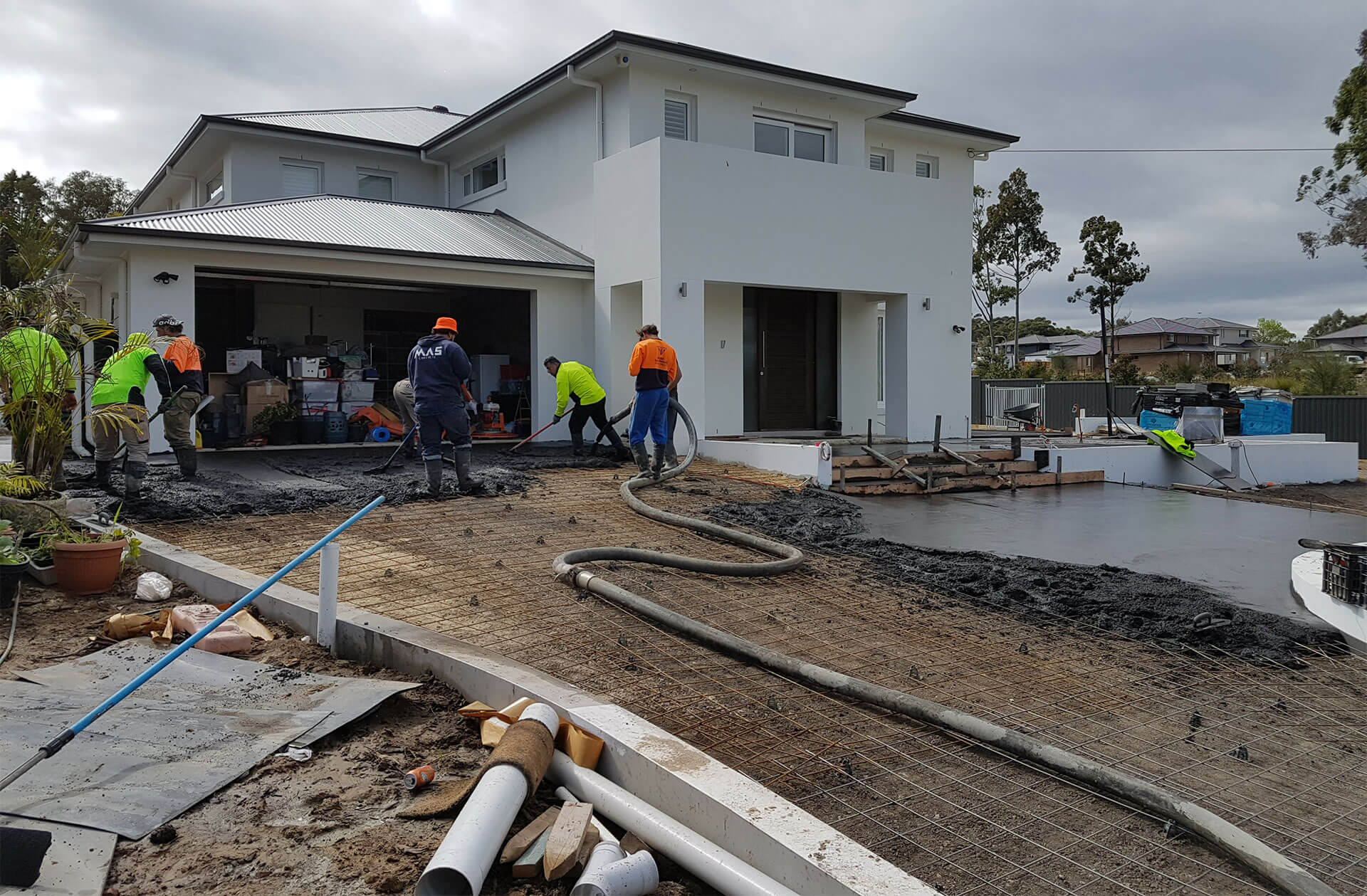
This is the step most DIY-leaning homeowners underestimate, and it’s the one that causes the most expensive regrets. You can’t pour quality concrete onto a lumpy, unlevelled, poorly compacted site and expect it to behave. Excavation isn’t just “dig a hole” — it’s setting levels, removing organic material and root systems, checking for buried services, and compacting a proper base layer so the slab has something stable to sit on.
Before any digging starts, a Dial Before You Dig check is non-negotiable — Sydney’s older suburbs are riddled with unmapped stormwater pipes, gas lines and the odd mystery cable nobody remembers installing. Skip this and you’re one unlucky trench away from a very awkward phone call to Sydney Water.
If your site has a slope, poor drainage, or you’re excavating near a boundary or retaining structure, this is where experienced excavation contractors in Sydney earn their keep. Getting the cut-and-fill right, managing surface water runoff, and compacting properly are the unglamorous jobs that quietly determine whether your slab sits flat for thirty years or develops a lean within five.
Step Three: Understand Your Soil (Yes, Really)
Sydney sits on a genuinely frustrating mix of soil types, and a fair chunk of the metro area — particularly out west and in parts of the north — has what’s classified as reactive clay soil. This stuff expands when it’s wet and shrinks when it dries out, and if your slab isn’t designed around that movement, you’ll eventually see cracking, doming, or edges lifting.
Engineers classify sites as Class A (stable, low movement) right up through M, H1 and H2 for increasingly reactive clay, and even E for extremely reactive or filled sites. Your site classification determines slab thickness, reinforcement pattern, and sometimes whether you need edge beams or a waffle pod system rather than a standard raft slab. This isn’t a box-ticking formality — it’s the difference between a slab that sits there quietly doing its job and one that starts telling on itself in year six.
Step Four: Formwork — the Unsung Hero of a Clean Edge
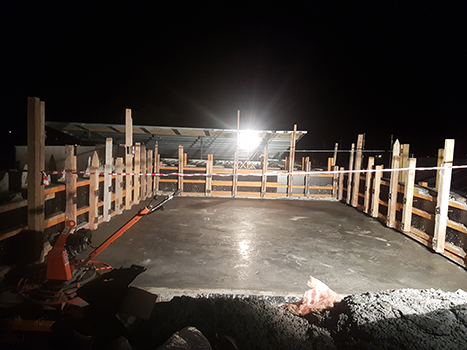
Formwork is the temporary mould that holds your concrete in shape while it cures, and most homeowners never think about it until they see a wonky edge on a finished driveway and wonder what went wrong. Timber formwork is the traditional choice for residential jobs — it’s flexible, easy to cut to custom shapes, and cost-effective for the curves and boundaries typical of a suburban block. Steel formwork tends to show up on larger commercial pours where reuse across multiple jobs makes the higher upfront cost worthwhile, and it gives an exceptionally smooth, straight edge.
For most Sydney homes, well-installed timber formwork does the job beautifully — provided the timber is straight, properly braced, and set to accurate levels before a single barrow of concrete goes near it. A crooked form gives you a crooked edge, permanently. There’s no “fixing it after” once the pour has gone off.
Step Five: Sort Your Council Paperwork Before, Not After
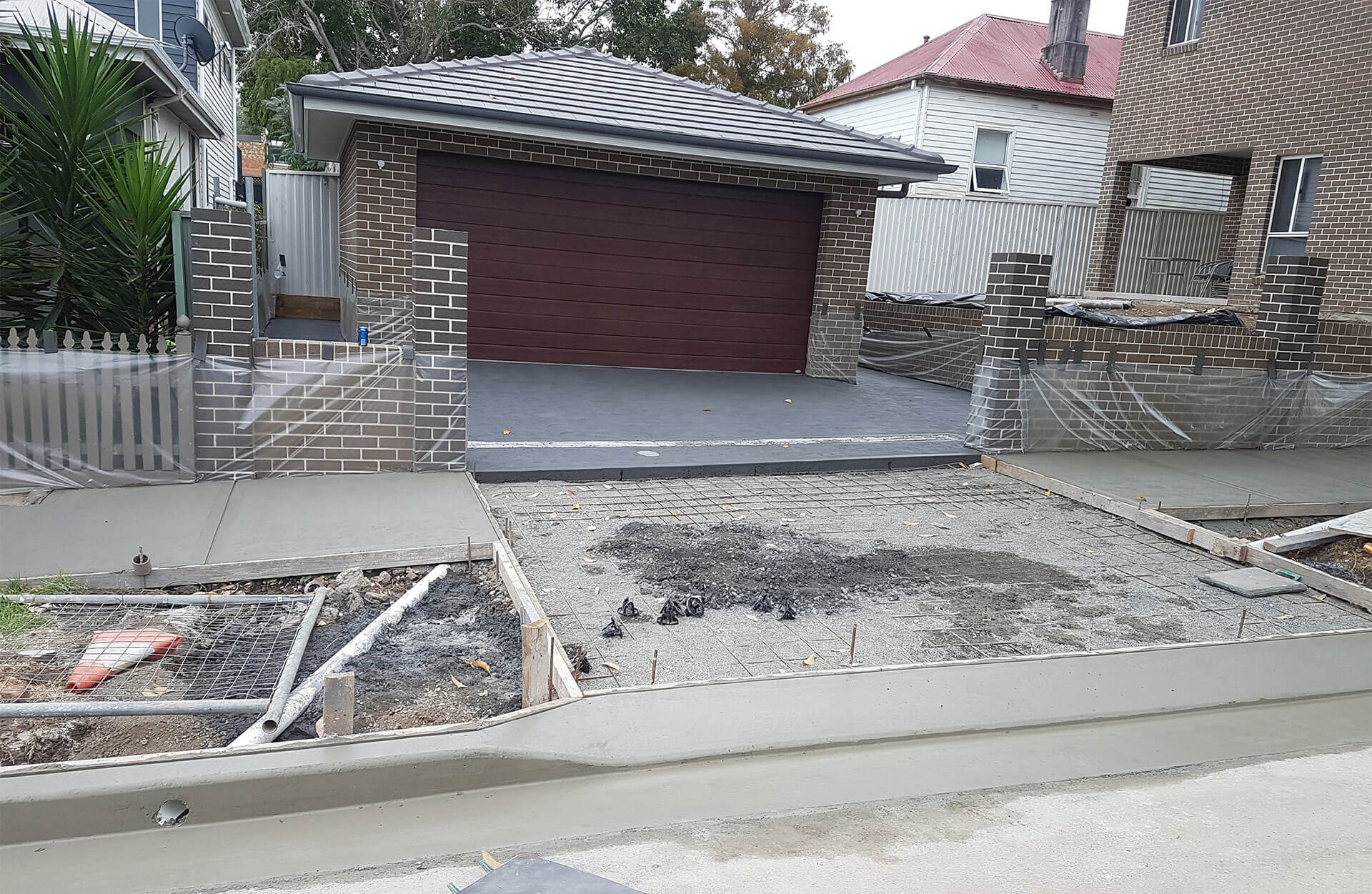
Here’s where a lot of otherwise well-planned projects come unstuck. Depending on what you’re building and where, you may need council approval — and driveways are a particular sticking point because the crossover (the strip between your property boundary and the road) technically remains council land even though you’re paying for it and it’s your responsibility to maintain.
Get this wrong and you’re not just risking a fine — you can be issued a rectification order requiring you to rip out and repour work that doesn’t meet council specifications for gradient, drainage, or materials. A council approved driveway in Sydney needs to meet your local council’s driveway and crossover specifications, which vary between LGAs — what flies in the Inner West won’t necessarily fly in Hornsby or the Northern Beaches. Sort your Section 138 approval (or check whether your job qualifies for exempt or complying development) before pour day, not after.
Footpaths carry similar rules, since they’re also council-controlled space even where they run alongside your own frontage. If your project includes concrete pathways in Sydney that connect to public footpath, expect council specs on thickness, slip resistance, and finish.
Step Six: New Slabs Need Their Own Conversation
If you’re pouring a slab for a new build, granny flat, extension or garage rather than resurfacing an existing area, treat it as its own project with its own engineering sign-off. New house slabs in Sydney need to satisfy the Building Code of Australia, match whatever your structural engineer has specified for reinforcement and thickness, and often need to be poured to a tight tolerance so your framing carpenter isn’t left cursing an out-of-level slab six weeks later.
This is also where termite protection, vapour barriers and plumbing rough-ins all need to happen in the right order, before the concrete goes anywhere near the site. Miss one of these and you’re looking at cutting into a cured slab later — expensive, messy, and entirely avoidable with proper sequencing.
Step Seven: Check the Licence, Not Just the Quote
Cheapest quote isn’t always the best deal, and in concreting specifically, an unlicensed or underinsured operator can leave you personally exposed. Any residential concreting job over $5,000 in NSW legally requires the contractor to hold Home Building Compensation insurance, and you can (and should) check a contractor’s licence status on the Service NSW public register before signing anything. Ask about public liability cover too, particularly for driveway crossover work where you’re technically liable for the council-owned section if something goes wrong down the track.
Step Eight: Respect the Weather and the Cure Time
Sydney’s climate is generous most of the year, but summer humidity and sudden storms both mess with concrete curing. Pour on a stinking hot day without proper curing compound and you risk surface cracking as it dries too fast. Pour right before a downpour and you risk a washed-out finish. A decent concreter will be watching the forecast as closely as you’re watching your budget.
As a rough guide, most residential slabs can handle light foot traffic within a day or two, but you’ll generally want to hold off parking a car on a new driveway for around a week to let it reach adequate strength. Full cure — the point where concrete has reached close to its design strength — typically takes closer to a month, so go easy on it early even after it looks solid.
Budgeting Without the Guesswork
Concreting costs in Sydney vary a fair bit depending on access, site prep required, finish type and square metreage, and so treat any quote that skips a site visit with a healthy dose of suspicion. A proper quote accounts for excavation, base preparation, formwork, reinforcement, the concrete mix itself, finishing, and any council fees. Ask for a breakdown rather than a single lump figure — it makes comparing quotes (and spotting corners being cut) a lot easier.
Bringing It All Together
None of these steps are individually complicated, but they do need to happen in the right order, by people who’ve done it enough times to spot the problems before they become expensive. That’s really the whole pitch for using an established, licensed team for concreting services in Sydney rather than piecing it together yourself — someone’s coordinating the excavation, the formwork, the soil classification, the council paperwork and the pour, so you’re not the one holding six different subcontractors’ phone numbers and hoping they all show up the same week.
If you’ve got a project in mind, whether it’s a full new home slab or a modest footpath refresh, our team is happy to walk the site with you and talk through what it’ll actually take. Head over to our contact page to book a look, or have a browse through our blog for more Sydney-specific guides while you’re deciding.
FAQs
Do I need council approval for a driveway or is a private concreter enough? Depends on your council and whether you’re touching the crossover or nature strip. Most LGAs require approval for new or replacement driveways because of the council-owned section at the front, even if the rest of your job is entirely on private land. A concreter who works across Sydney regularly should know your specific council’s process.
What’s the actual difference between timber and steel formwork for a home job? Timber is cheaper, more flexible for custom shapes and curves, and perfectly adequate for the vast majority of residential jobs. Steel gives a straighter, more uniform edge and gets reused across many pours, which is why it shows up more on commercial sites where that reuse offsets the higher setup cost.
How do I know if my site has reactive clay soil? A geotechnical site classification report will tell you definitively, and for anything structural (like a new slab) it’s generally required anyway. Signs that suggest reactive soil include existing cracking in nearby structures, clay-heavy soil when you dig, or simply being in a suburb known for it — parts of Western Sydney are notorious.
Can I pour concrete myself and just get a concreter to finish it? Technically yes, but we’d gently steer you away from it for anything beyond a small stepping-stone path. Getting the mix ratio, timing and finishing technique right on a DIY pour is harder than YouTube makes it look, and a botched pour is far more expensive to fix than it would have been to do properly the first time.
How long before I can actually use my new driveway or path? Light foot traffic is usually fine within a day or two. Hold off on vehicles for about a week. Full structural cure takes closer to 28 days, so avoid anything heavy — like a loaded trailer or a skip bin — parked on it during that early window.
What happens if my neighbour’s tree roots are near the excavation area? This needs to be assessed before digging starts, both for the tree’s health (some Sydney councils protect significant trees) and for your slab’s stability, since root systems can shift soil over time. A proper excavation assessment will flag this early rather than after the fact.
Is exposed aggregate worth the extra cost over plain concrete? For driveways especially, yes for most people — it’s more slip-resistant, hides minor surface wear better than plain grey concrete, and tends to add more to resale appeal. It does cost more upfront, so it comes down to budget and how long you’re planning to stay in the property.
Every Sydney block throws up its own quirks — slope, soil, access, council rules — so the smartest first move on any concreting project is still a proper site visit rather than a guess over the phone. That’s where we come in.