Drive down any street from Parramatta to the Northern Beaches and you’ll spot it within thirty seconds — a driveway that’s cracked like a dry lakebed, a footpath with a lip you could trip a wheelie bin over, or a “new” slab that’s already sunk on one corner like it’s bowing to the house. Sydney has a lot of concrete. Not all of it was poured by people who knew what they were doing.
That’s not a dig at homeowners — it’s a dig at the industry. Concreting looks deceptively simple from the footpath. Mix, pour, smooth, done. In reality, what separates a slab that lasts fifty years from one that’s cactus in five comes down to decisions made before a single bag of cement gets cracked open: the soil testing, the excavation depth, the formwork, the reinforcement, and whether anyone bothered to check what your council actually wants. This is where OzCrete Concrete has built its name across Sydney — not by being the loudest concreter in the group chat, but by getting the boring, technical stuff right so the finished product doesn’t need fixing in eighteen months.
This guide walks through what genuinely matters when you’re hiring concrete contractors in Sydney, whether you’re pouring a new house slab, resurfacing a cracked driveway, or trying to figure out why council suddenly cares about your footpath.
The Sydney Concreting Market Is Crowded — Here’s What Actually Separates the Good from the Average
Search “concreter near me” in Sydney and you’ll get a wall of results. Some outfits are one bloke with a mixer and a Facebook page. Others are large operations juggling twenty jobs a week. Neither extreme is automatically bad, but the pattern worth watching for is this: businesses that treat concreting services in Sydney as a genuine trade — with proper site assessment, engineer-specified mix designs, and compliance knowledge — versus those treating it as a quick cash job between weather windows.
The tell is usually in the process, not the price. A contractor who wants to inspect your soil, ask about drainage, and talk you through formwork options before quoting is thinking about year ten, not just settlement day. That’s the approach behind OzCrete Concrete’s services — the full spread from residential slabs through to council infrastructure work, all run through the same quality checks regardless of job size.
New House Slabs: The One Part of the Build You Really Don’t Want to Rush
If you’re building new in Sydney, your slab is arguably the single most consequential pour on the entire site. Get it wrong and you’re not dealing with a cosmetic issue — you’re dealing with structural cracking, doors that won’t close, and a builder pointing fingers at everyone except themselves.
A proper new house slab in Sydney starts with soil classification. Sydney’s clay-heavy soils in areas like the Hills District and Western Sydney are notoriously reactive — they swell when wet and shrink when dry, which is exactly the kind of movement that turns a slab into a crack magnet if it’s not engineered for the site. A good concreter will insist on a soil report, use the correct slab type (waffle pod, raft, or stiffened raised slab depending on classification), and reinforce accordingly rather than pouring a one-size-fits-all product.
For anyone planning a build, extensions, or a granny flat, OzCrete’s house slab work covers exactly this end-to-end approach — soil-appropriate design, correct curing time, and a finish that’s ready for your builder’s next trade without drama.
Excavation: The Unglamorous Job That Decides Whether Everything above It Survives
Nobody gets excited about excavation. There’s no photo-worthy moment in digging a trench. But almost every concreting failure in Sydney traces back to something that happened — or didn’t happen — at this stage: inadequate depth, poor compaction, no allowance for drainage falls, or digging without checking what’s actually under the site.
Excavation in Sydney properties gets complicated fast because of the terrain. Sloping blocks on the North Shore, sandstone shelves on the Northern Beaches, and unpredictable fill on older inner-west lots all throw curveballs that a cookie-cutter approach won’t handle. This is also where underground services — stormwater, sewer, the occasional mystery pipe nobody has a record of — turn a simple dig into a “call before you dig” situation. Proper compaction testing afterwards matters too; skip it and your beautifully finished slab or driveway will happily settle unevenly within a year or two.
OzCrete’s excavation team handles this groundwork as its own discipline rather than an afterthought squeezed in before the truck arrives, which is exactly why the pours that follow tend to actually stay flat.
Timber Formwork: The Invisible Skeleton Holding Your Concrete’s Shape
Formwork is the part of the job almost nobody thinks about until it goes wrong — and when it goes wrong, it goes wrong spectacularly, in the form of bulging edges, uneven thickness, or a slab that’s simply not the shape you agreed to.
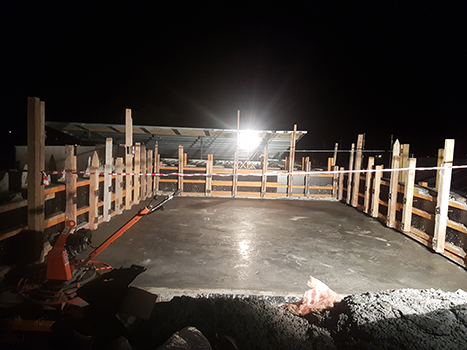
Timber formwork in Sydney projects needs to account for the weight of wet concrete (which is heavier than most people assume), correct bracing on uneven or sloping sites, and precise setout so your falls for drainage actually work once the concrete’s cured. A slab or path with formwork that shifted mid-pour is basically locked in — there’s no fixing it after the fact without breaking it out.
Good formwork is genuinely a craft. It’s why builders and homeowners across Sydney lean on OzCrete’s formworking expertise for anything from retaining structures to complex driveway shapes — the sort of jobs where a millimetre of movement in the boxing shows up as a very visible problem later.
Council Driveways: Where Concreting Meets Bureaucracy (and Why That’s Not a Bad Thing)
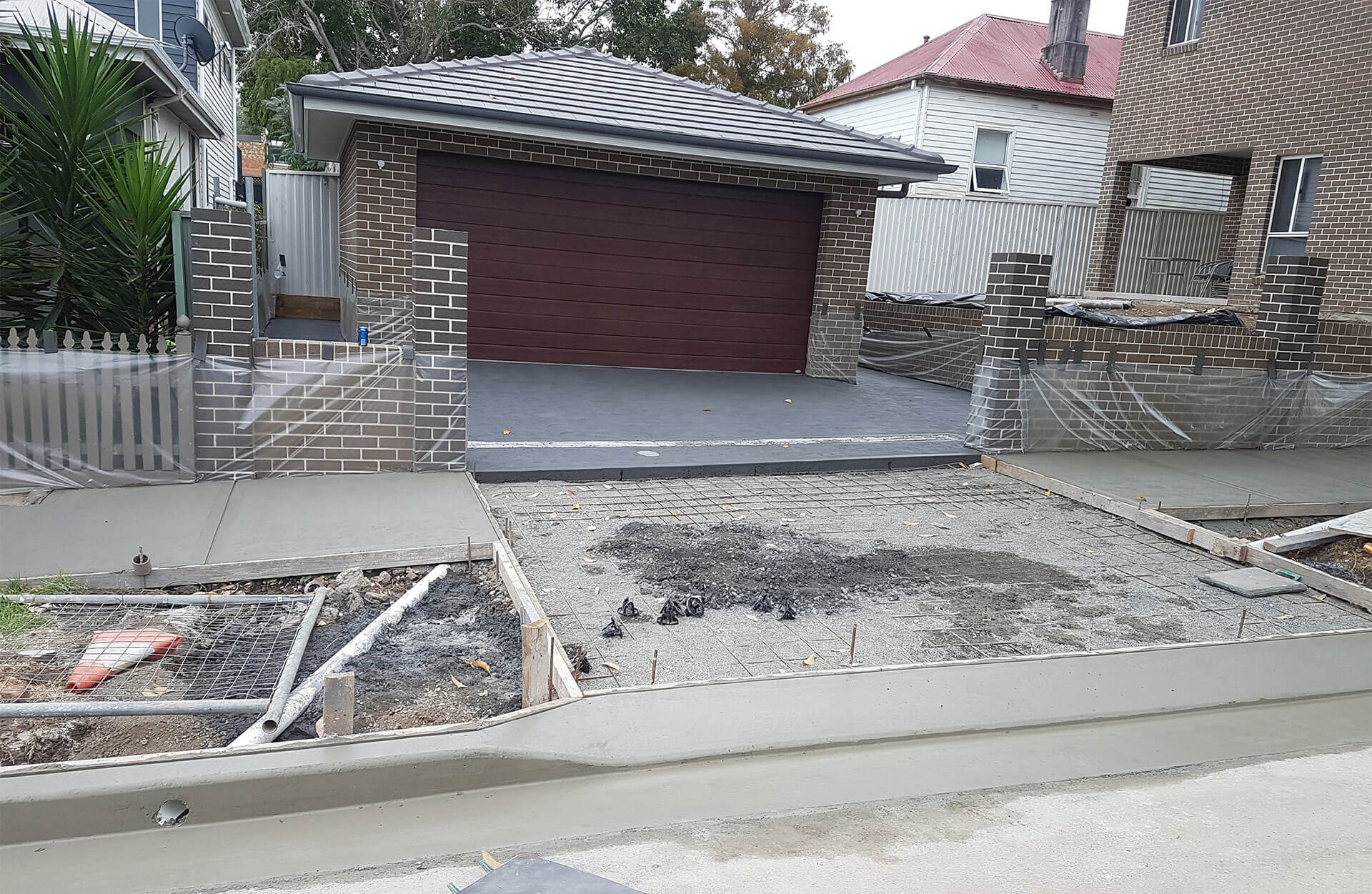
Here’s a fact that surprises a lot of homeowners: the section of your driveway crossing the nature strip isn’t actually yours to do whatever you like with. It’s council land, technically called a vehicle crossing or layback, and most Sydney councils — Parramatta, Ku-ring-gai, Hornsby, Ryde, the list goes on — have their own specifications for concrete strength, width, gradient, and drainage before they’ll sign off.
Skip the approval process and you’re not just risking a fine. Councils can (and do) flag unauthorised crossovers during property sales through Section 149 certificates, which is a spectacularly bad time to discover your driveway was never technically legal. Most councils now expect a minimum concrete strength around 25–32MPa for residential crossovers, reflecting updated standards for the weight of modern vehicles, and they’ll usually want formwork and reinforcement inspected before the pour — not after.
Navigating this is genuinely tedious paperwork, which is exactly why it’s worth outsourcing to someone who does it constantly. OzCrete’s council driveway concreting service handles the permit application, the council-specific specs, and the inspection scheduling, so you’re not the one on hold to your local council for the third time that week.
Concrete Pathways: Small Job, Big Impact on Kerb Appeal
Pathways don’t get the glory that a fresh driveway does, but a cracked, uneven, or weed-riddled path is one of the fastest ways to make an otherwise tidy front yard look neglected. And because footpaths cop constant foot traffic plus Sydney’s swing between baking summers and sudden downpours, they need the same attention to base preparation and jointing as any bigger pour — expansion joints in the wrong spots, or a base that wasn’t compacted properly, and you’ll get cracking within a couple of seasons regardless of how nice the surface finish looks.
Whether it’s a straightforward broom-finish path, an exposed aggregate strip along the side of the house, or a full front-yard walkway tying into a new driveway, OzCrete’s concrete pathways work is built around the same base-first philosophy as the rest of their jobs — because a pretty surface on a dodgy base is just a crack waiting for its moment.
What “Concreting Sydney” Actually Involves, Start to Finish
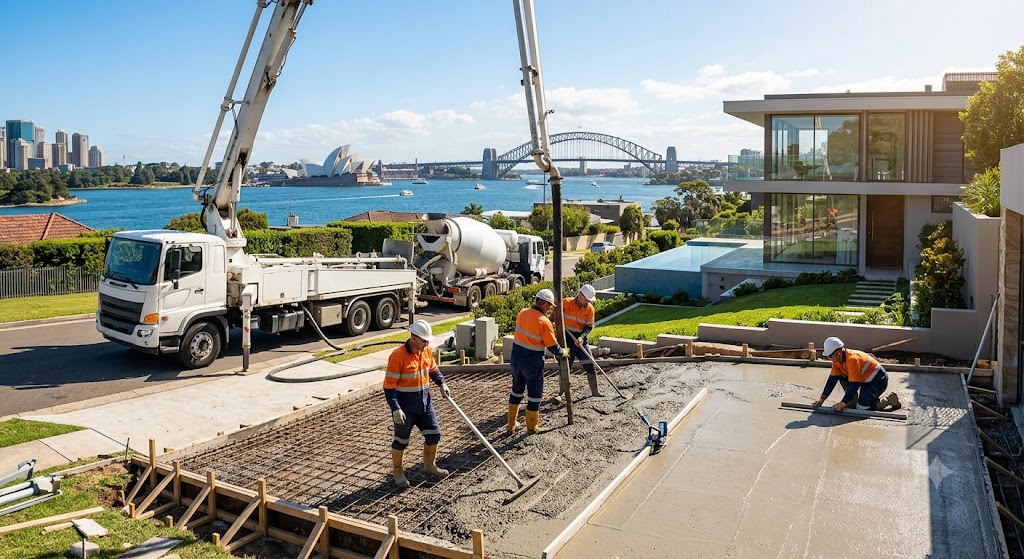
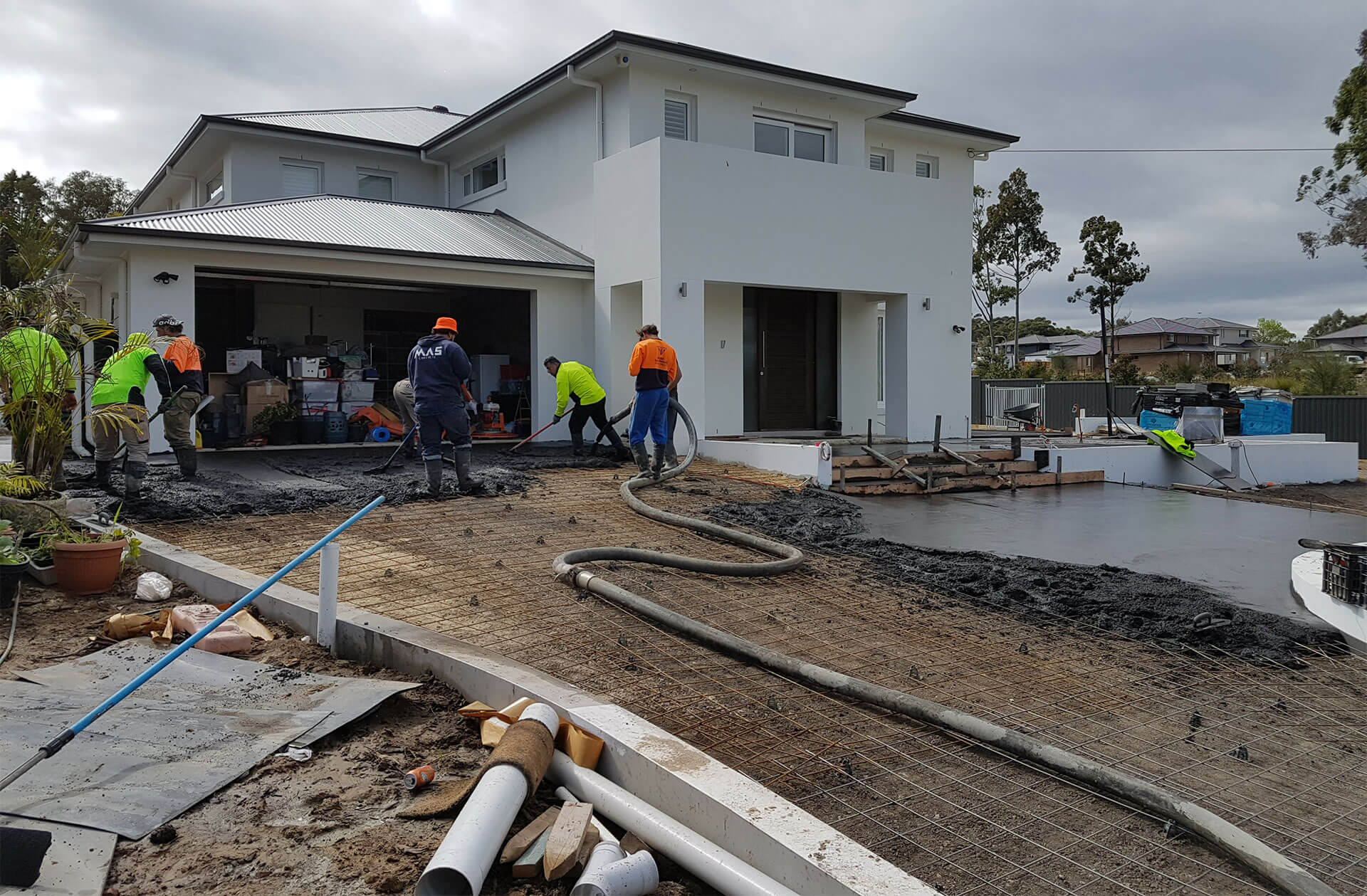
Pull all of the above together and you get the real picture of what proper concreting in Sydney looks like as a process, rather than a single afternoon with a cement truck:
- Site inspection and soil assessment
- Council checks where relevant (crossovers, easements, heritage overlays)
- Excavation to the correct depth and compaction testing
- Formwork setout with drainage falls built in
- Reinforcement placement (mesh or bar, depending on load)
- The pour itself, finished to the agreed surface (plain, broom, exposed aggregate, stencilled, or coloured)
- Correct curing time before load-bearing use
Miss a step and the rest becomes irrelevant. It’s the full sequence, done properly, that’s behind OzCrete Concrete’s homepage promise — and it’s the reason repeat referrals across Sydney’s suburbs keep the phone ringing more than any ad ever could.
A Word on Decorative Finishes and Other Bits worth Knowing
A few LSI terms worth understanding if you’re deep in the research rabbit hole: exposed aggregate concrete exposes the stone within the mix for a textured, non-slip finish popular on pool surrounds and driveways. Stencilled concrete stamps a pattern into the surface to mimic pavers at a fraction of the cost. Reinforced concrete simply means steel mesh or bar is embedded to resist cracking under load — non-negotiable for driveways and slabs, optional for light-traffic paths. And concrete resurfacing is the fix for an ageing but structurally sound slab that just looks tired, rather than a full replacement.
Knowing this vocabulary won’t make you a concreter, but it will make you very hard to fob off with vague answers on your next quote call.
Frequently Asked Questions
How much does concreting cost in Sydney? It varies hugely based on access, finish, reinforcement, and site prep, but expect plain concrete driveways to sit well below decorative or exposed aggregate options. Always get a written quote that separates excavation, formwork, and finishing costs so you can see exactly what you’re paying for.
Do I need council approval for a new driveway in Sydney? If any part of it crosses the nature strip or council land, yes — this is standard across almost every Sydney LGA. A concreter experienced with council driveway work can handle the application on your behalf.
How long does concrete take to cure before I can drive on it? Concrete typically reaches enough strength to walk on within a day or two, but most driveways need around 7 days before light vehicle use and closer to 28 days to reach full design strength.
What’s the difference between a slab and a footing? A footing is the deeper, load-bearing element that transfers weight into the ground (think house foundations), while a slab is the flat surface poured on top or independently for things like driveways and patios.
Can old concrete be resurfaced instead of replaced? Often, yes — if the base is still sound and the cracking is cosmetic rather than structural. A proper inspection will tell you whether resurfacing is genuinely viable or whether you’re just delaying a full replacement.
How do I get a quote? The easiest way is to reach out directly through OzCrete Concrete’s contact page with your address and a rough idea of the job — most quotes start with a quick site look rather than a guess over the phone.
Concreting isn’t glamorous, but it’s one of those trades where the difference between “good enough” and “actually good” shows up for decades, not days. If you’re weighing up a new slab, a driveway overhaul, or just want a footpath that doesn’t embarrass you at the letterbox, it’s worth reading a bit further on the OzCrete Concrete blog before you commit to anyone — informed homeowners tend to end up with better concrete, full stop.