Let’s get one thing out of the way: nobody grows up dreaming about concrete. Kids draw fire trucks and dinosaurs, not vibrating screeds and formwork ply. And yet here you are, googling “concrete contractors Sydney” at 9pm with a cup of tea going cold, because somewhere between the DA approval and the builder’s Gantt chart, you realised your entire house — literally every square inch of it — is going to sit on a slab poured by somebody you haven’t met yet.
That’s the thing about concrete. It’s the least glamorous part of any build, and the most unforgiving. Get your paint colour wrong and you repaint. Get your slab wrong and you’re looking at cracks, doors that won’t close, and a very awkward conversation with an engineer in twelve years’ time. So it pays to actually understand what you’re buying before you buy it.
We’re OzCrete Concrete, and we’ve been pouring, forming, digging and finishing concrete across Sydney for over two decades. This isn’t a sales pitch dressed up as a blog post (well, maybe a little bit — we do have bills to pay), but it is a genuinely useful guide to what Sydney concreting actually involves, what the fine print means, and how to avoid becoming a cautionary tale at your next barbecue.
Sydney’s Concrete Game Is Different — Here’s Why
Concreting in, say, regional Victoria is a fairly predictable affair: flat clay, mild weather, straightforward council. Sydney throws a few curveballs into the mix.
First, there’s the geology. Sydney sits on a patchwork of sandstone, reactive clay, and the odd pocket of fill that some previous owner “just packed down them.” That variability means the same house slab design that works fine in Castle Hill can be completely wrong for a site in Marrickville. A decent concrete contractor doesn’t just show up with a mixer truck; they read the soil report first.
Second, there’s the topography. Sydney is a city built on hills, gullies and harbourside slopes, so excavation and retaining often become part of the concreting conversation whether you asked for it or not.
Third — and this is the one nobody warns you about — there’s the council layer. Sydney has over 30 local government areas, and every single one has its own opinion on driveway widths, footpath finishes, and how many forms you need to fill out to touch the nature strip in front of your own house. More on that particular joy shortly.
None of this is meant to scare you off. It’s meant to explain why “cheapest quote wins” is a genuinely bad strategy for concrete work in this city. You want a team that already knows the difference between a Ku-ring-gai footpath spec and a Parramatta one, because relearning that on your project, on your dime, is not a fun way to spend a Tuesday.
What “Concreting Services” Actually Covers
When people search for concreting services Sydney, they’re often picturing one guy with a wheelbarrow. In reality, a proper concreting job is closer to a small production line, and missing a step anywhere in that line causes problems downstream.
A typical residential concrete project runs through:
- Site assessment and setout — working out levels, drainage falls, and how the new concrete needs to sit relative to existing structures
- Excavation — cutting and removing soil to the right depth and compaction
- Formwork — building the temporary “mould” the concrete gets poured into
- Reinforcement — steel mesh or bar, sized to the load the slab or path will actually carry
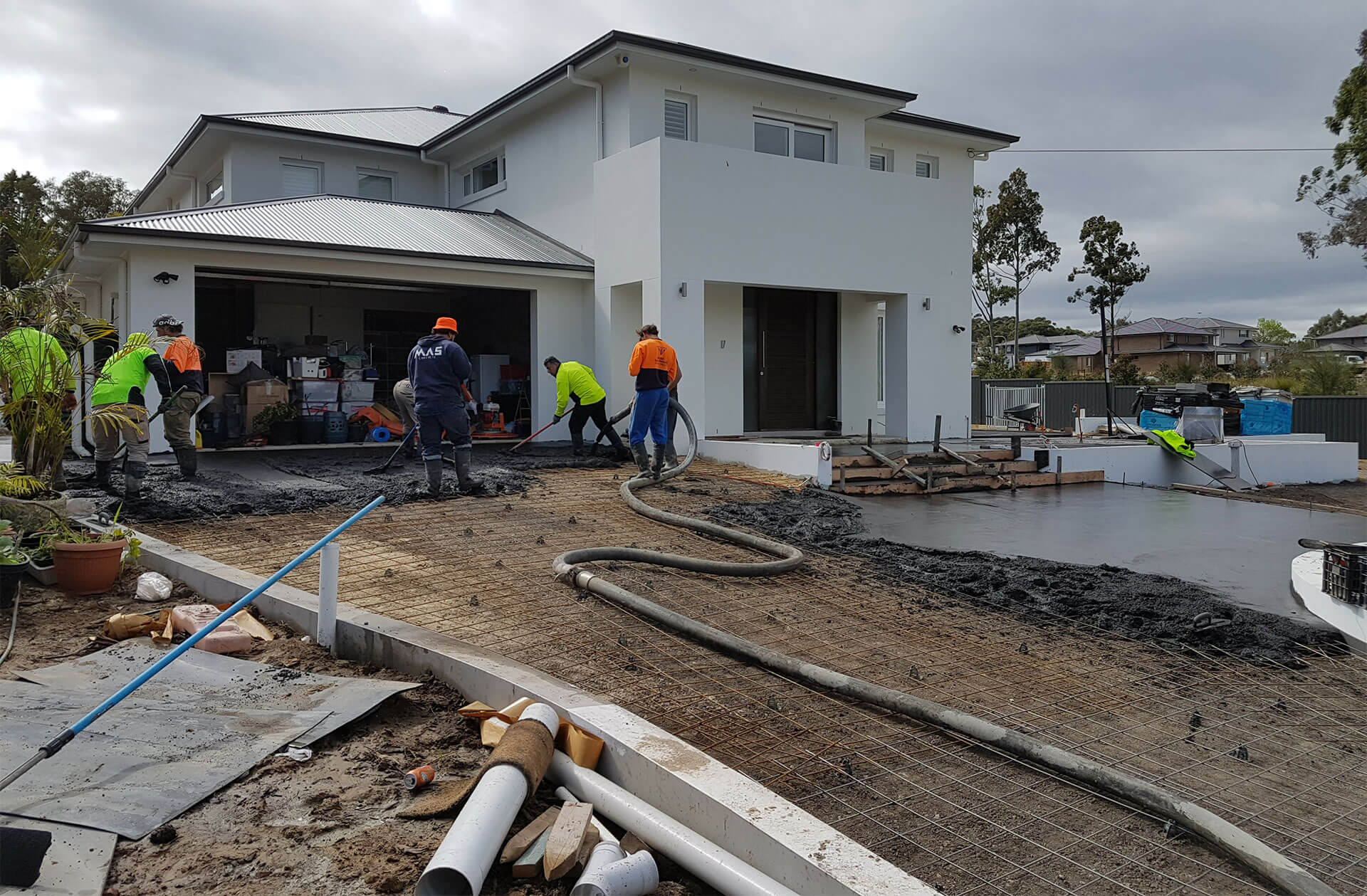
- Pouring and finishing — getting the concrete in, levelled, and given the right surface texture
- Curing — the unglamorous waiting game that determines whether your slab hits its design strength or falls short
Skip or rush any one of those and you’re gambling with a material that, once it’s gone off, is genuinely hard to argue with. This is why we handle the whole sequence ourselves rather than subcontracting it out to whoever’s cheapest that week — you can see the full rundown of what we do on our concreting services page.
House Slabs: The Part of Your Build You’ll Never See Again (So Get It Right)
Once the walls go up, your slab disappears from view forever — which is exactly why it deserves more scrutiny than the kitchen splashback. A poorly designed or poorly poured slab doesn’t announce itself immediately. It announces itself in year three, as a hairline crack that becomes a “why is my door dragging on the floor” problem, that becomes a “why is there a $40,000 underpinning quote in my inbox” problem.
For Sydney house slabs, the three most common types are:
- Waffle pod slabs — a grid of polystyrene void formers under a reinforced concrete top, popular because they’re relatively light on excavation and good for standard residential blocks
- Raft slabs — a single reinforced concrete “raft” that spreads load evenly, often specified for reactive or variable soil
- Suspended slabs — used where the ground floor needs to sit above grade, common in sloping sites or basement builds
Which one you need isn’t a style choice — it comes down to your soil classification, which your geotechnical report will spell out (Class M and Class H reactive clay sites are extremely common across Sydney’s west and southwest, and they change the entire slab design). We work directly off that report and your engineer’s specs, not off a guess. If you’re at the stage of comparing quotes, our house slabs page walks through what a properly engineered slab actually involves, and what questions you should be asking anyone quoting on it.
Excavation: The Job Nobody Photographs But Everyone Should Care About
Excavation contractors Sydney searches spike every time someone starts a renovation and realises their block isn’t flat, their soil isn’t cooperative, or there’s a retaining wall standing between them and a usable backyard. Excavation is the part of the job that happens before anything “exciting” starts, which is probably why it gets underestimated so often.
Good excavation work isn’t just “dig a hole.” It’s:
- Cutting to the correct depth and fall for drainage
- Compacting properly so the ground doesn’t settle unevenly under your new slab
- Protecting existing services (water, gas, stormwater) that are very much still down there
- Managing spoil removal so your driveway isn’t buried under a small mountain of dirt for three weeks
We run our own excavation crews rather than farming this out, because a slab is only as good as the ground it sits on — no amount of steel and concrete fixes a poorly prepared base. Have a look at how we approach excavation across Sydney if you want the specifics for your site.
Formwork: The Unsung Hero of a Straight Edge
Residential formwork Sydney is the kind of term that means nothing to most homeowners until they see a driveway with a wobbly edge and realise someone skipped a step. Formwork is essentially the timber or steel framework that holds wet concrete in its intended shape while it cures. Get the formwork slightly out of level or under-braced, and you’ll get a slab that’s out of level or bulging — permanently, because concrete doesn’t really do “let’s fix it later.”
For anything beyond a basic slab-on-ground — think stepped driveways, retaining structures, or suspended slabs — formwork becomes genuinely technical, involving load calculations for wet concrete pressure and careful bracing against Sydney’s occasional gale-force northerlies mid-pour. It’s not a spot to cut corners or hand to the cheapest sub-contractor on the job. You can see our approach to formwork if you’d like the finer detail.
Council Driveways: Where Bureaucracy Meets Concrete
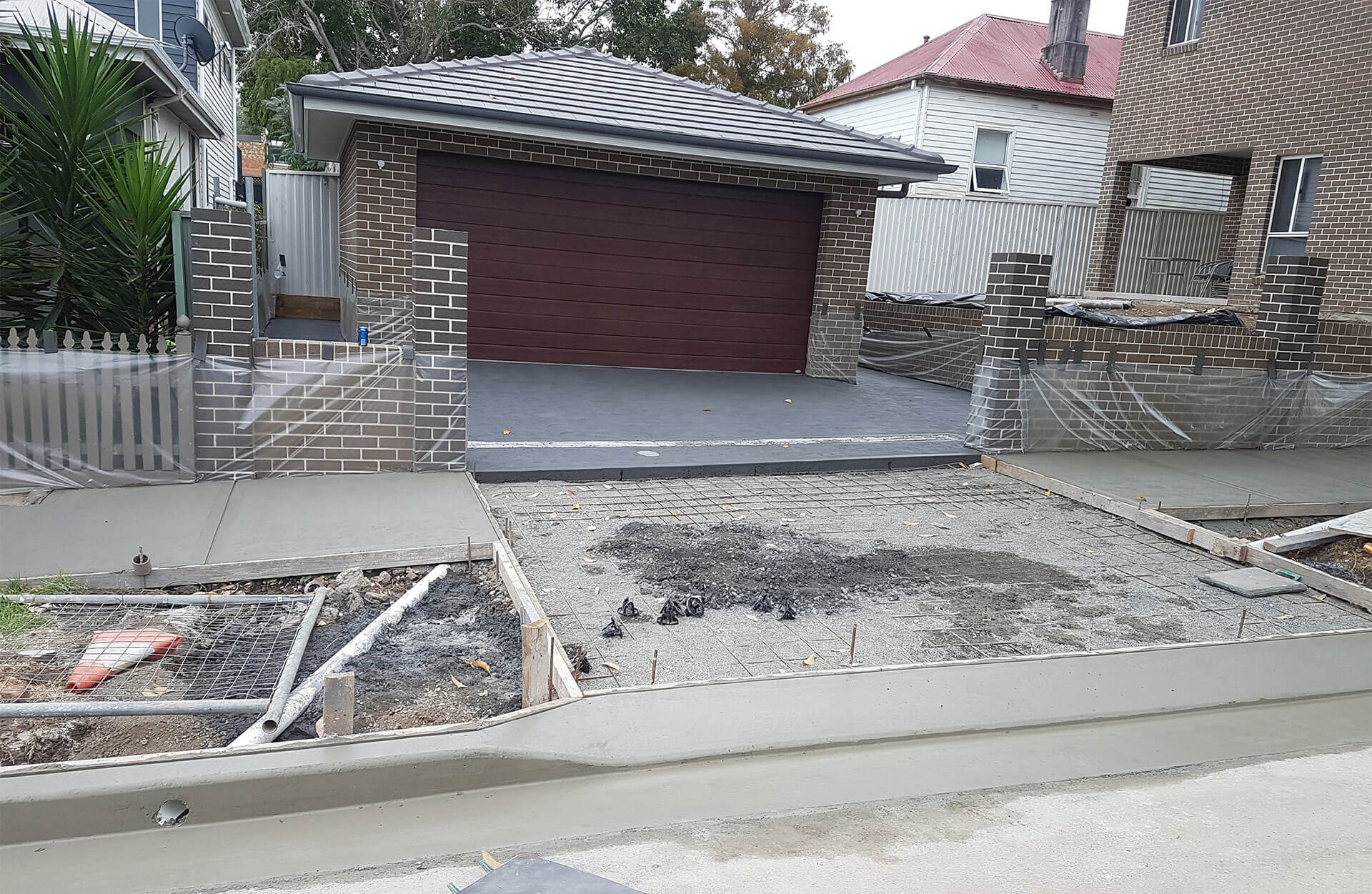
If there’s one part of this whole process that catches people off guard, it’s the council driveway. Homeowners often assume that because they’ve got DA approval, they can pour whatever they like from the garage to the street. Not quite. The moment your driveway crosses onto the nature strip or footpath, you’re no longer just dealing with your own property — you’re dealing with council-owned land, and that means a separate approval (often called a Vehicular Access Crossing or crossover permit).
Here’s the bit that trips people up: every council has its own rules. Concrete strength requirements, layback dimensions, drainage falls, and inspection stages can all differ from one LGA to the next — Parramatta’s requirements aren’t Hornsby’s, and Hornsby’s aren’t Ku-ring-gai’s. Get it wrong and you’re not just fixing your own driveway, you might be looking at council fines and a demolition-and-redo order, which is a genuinely miserable way to blow a weekend.
The paperwork side is honestly the most annoying part of the entire process — more annoying than the actual concrete work, if we’re honest. We handle the permit applications, inspections and compliance side of things as part of the job, so you’re not the one on hold to council for forty-five minutes. Our council driveway concreting page covers what to expect if you’re about to go through this.
Concrete Footpaths: Small Job, Big Compliance List
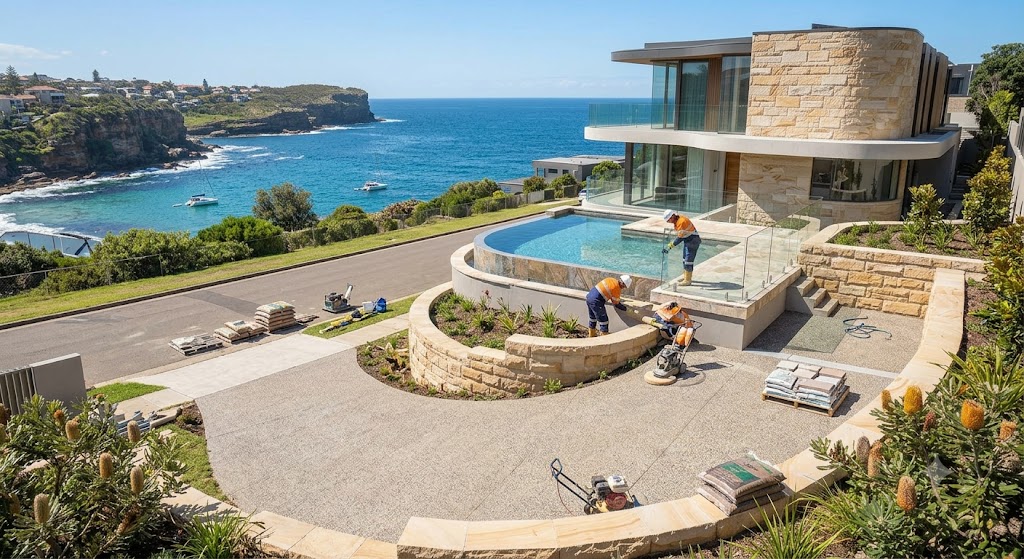
Concrete footpaths Sydney might sound like the least exciting item on this list, and to be fair, it probably is. But footpath and kerb work — particularly the “make good” sections required when a build damages the existing council footpath — comes with its own compliance checklist: slip resistance, correct falls for drainage, matching existing levels, and finishes that meet the relevant Australian Standard.
It’s also one of those jobs where councils are increasingly strict, since a poorly finished public footpath is a trip hazard the council itself becomes liable for. If your build has chewed up a section of footpath or you need new pathing around the property, our footpath concreting page has the detail on how we handle it, permits included.
So, How Do You Actually Pick the Right Concreter?
A few honest, non-salesy pointers:
- Ask who does the excavation. If a contractor subcontracts every stage to a different crew, you’ve got more handoffs and more chances for something to slip through the cracks (sometimes literally).
- Ask about soil reports and engineering. Anyone quoting a house slab without referencing your geotech report or engineer’s design is guessing.
- Ask who manages council paperwork. For driveways and footpaths, this should be part of the service, not a surprise extra.
- Check their curing process. Concrete that’s poured well but cured badly can still underperform. A rushed strip of the formwork or no curing compound in hot weather is a red flag.
- Look at finished jobs, not just poured slabs. Anyone can pour concrete. Fewer can finish it so it looks good in five years, not just on handover day.
If you’d like to talk through your specific project — whether it’s a full house slab, an excavation-only job, or “we just need the driveway sorted before Christmas” — get in touch through our contact page and we’ll give you a straight answer, not a script.
And if you’re the type who likes to read up before committing to anything (smart move, honestly), have a browse of our blog for more Sydney-specific concreting guides — from slab types to council quirks to the stuff nobody tells you until you’ve already signed a contract.
Frequently Asked Questions
How much does a concrete house slab cost in Sydney? It depends heavily on soil classification, slab type, site access, and size — a straightforward waffle pod slab on a flat, easy-access block will cost considerably less than a raft slab on a sloping, reactive-clay site with tight truck access. The only reliable way to get an accurate figure is a site-specific quote based on your soil report and plans.
Do I need council approval for a new driveway in Sydney? Generally yes, if any part of the driveway crosses the nature strip or footpath (the section connecting your property to the road). This is separate from your DA and is usually applied for as a vehicular crossing or crossover permit through your local council.
How long does concrete take to cure before it can be used? Concrete typically reaches enough strength to walk on within a couple of days, but full design strength (and the point at which it can safely handle vehicle loads) is usually closer to 28 days. Driveways especially shouldn’t take heavy loads early, no matter how tempting it is to park the car straight away.
What’s the difference between a waffle pod slab and a raft slab? Waffle pod slabs use void formers to reduce concrete volume and are common on more stable, standard residential sites. Raft slabs are a solid reinforced slab designed to spread load evenly, and are typically specified for reactive clay or more variable soil conditions. Your engineer’s report determines which applies to your site.
Can I get excavation done without a full concreting package? Yes — excavation, cut-and-fill, and site prep can be engaged as standalone works if you already have other trades lined up for the pour itself, though there’s usually a cost and coordination advantage to keeping it under one team.
What happens if my footpath or crossover gets damaged during my build? Most councils require the responsible party (usually the homeowner or builder) to reinstate any damaged council footpath, kerb, or crossover to the council’s specification before the project is signed off — this is generally referred to as a “make good” obligation.