There’s a reason half the concrete driveways in Sydney look like they’ve survived an earthquake. It’s not bad luck. It’s not “just how concrete is.” It’s soil, moisture, and a whole lot of shortcuts taken by whoever was cheapest on the day. Sydney sits on some of the most reactive clay in the country — the stuff swells when it rains and shrinks when it doesn’t, which is basically the opposite of what you want underneath a driveway, a slab, or a footpath you’re planning to walk on for the next thirty years.
This is the guide we wish more homeowners read before they got three quotes off Facebook Marketplace and picked the cheapest bloke with a mixer truck. We’re going to walk through what actually goes into decent concreting services Sydney-wide, why the process matters more than the price, and where things tend to go sideways. If you’ve searched anything like “concrete contractors Sydney,” “house slabs in Sydney,” or “site excavation Sydney,” you’re in the right spot.
Why “Just Pour It” Doesn’t Work Here
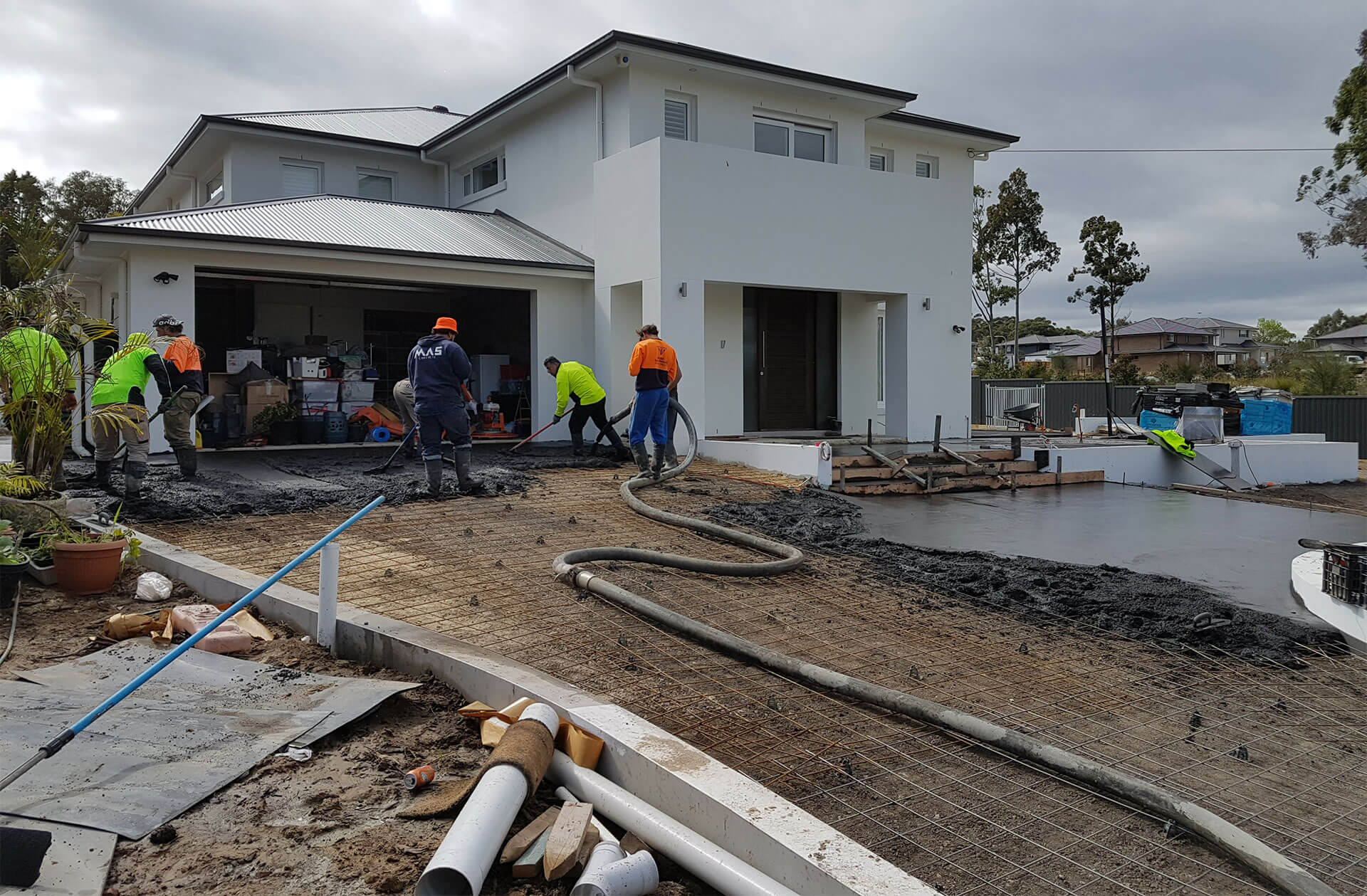
Everyone wants concreting to be simple: dig a bit, box it up, pour, done. In reality, a proper concrete job is 80% preparation and 20% actual pouring — and that ratio flips hard if the site prep gets rushed.
Sydney throws a few specific curveballs at any concrete contractor:
- Reactive clay soils across the western suburbs and parts of the north shore that expand and contract with moisture, leading to cracking if the slab design doesn’t account for it
- Sloping blocks everywhere from the Northern Beaches down to the Sutherland Shire, which turn a “simple” driveway into a drainage and retaining exercise
- Sandstone shelves close to the surface in older suburbs, which can mean rock breaking before anyone even gets to the concrete
- Council red tape for anything touching a footpath, verge, or vehicle crossing (more on that shortly, because it trips people up constantly)
None of that is a reason to panic. It’s just a reason to hire people who’ve actually dealt with it before, rather than someone whose experience is limited to flat blocks in a display village. This is the whole philosophy behind our approach to concreting across Sydney — treats every site like it’s got its own personality, because in this city, it usually does.
What Proper Site Excavation Actually Involves
Excavation is the unglamorous cousin of concreting. Nobody posts photos of a nicely dug trench on Instagram, but it’s the single biggest predictor of whether your slab lasts twenty years or starts cracking after the first wet winter.
Good site excavation Sydney work covers:
- Soil classification — understanding whether you’re dealing with clay, sand, rock, or a mongrel mix of all three, which determines footing depth and slab type
- Cut and fill — getting the site to the right level without just dumping loose fill and hoping for the best (a classic budget-job move that ends in tears)
- Drainage planning — water needs somewhere to go that isn’t “pooling against your new slab”
- Services and utilities checks — because nothing kills a schedule like slicing through a stormwater pipe nobody told you about
We run our own machinery and crews for this stage rather than subbing it out to whoever’s free that week, which is a big part of why our excavation work in Sydney tends to run on schedule instead of blowing out by three weeks because “the excavator guy had another job.”
Formwork: The Part Nobody Notices Until It’s Wrong
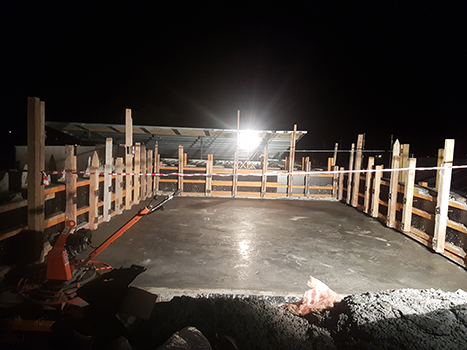
Formwork is basically the mould your concrete gets poured into, and it’s doing heavier lifting than most people realise. Bent, warped, or badly braced formwork means wonky edges, uneven thickness, and slabs that don’t sit level — which is a nightmare if you’re trying to build a structure on top of it later.
Solid formwork Sydney trades rely on:
- Timber or steel formwork that’s actually straight (shocking, we know)
- Correct bracing so it doesn’t bow outward under the weight of wet concrete
- Precise levels checked with a laser, not a bloke’s gut feeling
- Allowance for expansion joints in the right places, so cracking happens where it’s supposed to, not through the middle of your new patio
It sounds fussy, but this is exactly where cheap jobs fall apart. Anyone can pour concrete. Getting the formwork dead straight and dead level is the difference between a slab that photographs well for six months and one that’s still flat a decade later. Have a look at how we handle formwork on Sydney projects if you want the nerdy detail.
House Slabs: The Foundation Literally Everything Sits On
If you’re building new, extending, or putting up a granny flat, the slab underneath is not the place to cut corners. A house slab has to deal with structural load, soil movement, moisture, and (in Sydney) the occasional bushfire compliance requirement depending on your zone.
Common slab types you’ll hear thrown around for house slabs in Sydney:
- Waffle pod slabs — a popular, cost-effective choice on reactive soils, using polystyrene void formers under a reinforced slab
- Raft slabs — a solid reinforced slab that spreads load evenly, often used on trickier or more heavily loaded sites
- Stiffened raft slabs — a raft with extra reinforced beams for added strength on more reactive ground
Picking the wrong one for your soil class isn’t a cosmetic mistake — it’s a structural one, and it’s the kind of thing that shows up as cracked walls two years after you move in, not the week after the pour. Our team works from soil reports and engineering specs rather than guesswork, which is the whole point of the house slab work we do across Sydney.
Council Driveways and Footpaths: Where the Paperwork Lives
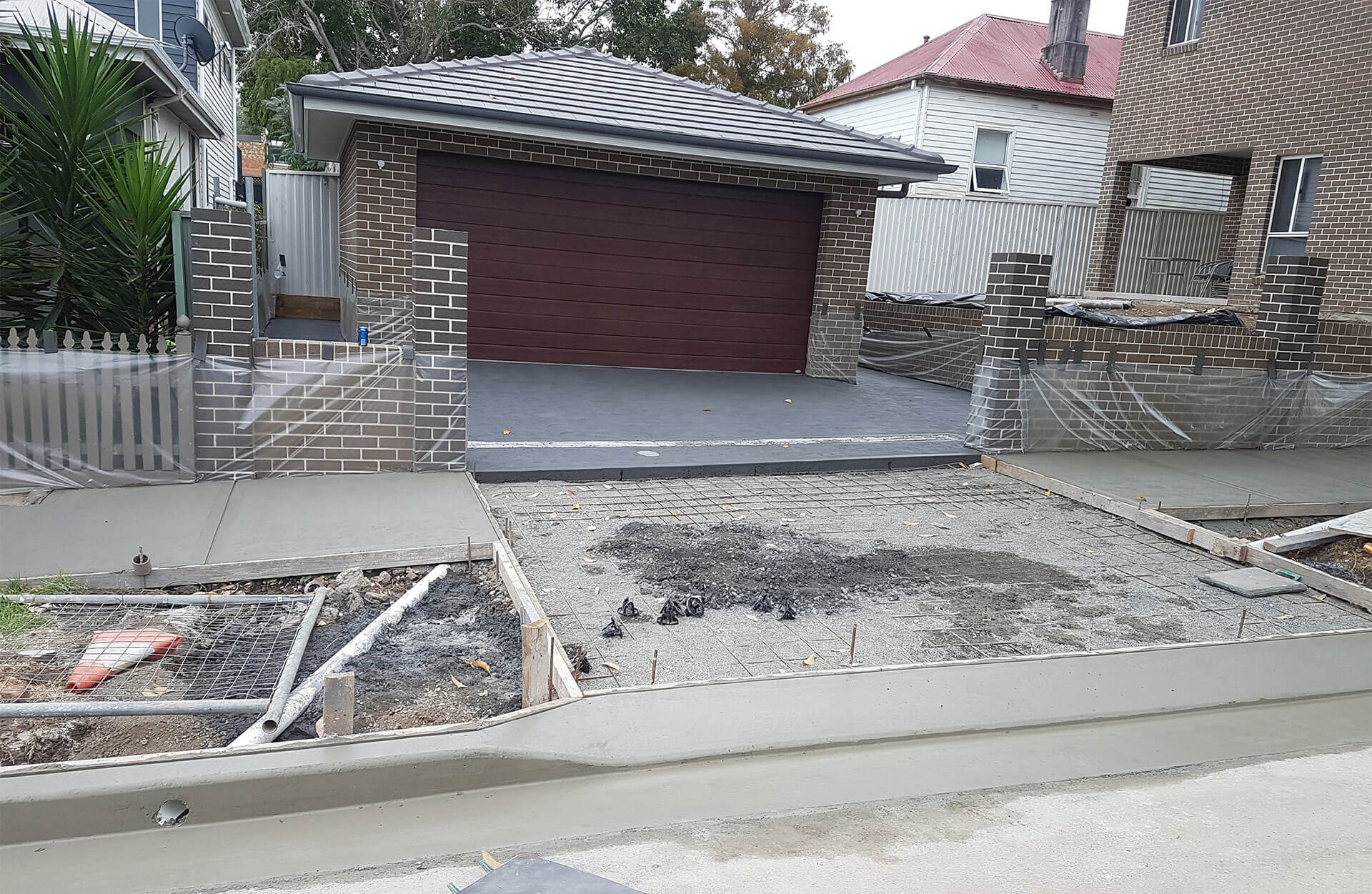
Here’s the bit that catches out most homeowners: if your driveway or footpath touches council land (and it almost always does, because the verge and the footpath are council property even though you’re the one mowing it), you generally need council approval before anyone starts breaking ground.
That means, depending on your council:
- A vehicle crossing application (also called a layback or crossover application)
- Design-level approval, where a council engineer sets the levels your driveway has to match
- Inspections at set stages of the pour, not just a rubber stamp at the end
- Compliance with specific materials and finishes — some councils genuinely won’t allow certain surfaces on the road reserve
Skip this step and you can be looking at a demolish-and-rebuild order at your own cost, which is about the least fun sentence in this entire article. A good council driveway Sydney contractor handles the applications, liaises with the council engineer, and builds to the approved plan the first time. We manage this process end to end through our council driveway concreting service, because chasing council paperwork yourself after hours on hold is nobody’s idea of a good time.
Footpaths get similar treatment. Footpath concreting Sydney-wide has to meet accessibility standards (think gradients and surface finishes that don’t turn into a slip hazard when it rains), plus whatever specific requirements your local council has bolted on top. We cover the compliance side through our footpath concreting work, so you’re not the one Googling council codes at 11pm.
So, What Does “Good” Actually Look Like?
Strip away the jargon and a properly run concreting job comes down to a handful of things:
- Someone actually looks at your soil before quoting a slab type
- Excavation and drainage get planned, not improvised
- Formwork is checked with instruments, not eyeballed
- Council approvals are sorted before the truck turns up, not scrambled afterward
- The same crew who dug the site pours the concrete, rather than three separate subcontractors playing pass-the-parcel with your project
That’s the standard we hold ourselves to across every job, whether it’s a full Sydney concrete services package for a new build or a single footpath patch for a strata block. You can see the full spread of what that covers on our services page, or drop into the OzCrete Concrete blog for more of this kind of thing if you’re the type who actually reads before you sign a quote (good on you, genuinely).
Curing: The Step Everyone Rushes
Pouring the concrete is the exciting bit — it’s also the point where a lot of homeowners assume the job’s basically done. It isn’t. Curing is what turns a wet grey puddle into something that’ll actually carry a car or a family for the next few decades, and rushing it is one of the most common (and most avoidable) mistakes on residential jobs.
A few things that matter more than people expect:
- Moisture control — concrete needs to stay damp while it cures, not dry out in the sun within a day, which is a genuine risk during a hot Sydney summer
- Weather timing — pouring right before a downpour or during a heatwave both cause problems, so timing the pour around the forecast isn’t optional, it’s just good practice
- Minimum cure time before load — walking on a slab too early is one thing, driving a car onto a fresh driveway is another. Most slabs need at least a week before any real load, and full strength takes closer to a month
- Protecting edges and joints — freshly poured edges are more vulnerable to chipping and cracking than the middle of the slab, so they need a bit of extra care in the first few days
Skipping any of this doesn’t usually show up straight away. It shows up eight, twelve, eighteen months later as hairline cracks or a driveway that’s started to dish in one corner — right around the time the original contractor has stopped answering calls.
What Actually Drives the Cost?
We won’t pretend to give you a number here, because genuinely, anyone who quotes a flat rate over the phone without seeing your site is guessing. But the factors that move the price up or down are worth knowing before you start comparing quotes:
- Access — a tight side gate or a steep driveway means more hand work and less machine work, which adds time
- Soil and rock — hitting sandstone partway through a dig changes the job considerably, and it’s common enough in older Sydney suburbs that it’s worth asking about upfront
- Slab type and reinforcement — a waffle pod slab and a stiffened raft slab are not the same price, and neither should be treated as interchangeable
- Council requirements — extra inspections, specific finishes, or a slower approval process can all add time (and therefore cost) to a driveway or footpath job
- Finish — plain broom finish, exposed aggregate, coloured, or stencilled concrete all sit at different price points
The honest answer is that a proper quote should come after someone’s actually looked at your site, not before.
Frequently Asked Questions
Do I really need council approval for a driveway that’s on my own property? If any part of it crosses the footpath, verge, or nature strip — which is almost always the case for a standard residential driveway — yes. That strip technically belongs to council, not you, so a vehicle crossing application is required before work starts.
How long does a typical house slab take from start to finish? It varies with soil conditions and slab type, but between site excavation, formwork, steel, and curing time, most residential slabs take one to two weeks of on-site work, plus curing time before it’s ready to build on.
Why did my neighbour’s driveway crack within two years? Usually it comes down to one of three things: inadequate site preparation, formwork or reinforcement that wasn’t up to spec, or a slab design that didn’t account for reactive clay soil movement. It’s rarely the concrete mix itself that’s the problem.
Can you handle both the excavation and the concrete pour, or do I need separate contractors? We run both in-house, which is generally a smarter move than juggling separate excavation and concreting contractors — one team means one point of accountability if something needs adjusting mid-job.
What suburbs does OzCrete Concrete actually cover? We work right across greater Sydney, from the Northern Beaches through to Western Sydney and the Sutherland Shire. If you’re not sure whether your area’s covered, it’s quickest to just get in touch and ask.
The Bottom Line
Concrete looks simple from the footpath. It isn’t. Every driveway, slab, and path that’s still flat and crack-free after a decade got there because someone did the boring, unglamorous groundwork properly — checked the soil, planned the drainage, braced the formwork, and chased the council paperwork before the truck rolled in.
That’s the whole OzCrete Concrete approach in a nutshell: less guesswork, more groundwork. If you’re weighing up a project — big or small — head to our homepage to see recent work, or reach out directly through our contact page for a quote that’s based on an actual look at your site, not a photo you sent over text.