There’s a particular kind of heartbreak that comes with watching your driveway crack apart six months after it was poured. Or your back patio pooling water every time Sydney decides to dump a month’s worth of rain on us in an afternoon (thanks, La Niña). If you’ve ever stood in your backyard wondering why the slab looks more like a jigsaw puzzle than a solid surface, you’re not alone — and it’s almost never bad luck. It’s bad concreting.
Here’s the thing nobody tells you when you’re planning a driveway, patio, or new slab: the outdoor space that actually holds up isn’t the one with the fanciest finish. It’s the one built properly from the ground up — literally. That’s the whole philosophy behind OzCrete Concrete, and it’s what this guide is really about: how proper residential concreting in Sydney turns a patch of dirt into something your grandkids will still be parking their (hopefully electric) cars on.
We’ve done the digging — pun very much intended — into what separates a concrete job that lasts twenty years from one that’s cracked before the invoice is even paid. Let’s get into it.
Why Your Outdoor Space Is Only as Good as What’s Underneath It
Most homeowners judge a concreting job by how it looks on day one. Smooth finish, nice edges, maybe a bit of an exposed aggregate sparkle in the sun — tick, tick, tick. But concrete isn’t like paint. It doesn’t forgive a shortcut. Everything that determines whether your slab is still flat and crack-free in a decade happens before the concrete truck even shows up.
Sydney’s clay-heavy soil is notorious for expanding and contracting with moisture, which means unless the ground is properly prepared, compacted, and drained, your slab is basically sitting on a very slow-motion trampoline. Add in our habit of getting six months of rain in six days, and you’ve got a recipe for slabs that heave, dip, and crack.
This is why genuine concreting services in Sydney start with soil assessment and site prep, not with a cement mixer. A concreter who skips straight to pouring is either inexperienced or in a hurry to get to the next job — neither of which you want anywhere near your driveway.
The Anatomy of a Proper Job — From Dirt to Driveway
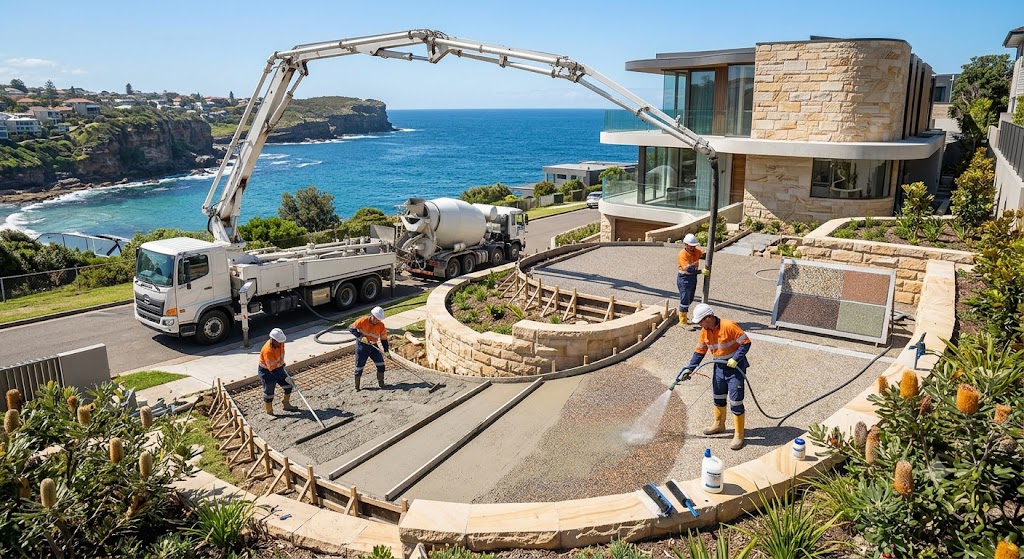
Good concreting is less “pour and pray” and more a sequence of steps that each protect the next. Here’s roughly how a job worth paying for actually unfolds:
- Site prep and excavation — clearing, levelling, and digging to the correct depth so the slab has proper support and drainage falls the right way.
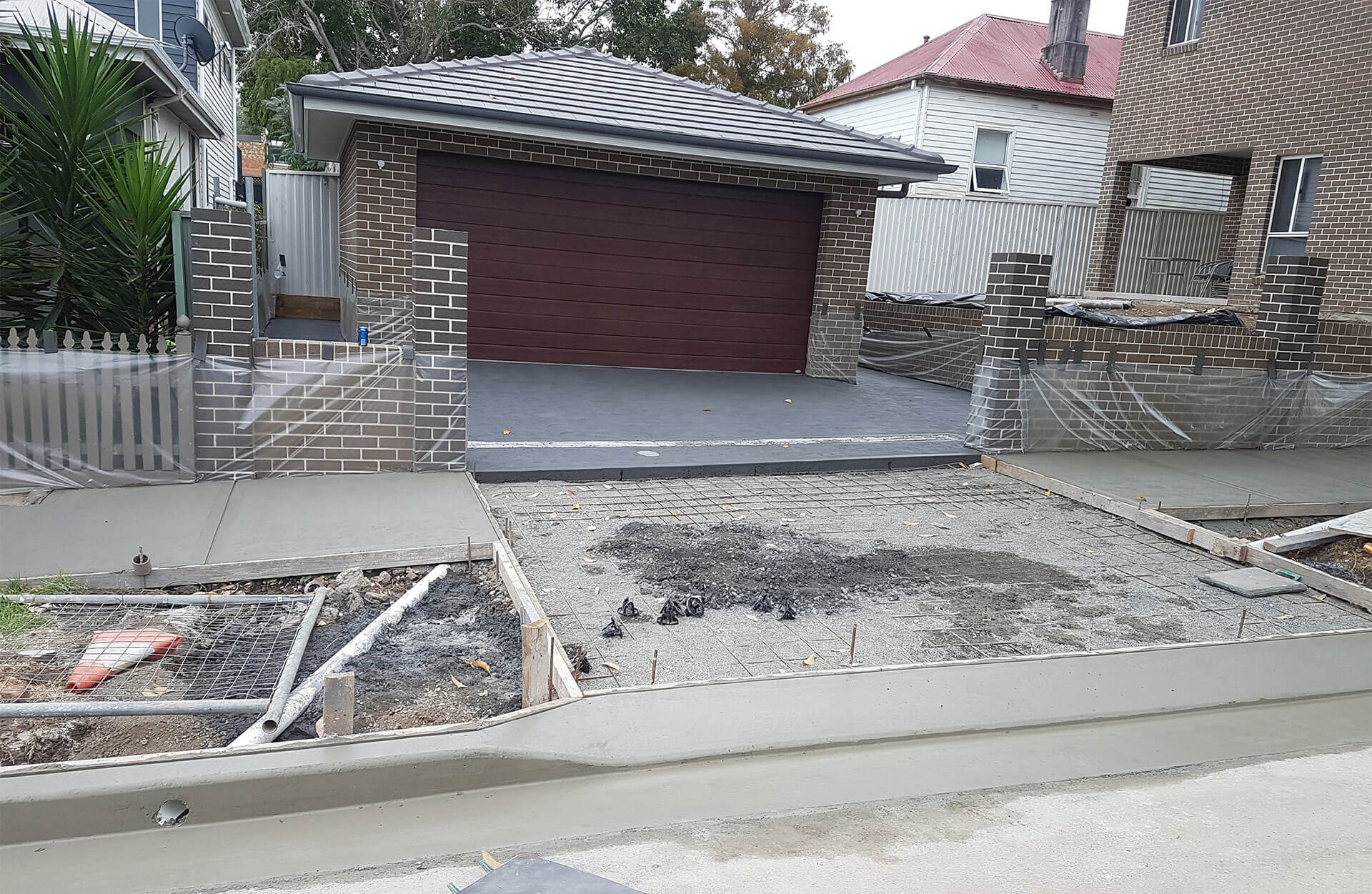
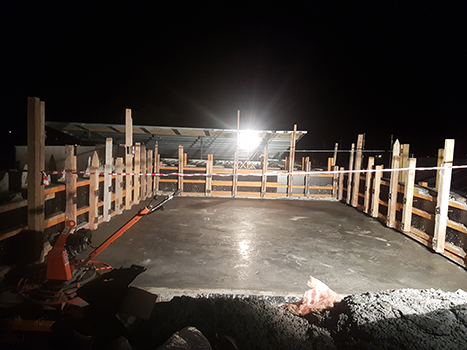
- Formwork — timber or steel edging that shapes the pour and keeps it exactly where it needs to be, down to the millimetre.
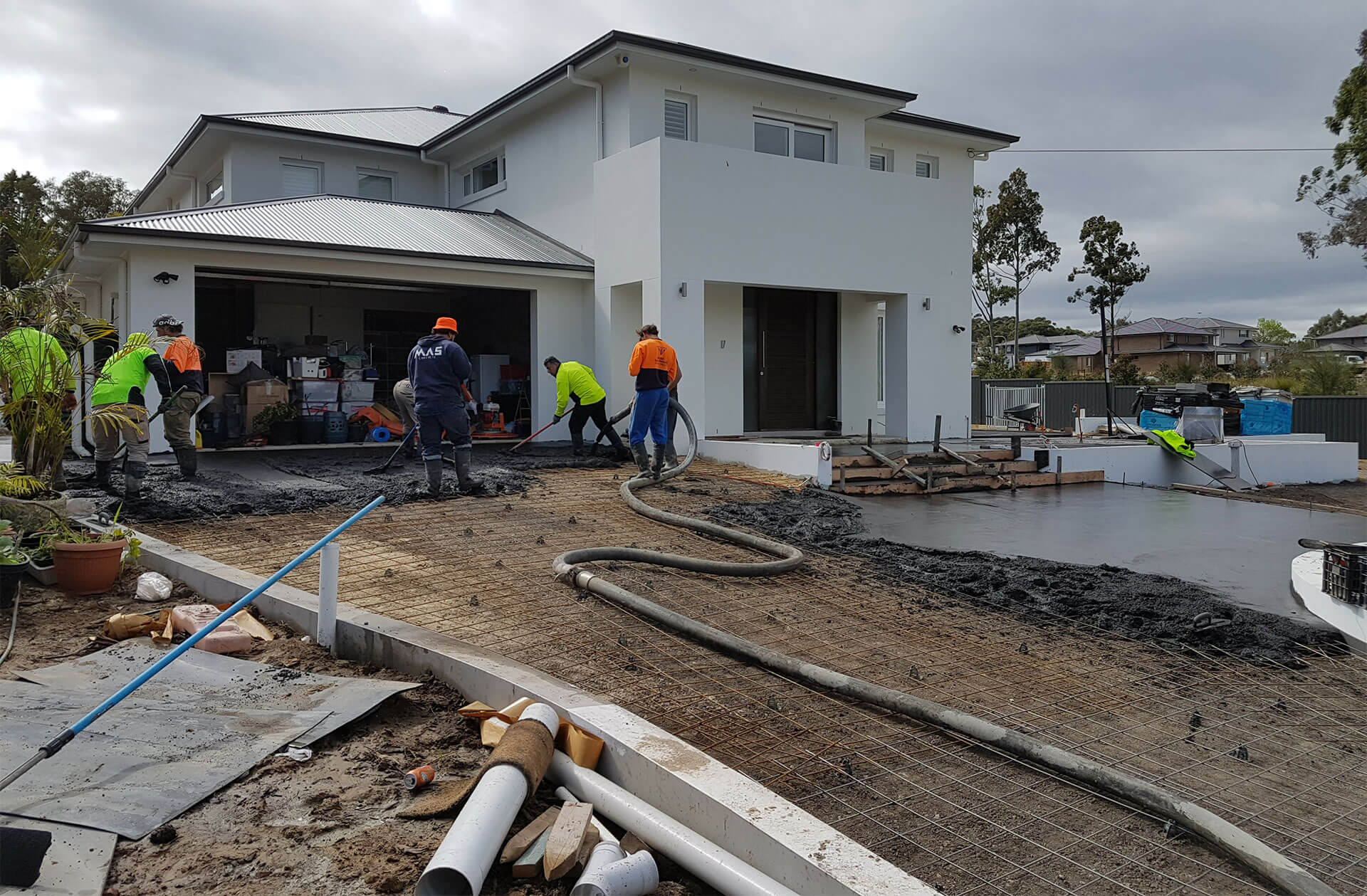
- Reinforcement — steel mesh or bar laid in to stop cracking under weight and movement.
- The pour and finish — getting the mix, the timing, and the curing conditions right (yes, weather actually matters here).
Skip or rush any one of these and the whole thing is compromised, no matter how good the final trowel finish looks. This is where excavation in Sydney work earns its keep — get the earthworks wrong and you’re fighting an uphill (or downhill, in the case of pooling water) battle before a single bag of cement is opened.
Formwork gets even less credit than it deserves. It’s the unglamorous timber frame nobody photographs for Instagram, but proper formworking in Sydney is what keeps your driveway edges straight, your steps square, and your slab thickness consistent from one end to the other. A wobbly formwork job is basically setting your concrete’s mistakes in stone. Concrete, actually.
House Slabs That Won’t Let You Down
If you’re extending, building a granny flat, or starting from scratch, the slab is arguably the single most important part of the build — and the one part almost nobody thinks about until something goes wrong. A poorly poured slab doesn’t just crack; it can throw out door frames, cause tiles to lift, and create long-term structural headaches that cost a fortune to fix retroactively.
Quality house slabs in Sydney are engineered to the specific soil classification of your block — because a slab that works fine in sandy Cronulla soil might be entirely wrong for the reactive clay you’ll find further west. This is one area where “she’ll be right” genuinely will not be right, so it pays to get someone across the local conditions rather than a generic quote off a national franchise.
Council Driveways and Footpaths — Navigating Sydney’s Red Tape
Ah, council approvals. Sydney’s other great outdoor sport, right up there with parallel parking on a hill. Anything touching the nature strip, kerb, or public footpath typically needs council sign-off, and every council — from the Inner West to Hills Shire — has its own quirks about widths, crossover angles, and materials.
Getting council driveways in Sydney approved and built correctly means understanding exactly what your local council wants before the first shovel goes in, not after a rejected inspection sends you back to square one. The same goes for council footpaths — public-facing concrete that needs to meet accessibility and drainage standards, not just look tidy from the street.
A concreter who’s dealt with dozens of councils across Sydney will already know the paperwork traps. One who hasn’t will learn on your dime, and possibly your deadline. If your project involves either a council driveway concreting service or footpath concreting, it’s worth asking upfront how many local approvals they’ve actually pushed through — not just how many slabs they’ve poured.
Common Concreting Mistakes Sydney Homeowners Make
Even with the best intentions, plenty of outdoor projects go sideways for entirely avoidable reasons. A few of the classics:
- Pouring in the wrong weather — concrete cures too fast in Sydney’s summer heat and too slow in a cold snap, both of which weaken the final strength if not managed properly.
- Ignoring drainage falls — a slab that looks flat but doesn’t shed water properly will eventually pool, stain, and erode.
- Going with the cheapest quote — thinner slabs, less reinforcement, and rushed curing times are how “budget” jobs get so budget.
- Skipping expansion joints — without them, temperature-driven expansion has nowhere to go except straight through your slab as a crack.
- DIY-ing council-adjacent work — unapproved driveway crossovers can mean a council-ordered demolition and a much bigger bill than getting it right the first time.
None of these are exotic failures. They’re the everyday, entirely preventable stuff that separates a slab lasting five years from one lasting fifty. And they’re rarely obvious at the time — a rushed pour on a 35-degree February afternoon looks perfectly fine the week it’s finished. It’s usually the following winter, once the ground has moved and the surface has had a proper freeze-thaw-style test (as much as Sydney does “freeze”), that the shortcuts start showing themselves.
Why Cutting Corners Costs More down the Track
There’s a version of this article that just says “hire a professional” and calls it a day, but that undersells how much money bad concreting actually costs homeowners. Re-pouring a failed slab means demolition, disposal, re-excavation, and starting from scratch — often at two or three times the cost of doing it properly the first time. And that’s before factoring in the flow-on damage a failed slab can cause to fencing, landscaping, or the structure it’s supporting.
Investing in proper residential concreting Sydney work isn’t really about getting a nicer-looking driveway. It’s risk management for one of the more expensive, hardest-to-fix parts of your property.
There’s also the resale angle, which tends to get overlooked until the “For Sale” sign goes up. A cracked driveway or an uneven back patio is exactly the kind of thing that makes a buyer’s agent start whispering numbers to their client during an inspection. Concrete work that’s holding up well, on the other hand, quietly signals that the rest of the property has probably been looked after too. It’s not the reason people buy a house, but it’s absolutely a reason they knock a chunk off the offer if it’s done badly.
Choosing the Right Concreting Services in Sydney
So what should you actually look for when picking who pours your next slab, driveway, or footpath? A few non-negotiables:
- Experience specific to Sydney’s soil types and council requirements
- Transparent quoting that breaks down excavation, formwork, reinforcement, and finishing
- A track record you can actually check — photos, reviews, completed council-approved work
- Willingness to explain the process, not just the price
The OzCrete Concrete team has built its reputation across Sydney doing exactly this — handling everything from backyard patios to full council-approved driveways with the same attention to what’s underneath as what’s on top. If you’re weighing up options, our concreting services page runs through the full scope of what we cover, and our concreting Sydney hub is a solid starting point if you’re still figuring out which type of job you actually need.
And if you’d rather just talk it through with an actual human than keep scrolling, our contact page is the fastest way to get a straight answer on your specific block, soil, and council.
FAQs: The Questions Sydney Homeowners Actually Ask
How thick should a residential driveway slab be in Sydney? For standard passenger vehicles, 100mm is common, but if you’re expecting anything heavier — a trailer, a caravan, or regular deliveries — 125–150mm with appropriate reinforcement is a safer bet. Soil type and expected load both factor into the final spec, which is why a generic answer off a forum shouldn’t replace an actual site assessment.
Do I need council approval for a new driveway or just a repair? Generally, any new crossover, widening, or change to a driveway touching the council nature strip needs approval. Straightforward like-for-like repairs to an existing, already-approved driveway usually don’t — but “usually” is doing some heavy lifting there, so it’s worth confirming with your local council before assuming either way.
How long does concrete need to cure before it can handle vehicle weight? Concrete typically reaches enough strength for foot traffic within a couple of days, but full curing for vehicle loads generally takes around 28 days. Driving on it earlier — even “just once, carefully” — is one of the more common ways homeowners undo weeks of good work.
Why does my old concrete driveway have cracks even though it looks well-maintained? Cracking is usually less about surface maintenance and more about what happened underneath during the original pour — inadequate base compaction, missing expansion joints, or reactive soil movement. Cosmetic sealing can slow it down, but it won’t fix an underlying structural issue.
Is exposed aggregate or plain concrete better for a Sydney driveway? It depends on priorities. Exposed aggregate offers better slip resistance and a premium look but generally costs more and can be slightly trickier to patch if damaged. Plain concrete is more budget-friendly and easier to repair section by section, though less visually distinctive. Neither is objectively “better” — it’s a trade-off between finish, cost, and long-term maintenance.
Can new concrete be poured directly over an old slab? Sometimes, if the existing slab is structurally sound, level, and free of major cracking — this is called an overlay. But if the original slab has underlying issues (poor drainage, reactive soil movement, or significant damage), pouring over it just buries the problem rather than solving it, and it tends to resurface — sometimes literally — within a year or two.
The Bottom Line
A stronger outdoor space isn’t about a fancier finish or a flashier colour — it’s about what happens in the two or three days before the concrete even shows up. Proper excavation, correct formwork, adequate reinforcement, and council compliance are the unglamorous fundamentals that decide whether your driveway, footpath, or slab is still doing its job in twenty years or cracking apart in two.
If you’re planning a project anywhere across Sydney and want it done the way it should be — not the way that’s quickest — have a browse through our blog for more project-specific breakdowns, or get in touch directly and we’ll talk you through what your space actually needs.